Jo Swinson: A Definitive Political Profile
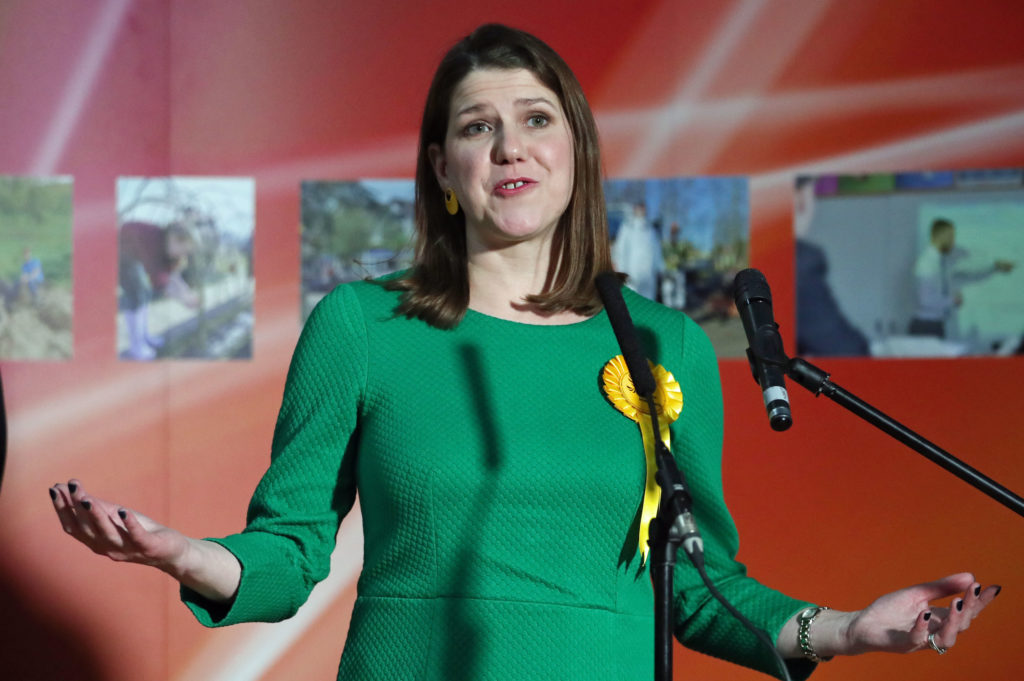
Jo Swinson’s political career represents one of the most dramatic arcs in modern British politics. From her early days as the “Baby of the House” to her historic, albeit short-lived, tenure as the first female leader of the Liberal Democrats, her journey encapsulates the volatility, opportunity, and brutal challenges of the political arena, particularly during the Brexit era. Her name became a lightning rod for both fervent support and intense criticism, symbolising a specific brand of passionate, uncompromising centrism. This comprehensive article moves beyond the headlines of the 2019 general election to explore the multifaceted story of Jo Swinson, examining her policy convictions, leadership style, lasting impact on her party, and her evolution beyond frontline politics. Understanding her trajectory offers crucial insights into the state of British liberalism, the struggles of third-party politics, and the personal cost of public life.
Early Life and Political Ascent
Jo Swinson’s entry into politics was rooted in a childhood shaped by activism and a clear sense of justice. Growing up in Glasgow and influenced by her parents’ involvement in social justice campaigns, she developed an early awareness of political discourse. This foundation led her to the Liberal Democrats at university, where she studied management at the London School of Economics and quickly ascended within the party’s youth ranks, demonstrating a precocious talent for organisation and communication that would define her later career.
Her breakthrough came in the 2005 general election when, at just 25 years old, she unseated a sitting Labour minister to become the MP for East Dunbartonshire. This victory earned her the title of “Baby of the House” as the youngest MP, immediately marking her as a rising star. During the Liberal Democrats’ period in coalition government from 2010 to 2015, Swinson served as a parliamentary private secretary and later as a junior minister in the Department for Business, Innovation and Skills, where she championed policies on flexible working and gender equality in corporate boards, establishing her reputation as a pragmatic moderniser.
A Modern Liberal Democrat Philosophy
Swinson’s political philosophy was firmly anchored in the social liberal tradition, emphasising individual rights, equality of opportunity, and evidence-based policy. She consistently framed her arguments through a lens of economic competence combined with social progress, arguing that a dynamic market economy required robust protections and investments in people to function fairly. This worldview placed her in the centre-ground, but with a distinctly activist edge, advocating for state intervention to correct market failures and break down structural barriers, particularly for women and minorities.
Her policy portfolio was extensive, but several core themes remained constant. She was a lifelong campaigner for gender equality, leading efforts to modernise workplace practices and challenge “laddish” parliamentary culture. Environmental sustainability was another pillar, with her pushing for more ambitious climate targets long before they entered the political mainstream. Furthermore, she was a staunch advocate for constitutional and electoral reform, viewing the UK’s first-past-the-post system as a fundamental barrier to representative politics. For Jo Swinson, liberalism was not a passive belief but a toolkit for active, practical change.
The Path to Party Leadership
Following the party’s near wipe-out in the 2015 election, which included the loss of her own seat, Swinson’s career entered a period of recalibration. She successfully regained East Dunbartonshire in 2017, returning to Parliament with renewed authority and a clear sense of the party’s need for revitalisation. After the resignation of Sir Vince Cable in 2019, she positioned herself as the candidate of energy, clarity, and generational change, promising to move the party beyond its post-coalition trauma and articulate a confident, unambiguous liberalism.
In July 2019, Jo Swinson was elected leader of the Liberal Democrats, making history as the first woman to hold the position. Her campaign was built on a message of unequivocal opposition to Brexit and a bold, optimistic vision for the country. She immediately sought to reshape the political narrative, positioning the Lib Dems as the unambiguous “Remain” party and herself as a prospective Prime Minister. This confident, even audacious, framing was designed to capture the momentum of the growing People’s Vote movement and appeal to disaffected voters from both main parties, setting the stage for a high-stakes electoral strategy.
The 2019 General Election Campaign
The December 2019 general election became the crucible in which Swinson’s leadership strategy was tested. The campaign was dominated by Brexit, and the Liberal Democrat platform under Jo Swinson was the clearest of all: to revoke Article 50 outright if they won a majority. This policy was intended to provide definitive clarity and mobilise the 48% who had voted Remain. The campaign launched with high-energy rallies and polished media appearances, with Swinson consistently projecting an image of competent, modern leadership in contrast to the perceived chaos of the two main parties.
However, the campaign faced significant headwinds. The “Revoke” policy was criticised by opponents as undemocratic, allowing the Conservatives to paint the Lib Dems as elitist and disrespectful of the 2016 referendum. Internally, there were tensions over the centralised, presidential campaign style that often seemed to focus more on Swinson’s persona than on local candidates. A pivotal moment was the publication of a controversial Conservative digital ad that manipulated footage of Swinson, but more damaging was a persistent media narrative that questioned the realism of her prime ministerial ambitions. The campaign’s high-risk, high-reward strategy ultimately collapsed under the weight of a national election framed as a binary choice between Boris Johnson and Jeremy Corbyn.
Analysis of the 2019 Electoral Outcome
The election result was catastrophic for Jo Swinson and the Liberal Democrats. Despite an increase in the national vote share, the party gained only one seat and Swinson herself lost her East Dunbartonshire constituency to the Scottish National Party. The defeat was multifaceted. Strategically, the “Revoke” stance failed to build the intended broad coalition; it solidified Remain support in already pro-Remain areas but alienated moderate Leave voters and proved unpalatable to many who, while opposing Brexit, favoured a second referendum over outright revocation. The first-past-the-post system brutally punished this concentrated support.
The leadership and messaging also came under intense scrutiny in the aftermath. Critics argued that Swinson’s portrayal as a potential Prime Minister was a strategic error that appeared hubristic given the party’s parliamentary numbers, making the campaign a target for ridicule. Furthermore, the intense focus on Brexit arguably came at the expense of promoting the party’s broader policy platform on issues like mental health, education, and climate change. The table below breaks down the key strategic pillars of the campaign and their outcomes.
Table: Strategic Analysis of the Liberal Democrat 2019 Election Campaign Under Jo Swinson
| Strategic Pillar | Intended Outcome | Actual Outcome & Critique |
|---|---|---|
| Unambiguous Revoke Policy | Mobilise the Remain vote into a coherent electoral bloc; provide clear differentiation. | Consolidated base but alienated moderates; framed as undemocratic; failed to break through in target seats. |
| Presidential Campaign Style | Elevate Jo Swinson as a fresh, competent leader; personalise the party brand. | Led to accusations of hubris; made the campaign a personality-focused target; overshadowed local candidates. |
| Targeting Conservative Remain Seats | Exploit Tory weakness over Brexit; win over moderate voters disillusioned with Johnson. | Failed in almost all targets; Tory “Get Brexit Done” message unified Leave voters and squeezed Lib Dem support. |
| Ignoring Labour’s Leftward Shift | Capitalise on Corbyn’s unpopularity to win soft Labour voters in pro-Remain areas. | Partially successful in some areas, but insufficient to win seats; many Labour voters returned to party to stop Tories. |
Post-Leadership and Life Beyond Politics
Following her election defeat, Jo Swinson resigned as party leader immediately. Her departure speech was graceful, taking responsibility for the result while expressing pride in the campaign’s values. This marked a decisive exit from frontline electoral politics. She did not seek re-election in any subsequent parliamentary contest, choosing instead to step away from the relentless scrutiny of the Commons. This move closed a significant chapter in her life that had begun nearly two decades prior as the youngest MP.
Since leaving politics, Swinson has embarked on a diverse portfolio career that leverages her experience in leadership, advocacy, and communication. She has become a respected speaker and consultant on topics like women’s leadership, ethical business, and wellbeing. Notably, she authored a book, The Power of Saying No, which draws on her political experiences to discuss setting boundaries and managing burnout. Additionally, she has taken on roles in the corporate and non-profit sectors, including advisory positions focused on flexible working—a policy area she long championed. This transition reflects a pragmatic and purposeful application of her skills beyond the partisan battlefield.
Legacy and Impact on the Liberal Democrats
Assessing the legacy of Jo Swinson within the Liberal Democrats is complex and subject to ongoing debate. On one hand, her leadership is often associated with the seismic electoral defeat of 2019, a event that left deep scars on the party. The bold “Revoke” strategy is frequently cited in political circles as a case study in overreach within a polarised electoral system. For a period, the party struggled with its identity in the aftermath, leading to a period of introspection and a return to a more traditional community-focused, incrementalist strategy under her successor, Ed Davey.
On the other hand, her impact includes significant positive contributions. She broke the ultimate glass ceiling in the party by becoming its first female leader, providing an important symbolic milestone. She injected a generationally distinct energy and unapologetically centred a modern, social liberal agenda, particularly on issues like climate and equality. Furthermore, she demonstrated a willingness to take bold, clear stances in an era of political equivocation. As a senior party figure reflected after her departure, “Jo brought a clarity and courage to our message that was electrifying for our members. The election result was devastating, but it didn’t erase the passion she reignited for a liberal Britain.” Her tenure forced a conversation about the party’s strategic choices that continues to shape its direction.
Gary Carr: The Definitive Guide to the Actor’s Career, Breakout Roles, and Artistic Journey
Media Portrayal and Public Perception
The media narrative around Jo Swinson evolved dramatically throughout her career, shaping public perception in profound ways. Initially, she was often framed as a fresh-faced moderniser and a pragmatic campaigner on issues like body image and flexible working. This portrayal shifted during her leadership bid and the 2019 election, where media focus intensified on her perceived “PM-in-waiting” positioning. Certain outlets were dismissive or openly hostile, while others praised her clarity but questioned her strategy, creating a fragmented public image that was hard to define.
This media dynamic had real consequences. The constant questioning of her credibility as a potential prime minister, regardless of its factual basis, seeped into public consciousness. Simultaneously, her strong performances in parliamentary debates and media interviews earned her respect even from political opponents for her preparation and conviction. The overall effect was a public perception of Jo Swinson as a highly competent, determined, and principled politician, whose strategic choices in a uniquely challenging political moment ultimately overshadowed her substantive policy work and personal attributes.
Jo Swinson in Historical and Political Context
To fully understand Jo Swinson’s political journey, it must be situated within the turbulent context of post-2010 British politics. She entered the coalition government as a young minister, experiencing both the opportunities and severe reputational costs of shared power. Her later career was then overwhelmingly defined by the all-consuming issue of Brexit, a force that distorted traditional political alliances and made centrist, compromise-based politics exceptionally difficult. Her leadership was an attempt to navigate this upheaval with definitive answers, a approach that clashed with the nuanced, often conflicted, feelings of the electorate.
Historically, she can be viewed as a figure who represented the peak of the “Remain” fightback, a last major stand for a form of liberal, internationalist, and pro-European politics before the UK’s formal departure from the EU. Her story is also one of the personal challenges faced by women in leadership, subjected to different standards of scrutiny regarding ambition, likability, and family life. In this broader context, her career is a compelling chapter in the stories of British liberalism, Brexit, and the changing face of political leadership.
Conclusion
The political story of Jo Swinson is far more than a tale of a single lost election. It is a nuanced narrative of ambition, principle, strategy, and the immense pressures of leading a third party in a time of national crisis. From her early promise as a moderniser to her fateful decision to champion an uncompromising anti-Brexit platform, she shaped and was shaped by one of the most divisive periods in recent British history. While her tenure as Liberal Democrat leader ended in dramatic defeat, her influence persists in the party’s ongoing debates about identity and strategy, and in the broader discourse on women in leadership and clear political communication. Her subsequent work beyond politics demonstrates the transferable value of her experiences. Ultimately, Jo Swinson remains a significant and instructive figure—a politician who dared to be unequivocal in an age of ambiguity, and whose career offers enduring lessons on the intersection of conviction, strategy, and the unforgiving nature of the political spotlight.
Frequently Asked Questions
What is Jo Swinson doing now?
Since leaving politics, Jo Swinson has built a multifaceted career as an author, speaker, and consultant. She wrote a book on empowerment and wellbeing, The Power of Saying No, and works with organisations on leadership, workplace culture, and gender equality, often drawing directly on her experiences from her time in government and as party leader.
Why did Jo Swinson lose her seat in 2019?
Jo Swinson lost her East Dunbartonshire seat in 2019 due to a strong challenge from the Scottish National Party (SNP) in a constituency that voted strongly for Remain. The national focus on her leadership and the polarising “Revoke” policy likely impacted her local campaign, with some tactical voting occurring against her as the Liberal Democrat leader in a seat the SNP was aggressively targeting.
What was Jo Swinson’s stance on Brexit?
As Liberal Democrat leader, Jo Swinson adopted the most definitive anti-Brexit position of any major party leader. Her policy was to revoke Article 50 outright if the Lib Dems won a majority, cancelling Brexit without a second referendum. Prior to this, she was a passionate advocate for a People’s Vote. This clear stance was the centrepiece of her 2019 election campaign.
How long was Jo Swinson leader of the Liberal Democrats?
Jo Swinson’s tenure as leader of the Liberal Democrats was brief but impactful. She was elected leader in July 2019 and resigned following the general election defeat in December 2019, after approximately five months in the role. Her leadership period was entirely consumed by the Brexit crisis and the subsequent election campaign.
What were Jo Swinson’s key policy areas?
Beyond Brexit, Jo Swinson was a long-standing campaigner on several key policy areas. These included gender equality, where she championed shared parental leave and flexible working; ambitious action on the climate crisis; and comprehensive political reform, including replacing the first-past-the-post voting system with proportional representation.