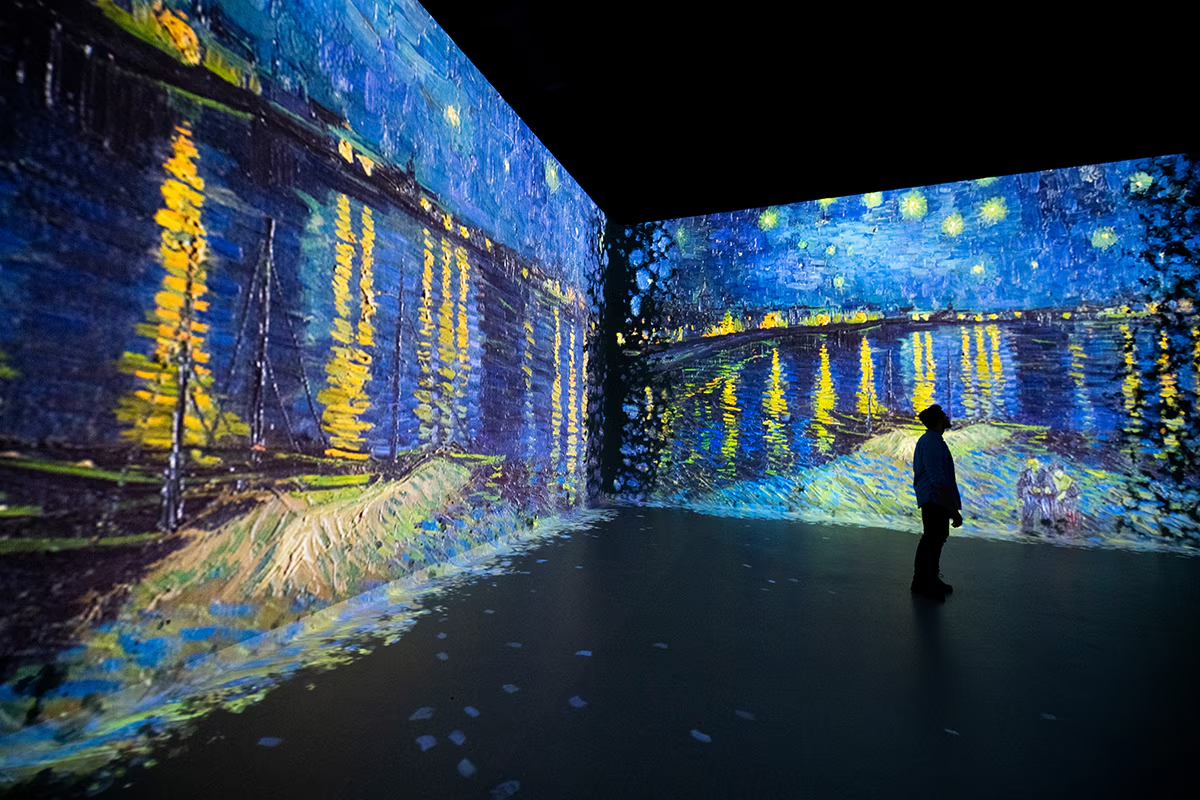
Introduction to Frameless London
Frameless London has rapidly become one of the most talked-about cultural attractions in the city, and for good reason. Unlike traditional galleries where artwork is confined to walls and frames, Frameless London flips the entire concept of art exhibition on its head. Here, art surrounds you. It moves, breathes, and pulls you into its world in a way that feels both modern and deeply emotional. The experience isn’t about standing still and observing; it’s about walking through masterpieces and feeling like part of them.
What truly sets Frameless London apart is its ability to make classical and modern art accessible to everyone. You don’t need a background in art history to appreciate what’s happening around you. The immersive technology, scale, and atmosphere do the heavy lifting, allowing visitors to connect with the art on a personal level. Whether you’re an art enthusiast or someone who hasn’t stepped into a gallery in years, Frameess London meets you exactly where you are.
The attraction has also arrived at a perfect cultural moment. In an era dominated by digital experiences and short attention spans, Frameless London manages to slow people down while still embracing modern technology. It blends centuries-old artwork with cutting-edge projection, sound design, and spatial storytelling, creating an experience that feels timeless rather than trendy.
At its core, Frameless ondon isn’t just about viewing art differently. It’s about rethinking what art spaces can be, how people engage with creativity, and why emotional connection matters just as much as intellectual understanding. This philosophy is what makes the experience linger long after visitors leave the building.
The Concept Behind Frameless London
The idea behind Frameless London is surprisingly simple, yet incredibly powerful: remove the frame, remove the barrier, and let the audience step inside the artwork. Traditional museums often create a sense of distance between the viewer and the piece, both physically and emotionally. Frmeless London intentionally dismantles that distance, replacing it with immersion and movement.
Instead of isolated paintings on white walls, the space uses floor-to-ceiling projections that transform entire rooms into living canvases. Paintings expand, shift, and sometimes even respond to the presence of visitors. This dynamic environment changes how people perceive scale, color, and composition, allowing them to notice details they might otherwise overlook in a conventional setting.
Another key element of the concept is storytelling. Frameless London doesn’t just display art randomly; it curates experiences that guide visitors through themes, emotions, and artistic movements. Each room feels like a chapter in a larger narrative, helping visitors understand not just what they’re seeing, but why it matters. This structured approach adds depth without feeling academic or overwhelming.
Importantly, the creators of FramelessLondon have emphasized inclusivity. The experience is designed to be welcoming to all ages and backgrounds, breaking down the idea that art appreciation is reserved for a select few. By combining technology, storytelling, and emotional engagement, Fraeless London has created a blueprint for how cultural spaces can evolve without losing their soul.
The Immersive Art Experience Explained
Walking into Frameless London feels less like entering a museum and more like stepping into another world. The immersive experience begins almost immediately, as walls, floors, and ceilings become active participants in the storytelling. The scale is intentionally overwhelming at first, encouraging visitors to let go of expectations and simply absorb what’s happening around them.
Sound plays a crucial role in shaping the atmosphere. Carefully curated music and ambient audio enhance the visuals without overpowering them. The soundscapes are designed to guide emotional responses, subtly shifting mood as visitors move from one space to another. This multi-sensory approach ensures that the experience feels holistic rather than purely visual.
Movement is another defining feature. Unlike traditional galleries where visitors stand still, Frameless London encourages exploration. People walk, sit, pause, and sometimes even lie down to fully absorb the projections. This freedom of movement reinforces the idea that art doesn’t have to be consumed in a rigid or prescribed way.
Perhaps the most impressive aspect is how the immersive elements remain respectful to the original artwork. Rather than distorting or trivializing famous pieces, Frameless London uses technology to highlight brushstrokes, textures, and details that might be difficult to see up close in a museum. The result is an experience that feels both innovative and deeply reverent.
The Artistic Curation and Featured Styles
Frameless London showcases a wide range of artistic styles, spanning different periods, movements, and emotional tones. From bold impressionist works to emotionally intense expressionist pieces, the curation reflects a thoughtful balance between familiarity and discovery. Visitors encounter famous masterpieces alongside lesser-known works, creating moments of recognition as well as surprise.
One of the strengths of the curation is its focus on emotional resonance rather than strict chronology. Instead of organizing art by date or artist alone, Frameless London groups pieces by mood, theme, or visual language. This approach allows visitors to connect with the artwork instinctively, without needing prior knowledge or context.
The experience also emphasizes artistic techniques in a way that feels organic. By enlarging details and animating transitions, Frameless London draws attention to brushwork, color theory, and composition. These elements become easier to appreciate when they surround you, rather than being confined to a canvas several feet away.
This style-driven curation ensures that Frameless Lonon feels cohesive despite its variety. Each room has its own identity, yet everything flows naturally from one space to the next. It’s a reminder that art, regardless of era or style, shares a common purpose: to evoke feeling and spark curiosity.
Technology as a Creative Tool, Not a Distraction
Technology is central to Frameless London, but it never feels like the main attraction. Instead, it acts as a silent partner, enhancing the art rather than competing with it. High-resolution projections, precise mapping, and responsive systems work together seamlessly, creating an experience that feels polished and intentional.
One of the most impressive aspects of the technology is its subtlety. Transitions between artworks are smooth and fluid, avoiding jarring shifts that could break immersion. The technology adapts to the space, rather than forcing the space to adapt to it. This careful integration ensures that visitors remain focused on the emotional and visual impact of the art.
The use of scale is another technological triumph. By enlarging artwork beyond its original size, Fraeless London allows visitors to explore details that are often missed. Tiny brushstrokes become sweeping gestures, and subtle color variations take on new significance. This magnification deepens appreciation rather than diminishing authenticity.
Crucially, Frameless London avoids the trap of turning art into a spectacle. There are no gimmicks or unnecessary effects. Every technological choice serves a purpose, reinforcing the idea that innovation can coexist with artistic integrity when handled thoughtfully.
Why Frameless London Appeals to Modern Audiences
Frameless London resonates strongly with contemporary audiences because it aligns with how people experience content today. Modern viewers are accustomed to interactive, immersive environments, whether through digital media, gaming, or virtual experiences. Frameles London taps into this familiarity while offering something far more meaningful than passive entertainment.
Social interaction is another factor in its appeal. The space encourages shared experiences, conversation, and reflection. Visitors often discuss what they’re seeing in real time, creating a communal atmosphere that feels welcoming rather than formal. This sense of connection enhances enjoyment and makes the experience more memorable.
The attraction also fits naturally into modern lifestyles. It doesn’t require hours of intense focus or prior preparation. Visitors can engage deeply or casually, depending on their mood and interest level. This flexibility makes Frameless London accessible without compromising quality.
Ultimately, Frameless London succeeds because it respects its audience. It assumes curiosity rather than expertise and offers an experience that rewards attention without demanding it. In a world where cultural institutions often struggle to stay relevant, Framelss London feels refreshingly in tune with the present.
Educational Value Without Feeling Academic
While Frameless London is undeniably entertaining, it also carries significant educational value. The experience introduces visitors to major artistic movements, techniques, and ideas in a way that feels intuitive rather than instructional. Learning happens naturally, through observation and emotional engagement.
Instead of long text panels or complex explanations, information is woven subtly into the experience. Visual cues, thematic groupings, and gentle contextual details help visitors understand what they’re seeing without overwhelming them. This approach is especially effective for younger audiences or those new to art.
The immersive format also supports different learning styles. Visual learners benefit from the scale and clarity of the projections, while auditory learners connect through soundscapes and narrative elements. Kinesthetic learners, meanwhile, engage through movement and spatial exploration.
By removing the pressure to “understand” art in a traditional sense, Framless London fosters genuine curiosity. Visitors leave not feeling tested, but inspired to explore further, which is arguably the most effective form of education.
The Cultural Impact of Frameless London
Frameless London has contributed to a broader conversation about the future of cultural spaces. Its success challenges the idea that innovation and tradition are mutually exclusive. Instead, it demonstrates that technology can amplify cultural heritage rather than dilute it.
The attraction has also influenced how people perceive art institutions. By creating an environment that feels open, welcoming, and emotionally engaging, Frameless London has attracted audiences who might otherwise avoid galleries altogether. This expansion of the cultural audience is one of its most significant achievements.
In a city as culturally rich as London, standing out is no small feat. FramelessLondon has managed to carve out its own identity by offering something genuinely different, rather than simply replicating existing models. Its influence is already visible in the growing popularity of immersive exhibitions worldwide.
More than anything, Framelss London has reminded people that art is not static. It evolves alongside society, responding to new technologies, audiences, and ways of thinking. This adaptability is what keeps art relevant, and Frameless London embodies that principle beautifully.
Conclusion:
Frameless London is more than just an exhibition; it’s a statement about how art can be experienced in the modern world. By removing physical and psychological barriers, it invites people to engage with creativity in a way that feels natural, emotional, and deeply human.
The experience succeeds because it balances innovation with respect. Technology enhances rather than overshadows the artwork, and accessibility doesn’t come at the expense of depth. Every element, from curation to sound design, works together to create a cohesive and memorable journey.