Anna Haugh: Crafting a Culinary Legacy with Precision and Passion
The world of haute cuisine is a realm of intense pressure, relentless innovation, and formidable personalities. To not only survive but thrive at its pinnacle requires a rare alchemy of skill, vision, and indomitable spirit. In this demanding arena, chef Anna Haugh has carved out a space that is unmistakably and authentically her own. Her journey from the home kitchens of Dublin to commanding the pass at one of London’s most acclaimed restaurants is a masterclass in dedication, a story woven with classical French technique, profound Irish sensibility, and a fiercely independent culinary voice. This deep dive explores the multifaceted career of Anna Haugh, examining the philosophy, discipline, and creative force that define her work and continue to shape the contemporary British dining landscape.
Executive Summary
This article provides a comprehensive exploration of the career and culinary identity of chef Anna Haugh. It traces her foundational training in Dublin and rigorous apprenticeship under legendary chefs like Gordon Ramsay, highlighting how these experiences forged her exacting standards. The analysis extends to her role as a head chef and restaurateur, detailing her leadership style, signature approach to modern European cuisine, and the operational philosophy behind her successful London restaurant. Beyond the kitchen, we examine Haugh’s influence as a media presence and advocate for sustainable, producer-driven cooking. The piece serves as both an authoritative biography and a practical study of the principles that underpin a top-tier culinary career, offering insights for aspiring chefs and food enthusiasts alike.
Introduction: The Making of a Modern Culinary Voice
In an industry often dominated by monolithic narratives, the story of Anna Haugh stands out for its clarity of purpose and depth of craft. Her reputation is not built on fleeting trends or sensationalism, but on a bedrock of impeccable technique, a profound respect for ingredients, and a warm, no-nonsense approach that resonates both on and off the plate. For those following the evolution of London’s food scene, the name Anna Haugh signifies more than just a talented chef; it represents a standard of excellence that is holistic, encompassing kitchen management, mentorship, and a genuine connection to the dining room. This article delves into the elements that constitute her authority, from her formative years and defining mentorships to the tangible expression of her vision on the plate today. Understanding her path offers a valuable lens on what it truly takes to build a lasting and respected culinary enterprise in the modern era.
Foundational Training and Early Culinary Influences
Every chef’s signature style is a palimpsest, with the foundational layers written by early teachers and experiences. For Anna Haugh, this foundation was poured in Dublin, where her initial fascination with food was nurtured in a home environment that valued cooking from scratch. This early exposure to the visceral pleasure of transforming raw ingredients into nourishment instilled a fundamental, almost tactile, connection to food. It was a formative period that emphasized outcome and flavor over ego, a principle that would later become a cornerstone of her professional ethos.
Her formal culinary education began at the Dublin Institute of Technology, but the true crucible of her early career was her work in some of Ireland’s top kitchens. Here, she moved beyond theory into the intense, physical reality of professional service. These roles taught her not just knife skills and sauce work, but the critical, unglamorous disciplines of organization, timing, and resilience. The Irish culinary landscape of the time, with its growing emphasis on local provenance, also subtly shaped her perspective, embedding a lifelong belief that a chef’s first duty is to the quality of the raw materials presented by dedicated suppliers.
Key Takeaway: Anna Haugh’s culinary philosophy is deeply rooted in the practical, ingredient-focused cooking of her Irish upbringing and early professional training, which prioritized fundamental skills and respect for produce over superficial flair.
Mentorship Under Masters: The Ramsay Kitchen Crucible
A pivotal chapter in the career of Anna Haugh, and one that fundamentally sharpened her professional identity, was her tenure in the kitchens of Gordon Ramsay. To work in this environment is to volunteer for the most rigorous masterclass in precision, consistency, and pressure management imaginable. The Ramsay system is legendary for its exacting standards, where every component, from a finely diced brunoise to the temperature of a sauce, is subjected to relentless scrutiny. For Haugh, this was not a suppression of creativity, but its essential framework.
Within this high-stakes arena, Haugh excelled, rising to the position of Senior Sous Chef at Gordon Ramsay at Claridge’s. This role transcended cooking; it was about leadership, logistics, and maintaining a Michelin-starred standard day after day. The experience honed her palate, refined her technical execution to a razor’s edge, and instilled an operational discipline that is evident in every aspect of her own restaurant’s run today. It provided an unparalleled education in what it takes to operate at the zenith of the international restaurant world, lessons that she would later adapt and filter through her own distinctive voice.
Key Takeaway: The intense, precision-driven training Haugh received in Gordon Ramsay’s Michelin-starred kitchens provided the technical and operational backbone for her career, teaching her the non-negotiable standards required for excellence at the highest level.
Defining a Culinary Philosophy: Modern European with an Irish Heart
After years of mastering the canon of classical French cuisine under masters, the evolution of chef Anna Haugh involved a process of thoughtful synthesis. Her culinary philosophy today is best described as Modern European with a distinct Irish inflection. This is not a fusion concept, but a refined, personal style where technique serves ingredient and heritage. The French foundation provides the methodology—the stocks, the sauces, the pastry work—while the Irish influence speaks through a certain robustness, a celebration of stellar dairy, superb seafood, and a preference for deeply satisfying, flavor-forward compositions over delicate minimalism.
At its core, Anna Haugh’s approach is producer-led. She builds relationships with farmers, fishermen, and foragers, allowing their finest offerings to dictate menu direction. A perfect lobster might inspire a delicate ravioli, while a haul of wild mushrooms could lead to a rich, earthy accompaniment for aged beef. This philosophy represents a mature trend in fine dining, moving away from rigid, chef-centric tasting menus toward a more responsive, seasonal, and ultimately respectful dialogue with nature’s calendar. Her food speaks of place and time, articulated with a polished, metropolitan elegance.
Key Takeaway: Anna Haugh’s culinary signature is a sophisticated blend of classical French technique and Irish-inspired sensibility, resulting in a modern, producer-led cuisine that is both elegant and deeply satisfying.
Leadership in the Kitchen: Command, Compassion, and Culture
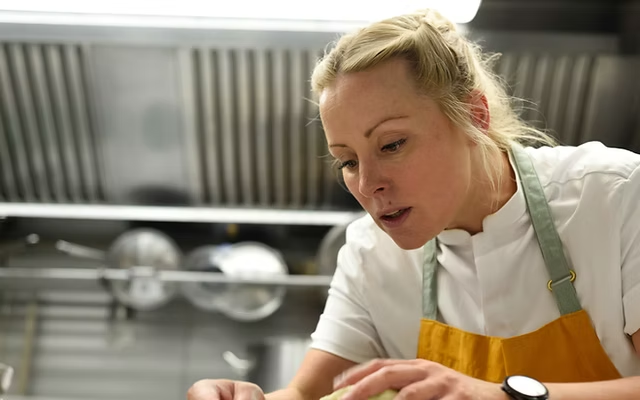
The atmosphere of a kitchen is a direct reflection of the chef who leads it. The leadership style of Anna Haugh is frequently noted for its balance of firm command and genuine compassion—a combination forged in the heat of some of the world’s most demanding brigades. She runs a tight, organized pass where standards are unequivocally high, echoing the discipline of her training. Mise en place must be perfect, tickets are followed with military precision, and every plate that leaves the kitchen must meet a unwavering benchmark. This rigor is not born of intimidation, but of a shared commitment to excellence that she both demands and models.
However, what distinguishes her approach is a conscious effort to foster a healthier, more sustainable kitchen culture. She is a vocal advocate for fair treatment, reasonable hours where possible, and active mentorship. Having navigated the often-toxic environments of the past, Anna Haugh is part of a new generation of chef-leaders intent on proving that exceptional results can be achieved without beratement or burnout. This focus on culture directly impacts retention, creativity, and the overall quality of the guest experience, as a respected, cohesive team performs at a higher level.
Key Takeaway: Haugh exemplifies a modern, progressive leadership model in the kitchen, combining uncompromising standards with a supportive and mentoring approach to cultivate a positive, sustainable, and high-performing team culture.
The Restaurant Realized: From Concept to Dining Experience
The ultimate expression of any chef’s vision is their own restaurant. For Anna Haugh, this milestone was the opening of her acclaimed London venture. This space is the physical manifestation of her entire career’s learnings: the food philosophy, the operational rigor, and the desired guest experience. The menu is a clear document of her style, showcasing seasonal British and Irish ingredients through a lens of refined European technique. Dishes are intelligent and balanced, offering complexity without contrivance, and a palpable sense of heart.
Beyond the plate, the restaurant experience reflects her personality. The dining room manages to feel both special and welcoming, avoiding chilly formality. This careful calibration—between high-end execution and relaxed warmth—is a hallmark of her brand. It demonstrates a sophisticated understanding of what modern diners seek: not just a transactional meal, but a memorable, human-centered occasion. The success of the restaurant stands as tangible proof that her synthesis of fierce discipline and genuine hospitality is a powerful and resonant formula in today’s competitive market.
James Haskell: Beyond the Pitch – A Deep Dive on Rugby, Transition & Modern Athletic Identity
Key Takeaway: Anna Haugh’s restaurant successfully translates her holistic culinary vision into a complete dining experience, marrying exemplary food with a warm, welcoming atmosphere that defines modern, approachable fine dining.
Mastering Butchery and Whole-Animal Utilization
A specific area where Anna Haugh’s expertise shines with particular brilliance is in butchery and whole-animal cookery. This skill is a cornerstone of both sustainable kitchen practice and true cost management, moving far beyond simply ordering pre-portioned cuts. For Haugh, butchery is a respectful craft, a process of understanding an animal’s anatomy to utilize every part with purpose and creativity. It represents a direct link to the ingredient, a hands-on knowledge that informs cooking times, methods, and flavor pairings for different muscles and offal.
Her proficiency here allows for incredible menu diversity and value. A single animal might yield a premier rib-eye for the center of the plate, while secondary cuts are transformed into rich braises, sausages, or stocks. Offal, when treated with skill, becomes a delicacy. This approach is a practical demonstration of her producer-led philosophy; it honors the work of the farmer and the life of the animal by ensuring nothing is wasted. It’s a practice that speaks to a deeper, more responsible culinary intelligence, one that aspiring chefs would do well to study.
Key Takeaway: Haugh’s advanced skill in butchery and whole-animal utilization is a critical pillar of her sustainable, cost-effective, and creatively rigorous kitchen practice, minimizing waste and maximizing flavor.
The Media Presence: Educating and Advocating Beyond the Pass
In the contemporary culinary world, a chef’s influence extends beyond their restaurant walls. Anna Haugh has effectively leveraged media platforms to amplify her voice as an educator and advocate. As a regular judge on professional cooking television, she brings a distinctly informed, fair, and constructive critique to the screen. Her feedback is rooted in tangible kitchen logic—discussing seasoning, technique, and time management—rather than manufactured drama. This has made her a trusted and authoritative figure for viewers.
Furthermore, she uses her platform to discuss broader industry issues, from mental health in kitchens to the importance of supporting local supply chains. This public role is a natural extension of her leadership philosophy. By demystifying professional cooking standards and advocating for positive change, Anna Haugh contributes to the evolution of the industry’s culture. Her media work is not separate from her identity as a chef; it is integral to her mission of educating the public and inspiring the next generation of culinary professionals.
Key Takeaway: Through television and media, Anna Haugh extends her role as a mentor and industry leader, providing expert, practice-based critique and advocating for a more sustainable and humane culinary profession.
Signature Dishes and Creative Process
Analyzing the creative process of a chef like Anna Haugh offers a window into how abstract philosophy becomes edible art. Her signature dishes are never mere assemblages of trendy ingredients; they are cohesive statements. The process often begins with a stellar primary ingredient—perhaps a line-caught sea bass or a bundle of heritage carrots. From there, she considers complement and contrast: texture, acidity, richness, and temperature. A delicate fish might be paired with a crisp skin, a beurre blanc sauce, and a sharp, pickled element to cut through the fat.
One could envision a dish that perfectly encapsulates her style: a perfectly cooked fillet of Irish beef, accompanied by a bone marrow sauce that speaks of classical French depth, alongside a gratin of celeriac and a vibrant parsley and shallot salad. It is a plate that is technically flawless, deeply flavorful, satisfying, and visually appealing without being overly fussy. It tells a story of place and skill, which is the ultimate goal of her creative endeavor.
Key Takeaway: Anna Haugh’s signature dishes exemplify her creative process, where a focus on a premium core ingredient is elevated through precise technique and thoughtful composition to create balanced, flavorful, and intelligent plates.
Supplier Relationships and the Farm-to-Pass Pipeline
For a chef whose cuisine is ingredient-led, the supply chain is not a backend logistics issue; it is the very source of inspiration. Anna Haugh invests significant time in cultivating direct relationships with suppliers. This means visiting farms, understanding cultivation practices, and building partnerships based on mutual respect and shared standards. These relationships ensure a consistent flow of the highest quality produce, but they also provide a narrative for the menu, allowing the restaurant to tell the story of its food from soil to plate.
This “farm-to-pass” pipeline is a critical competitive advantage and a core element of modern best practice. It allows for hyper-seasonality, incredible freshness, and supports a more ethical and sustainable food system. When a diner enjoys a dish by Anna Haugh, they are tasting not only her skill but the care of a specific farmer or fisher. This network transforms cooking from a solitary creative act into a collaborative celebration of the entire food ecosystem.
Key Takeaway: Haugh’s deep, direct relationships with artisanal suppliers form the essential foundation of her ingredient-led philosophy, ensuring quality, enabling seasonality, and embedding sustainability into her restaurant’s DNA.
Navigating Challenges: From Pandemic Recovery to Economic Shifts
The resilience of a chef is tested not in times of plenty, but in periods of crisis. The recent challenges faced by the hospitality industry, from global lockdowns to inflationary pressures, have been a brutal proving ground. Anna Haugh navigated these trials with a characteristic blend of pragmatism and adaptability. During enforced closures, engagement with her customer base remained crucial, whether through at-home meal kits that translated her style for domestic kitchens or transparent communication about the challenges faced.
The current economic climate, with rising costs for energy, ingredients, and labor, demands a new level of operational acumen. The response in kitchens led by chefs like Anna Haugh involves meticulous cost control, strategic menu engineering to maintain value without compromising quality, and a reinforced focus on the unique experiences that only a restaurant can provide. Navigating these hurdles successfully requires moving beyond pure culinary talent into the realms of business strategy and resilient leadership, skills she has demonstrably mastered.
Key Takeaway: Successfully steering a restaurant through modern economic and operational crises requires the adaptive, business-savvy leadership that Anna Haugh exemplifies, balancing culinary integrity with necessary financial and strategic pragmatism.
The Evolving Role of the Celebrity Chef
The concept of the “celebrity chef” has undergone a significant transformation, and figures like Anna Haugh are at the forefront of its redefinition. The archetype of the distant, deity-like figure has given way to a more accessible, expertise-driven model. Today’s influential chefs are expected to be multi-hyphenates: skilled operators, empathetic leaders, savvy businesspeople, and credible communicators. Haugh’s public persona aligns perfectly with this shift—she is celebrated for her demonstrable skill and ethical stance as much as for her television appearances.
This evolution is positive for the industry. It places a higher value on substance over spectacle and creates role models who represent a more holistic and sustainable career path. The authority of a modern chef like Anna Haugh is built on a foundation of verified accomplishment and respected opinion within the professional community, which then translates into public trust and influence. This model encourages a healthier, more knowledge-based public discourse around food.
Key Takeaway: Anna Haugh represents the modern evolution of the celebrity chef, where authority is earned through demonstrated expertise, ethical leadership, and professional accomplishment rather than manufactured celebrity alone.
Essential Techniques for Aspiring Chefs
For any aspiring chef looking to understand the pathway to a career like that of Anna Haugh, certain foundational techniques are non-negotiable. Mastery begins not with complex recipes, but with the relentless honing of basics. Knife skills are paramount—consistent, precise, and safe cutting affects cooking time, presentation, and professionalism. Sauce making, particularly the five French mother sauces and their derivatives, forms the flavorful backbone of much professional cuisine. Understanding heat control and the Maillard reaction—knowing when to sear, simmer, or poach—is the difference between a good dish and a great one.
Equally critical are the less glamorous but vital organizational disciplines: impeccable mise en place, flawless time management during service, and rigorous station organization. These are the skills that allow creativity to flourish under pressure. Aspiring professionals should also study seasonality and basic butchery. Developing these core competencies creates a versatile and resilient cook, capable of adapting to any kitchen environment and forming a solid foundation upon which a unique style, like that of Anna Haugh, can later be built.
Key Takeaway: Aspiring chefs should focus on mastering fundamental techniques—superior knife skills, sauce craft, heat control, and kitchen organization—as the essential groundwork for any successful long-term career, mirroring the rigorous training of chefs like Anna Haugh.
The Future of Fine Dining: Trends and Enduring Principles
The landscape of fine dining is in a constant state of flux, responding to cultural, economic, and environmental currents. Current trends point toward a continued relaxation of formality, a greater emphasis on ingredient provenance and plant-forward menus, and the integration of technology for reservations and personalized experiences. However, while the surface presentation evolves, the core principles exemplified by chefs like Anna Haugh remain timeless and will continue to define excellence.
These enduring principles include an unwavering commitment to technical mastery, a deep respect for ingredients, the importance of genuine hospitality over sterile service, and the ability to run a financially sustainable and ethically sound operation. The restaurants that will thrive are those that, like Haugh’s, skillfully adapt the trappings of the moment—perhaps a more casual setting or a focus on local foraging—while holding fast to these immutable pillars of quality. The future belongs to those who can balance innovation with integrity.
Key Takeaway: While dining trends evolve, the future of fine dining will be shaped by those, like Anna Haugh, who successfully adapt to new expectations while upholding the timeless pillars of technical skill, ingredient integrity, genuine hospitality, and operational sustainability.
A Culinary Case Study: Deconstructing a Signature Approach
To move from theory to practice, consider a real-world application of Anna Haugh’s philosophy. Imagine a supplier delivers a batch of exceptionally fresh, wild Scottish girolle mushrooms earlier than expected. A less prepared kitchen might struggle to integrate them spontaneously. In Haugh’s kitchen, the process is fluid. The mushrooms are immediately inspected and properly stored. The chef and team then brainstorm: their delicate, nutty flavor and firm texture could be a perfect complement for a poultry dish.
They might decide to feature them alongside a pan-roasted supreme of guinea fowl. The mushrooms would be quickly sautéed with shallots, thyme, and a splash of sherry vinegar to add brightness, finished with parsley. This becomes a garnish for the crispy-skinned fowl, which rests on a bed of creamy potato purée enriched with Irish butter. A simple jus made from the bird’s bones ties it together. This dish, created in response to a seasonal gift, is a perfect snapshot of her style: technically precise (perfectly cooked fowl, smooth purée), ingredient-led (the mushrooms dictate the dish’s direction), and deeply satisfying in its harmonies of texture and flavor.
Key Takeaway: This case study illustrates how Haugh’s producer-led philosophy and technical rigor work in practice, allowing her kitchen to creatively and seamlessly integrate exceptional seasonal ingredients into a cohesive, high-standard dish.
The Indispensable Toolkit: Equipment Philosophy
A chef’s relationship with their tools is deeply personal and professional. For a chef of Anna Haugh’s caliber, equipment is about reliability and precision, not gadgetry. The foundation is a set of high-quality, well-balanced chef’s knives, kept razor-sharp. A robust stand mixer and a precise digital probe thermometer are considered essentials for consistency in pastry and protein cookery. Heavy, conductive carbon steel or cast-iron pans are favored for their superior searing capabilities and heat retention.
Perhaps more revealing is the philosophy behind the tools: they are enablers, not crutches. Fancy sous-vide machines or molecular gastronomy kits are less emphasized than fundamentals that give the cook direct control. The focus is on equipment that performs a specific function flawlessly and durably, from a powerful immersion blender for perfectly smooth soups to reliable kitchen scales for baking accuracy. This practical, no-nonsense approach to kit ensures that skill, not technology, remains the primary driver of quality on the plate.
Key Takeaway: Anna Haugh’s approach to kitchen equipment prioritizes reliable, high-performance fundamentals that enhance a cook’s control and precision, reflecting a philosophy where craftsmanship, not technology, is paramount.
Sustainability as Standard Practice
In today’s culinary world, sustainability is transitioning from a buzzword to a baseline operational requirement. For Anna Haugh, these practices are woven into the daily fabric of the kitchen, driven by both ethical imperative and practical sense. This manifests in the comprehensive whole-animal butchery discussed earlier, which is a primary tenet of a sustainable kitchen. Vegetable trim is used for stocks, pickles, or compost. Menu planning is inherently seasonal and local, reducing food miles and supporting regional agriculture.
Furthermore, consider exploring her stance on seafood, which would advocate for following Marine Conservation Society guidelines to choose sustainable species. In the front of house, initiatives might include offering filtered still and sparkling water to cut bottled water waste and using digital systems to reduce paper. This holistic view recognizes that a restaurant’s environmental impact extends beyond the kitchen door. For Haugh, sustainability isn’t a marketing segment; it is simply the correct, responsible way to run a modern food business.
Key Takeaway: For Anna Haugh, sustainability is an integrated, non-negotiable aspect of professional kitchen management, encompassing sourcing, waste reduction, and operational efficiency as standard practice.
Balancing Tradition and Innovation on the Plate
One of the most delicate acts in modern cuisine is honoring tradition while pushing forward. Anna Haugh navigates this balance with intelligence and respect. She does not discard classic techniques; she understands they are the language of her craft. A silky hollandaise, a clear consommé, or a perfectly laminated pastry are testaments to this respect. These are the building blocks, the proven methods that guarantee certain results and connect today’s dining to a rich heritage.
Innovation enters in their application and combination. She might use a classic brown butter sauce (beurre noisette) but pair it with an unconventional vegetable or a globally inspired spice. A traditional terrine could be reinterpreted with modern textures or presented in a more approachable style. The innovation is evolutionary, not revolutionary. It is about using a deep understanding of the rules to know when and how to thoughtfully bend them, ensuring that novelty always serves flavor and never undermines the integrity of the core ingredient.
Key Takeaway: Haugh’s cuisine expertly balances tradition and innovation, using classical techniques as a reliable foundation from which to explore new applications, combinations, and presentations that feel both fresh and fundamentally sound.
Defining Culinary Excellence: A Nuanced Perspective
What constitutes true culinary excellence in the modern era? In the context of a chef like Anna Haugh, culinary excellence transcends a single perfect dish. It is a holistic standard encompassing technical mastery, ingredient integrity, creative vision, and operational harmony. It means every element on the plate has a purpose, flavors are in balance, and techniques are executed flawlessly. Beyond the food, it requires a dining experience that feels considered and genuine, led by a kitchen and front-of-house team that operates as a unified, respected unit. Ultimately, it is the consistent delivery of this complete package that defines a truly excellent restaurant in today’s discerning market.
Key Takeaway: Culinary excellence, as demonstrated by Anna Haugh, is a multi-faceted achievement combining flawless food, a cohesive guest experience, and a sustainably run operation.
The Psychology of Flavor and Menu Design
Menu creation is as much a psychological exercise as a culinary one. Anna Haugh approaches this task with a strategist’s mind. A well-designed menu tells a story, guides the diner on a journey, and maximizes kitchen efficiency. It considers balance across categories: textures (crisp, creamy, chewy), flavors (sweet, sour, salty, bitter, umami), and temperatures. A heavy, rich dish is followed by an option that is light and acidic. This variety caters to different diner preferences and prevents palate fatigue.
The structure also supports kitchen flow. Items are chosen and described to naturally steer choices toward dishes that can be executed consistently during a busy service. Descriptor language is carefully chosen to entice and inform without being overwrought. The psychology extends to pricing architecture and layout, subtly encouraging a satisfying progression through the meal. This behind-the-scenes work is critical to the restaurant’s success, ensuring that the culinary vision is communicated effectively and executed smoothly night after night.
Key Takeaway: Effective menu design, a skill Haugh masters, involves a strategic blend of culinary balance, narrative flow, and operational logistics to enhance the diner’s experience and ensure kitchen efficiency.
A Supporting Quote on Culinary Philosophy
A respected food critic and industry observer, known for their deep analysis of London’s dining scene, once offered a succinct insight that perfectly captures Haugh’s impact: “In an age of culinary noise, Anna Haugh’s food speaks with clear, confident eloquence. Her cooking reassures through its technical surety and delights through its intelligent generosity. She proves that substance, skill, and soul are the most compelling trends of all.” This quote underscores how her work is perceived: not as chasing fads, but as a steadfast commitment to the core values of the craft, executed at the highest level.
Key Takeaway: Critical analysis recognizes Anna Haugh’s contribution as a chef who prioritizes substance, skill, and authentic flavor over transient trends, establishing a lasting and respected presence.
Essential Elements of a Professional Kitchen Hierarchy
A clear, functional hierarchy is the skeleton of any successful professional kitchen. While titles can vary, the core structure and responsibilities are universal in establishments run to the standard of Anna Haugh. The following table outlines this classical brigade system, adapted for a modern, high-end restaurant.
| Role | Core Responsibilities | Critical Skills & Attributes |
|---|---|---|
| Head Chef/Proprietor | Ultimate creative, operational, and financial authority. Sets menu, standards, and culture. Manages suppliers and PR. | Visionary leadership, business acumen, deep culinary knowledge, resilience, and final accountability. |
| Executive/Sous Chef | Day-to-day kitchen commander. Directs service, manages the brigade, ensures consistency, and troubleshoots issues. | Exceptional organizational skills, calm under pressure, precise cooking ability, and strong interpersonal management. |
| Chef de Partie | Leads a specific section (e.g., sauce, fish, pastry). Responsible for all mise en place and output for that station. | Mastery of their section’s techniques, speed, consistency, and ability to lead a small team of commis. |
| Commis Chef | Junior chef assigned to a section. Performs preparatory tasks and learns station operations under a Chef de Partie. | Willingness to learn, stamina, attention to detail, and foundational knife and cooking skills. |
| Kitchen Porter | Maintains cleanliness, washes dishes, handles basic vegetable prep, and supports the flow of service. | Reliability, speed, and a vital understanding that their role is crucial to the entire kitchen’s operation. |
Key Takeaway: A clear, disciplined kitchen hierarchy with defined roles and responsibilities is essential for the smooth operation, consistency, and excellence expected in a restaurant led by a chef like Anna Haugh.
The Path Forward: Continuing Evolution and Influence
The journey of Anna Haugh is far from static. Like all true artists of the kitchen, she continues to evolve. Future directions may involve deeper exploration of specific regional Irish ingredients on a global stage, further advocacy for industry-wide reform regarding work culture, or perhaps the development of new culinary ventures that explore different aspects of her philosophy. Her influence is already evident in the chefs she has trained and the public conversation she helps to shape.
For the industry, her path offers a compelling blueprint. It demonstrates that a career built on rigorous skill, ethical practice, and authentic expression can achieve both critical acclaim and commercial viability. As the next generation of chefs looks for models, the comprehensive, integrity-driven approach of Anna Haugh will undoubtedly remain a powerful and inspiring reference point.
Key Takeaway: Anna Haugh’s ongoing evolution and broad influence provide a sustainable and integrity-focused blueprint for success in the modern culinary world.
Actionable Checklist for Culinary Professionalism
Before concluding, here is a concise checklist summarizing key principles inspired by the career of Anna Haugh, useful for any culinary professional seeking to elevate their craft:
- Master the Fundamentals: Dedicate time daily to perfecting knife skills, mother sauces, and heat control.
- Know Your Source: Build direct relationships with suppliers and understand the provenance of your key ingredients.
- Lead with Respect: Foster a kitchen culture of high standards, clear communication, and mutual respect.
- Embrace the Whole: Practice whole-animal butchery and root-to-stem cooking to minimize waste and maximize creativity.
- Balance Tradition & Innovation: Use classical technique as your foundation for thoughtful, flavor-driven creativity.
- Design with Intention: Craft menus that balance flavor, texture, and operational flow.
- Prioritize Sustainability: Integrate environmental and ethical considerations into every operational decision.
- Communicate Your Craft: Whether to guests or staff, articulate the why behind your food with clarity and passion.
Conclusion: The Enduring Impact of a Chef’s Craft
The story of Anna Haugh is more than a chronicle of personal achievement; it is a testament to the enduring power of craft, character, and clarity of vision in the culinary arts. From the solid grounding of Dublin to the polished heights of London, her career arc illustrates that lasting success is built on a foundation of uncompromising skill, a profound dialogue with ingredients, and the strength to lead with both authority and empathy. In a world of constant change and noise, her work stands as a reminder that the core principles of good cooking—respect for the product, mastery of technique, and generosity of spirit—are timeless. Anna Haugh has not just built a restaurant; she has built a standard, one that will continue to inspire and influence the table for years to come.
Frequently Asked Questions (FAQ)
What is Anna Haugh best known for in the culinary world?
Anna Haugh is best known as a highly skilled chef and restaurateur celebrated for her modern European cuisine with Irish influences. She gained significant experience in Gordon Ramsay’s Michelin-starred kitchens before opening her own acclaimed London restaurant. She is also recognized as a fair and knowledgeable television judge and an advocate for sustainable practices and positive kitchen culture.
Where did Anna Haugh train to become a chef?
Anna Haugh began her formal culinary training in Dublin before moving to London to advance her career. Her most formative professional training occurred during her tenure in the kitchens of Gordon Ramsay, where she rose to the position of Senior Sous Chef at Gordon Ramsay at Claridge’s, honing her skills in a demanding, precision-focused Michelin-starred environment.
What style of cuisine does Anna Haugh specialize in?
The cuisine of Anna Haugh is best described as modern European with a distinct Irish heart. It combines classical French technique with a robust, ingredient-focused sensibility inspired by Irish culinary traditions. Her food is producer-led, seasonal, and emphasizes clear, satisfying flavors and impeccable technical execution.
Has Anna Haugh received any major awards or recognition?
While specific awards evolve, Anna Haugh has received consistent critical acclaim for her restaurant, which has been recognized by major culinary guides and publications. Her reputation is built on sustained excellence, her respected media presence as a television judge, and her influence as a leader advocating for higher standards within the hospitality industry.
What is Anna Haugh’s approach to leadership in the kitchen?
Anna Haugh promotes a leadership style that balances firm, high standards with compassion and mentorship. Having experienced intense kitchen environments, she focuses on creating a respectful, supportive, and sustainable culture for her team. This approach emphasizes clear communication, professional development, and a shared commitment to excellence, aiming to prove that top-quality results can be achieved without a toxic work atmosphere.
About the Author