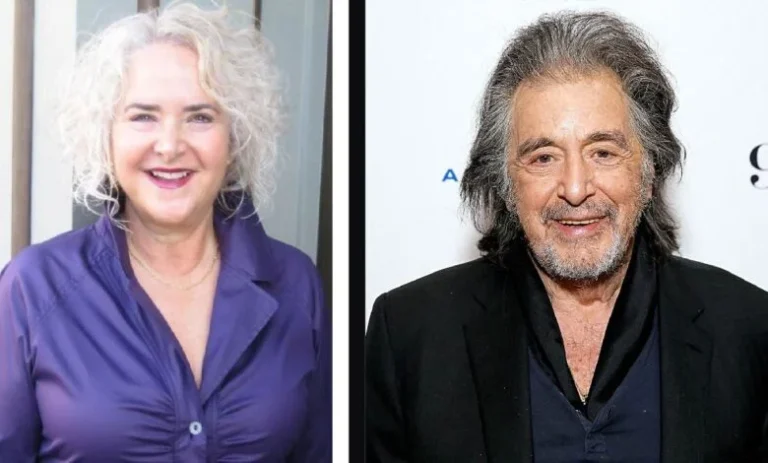
Harlene Rosen was a brilliant, ambitious, and fiercely independent woman who crossed paths with a young man on the cusp of becoming an icon. Their brief, tumultuous relationship and its even more tumultuous ending became a foundational stone in the Dylan mythology, a source of early scandal, lyrical fodder, and a public narrative that she had to live with for decades. Her life is a window into a specific time and place—the late 1950s Beatnik scene, the early folk revival in New York—and a poignant case study of what it meant to be a modern woman whose own identity was suddenly, and permanently, overshadowed by that of her famous ex-partner. This is not just the story of a muse; it is the story of a person who had to forge her own path in the long shadow of a giant, a woman of substance who was, for a time, famously known as the woman Bob Dylan allegedly “left for dead.”
Who Was Harlene Rosen Before Bob Dylan?
Long before she was ever associated with the name Dylan, Harlene Rosen was a bright young Jewish woman from Queens, New York, with a sharp mind and a passion for the arts. Born in 1941, she grew up in a post-war America that was beginning to simmer with new cultural and intellectual currents. She was a student at Herzliah Hebrew Teachers’ Academy, a private Jewish high school, where she was known for her intelligence and strong will. Her world was one of books, ideas, and the burgeoning coffeehouse culture that was beginning to take root in Greenwich Village.
It was in this vibrant, intellectually charged atmosphere that a young Robert Zimmerman, not yet Bob Dylan, entered her life. The exact details of their meeting are lost to time, but by the late 1950s, they were a couple. Dylan, then a student at the University of Minnesota, would visit New York and stay with the Rosen family. Harlene was not just a girlfriend; she was an early intellectual companion. She was immersed in a world that Dylan desperately wanted to be part of—the world of Beat poetry, folk music, and serious artistic pursuit. She was, by all accounts, his superior in both education and worldly sophistication at the time, a fact that likely both attracted him and created a underlying tension.
Their relationship was a product of its time—intense, youthful, and built on a shared, if nascent, artistic sensibility. Harlene was a participant in the scene, not just an observer. She was present at the formative moments of Dylan’s early New York life, a witness to his self-creation from Robert Zimmerman into the persona that would captivate the world. She represented a connection to a stable, intellectual, and culturally Jewish world that Dylan would both draw from and, eventually, feel the need to escape.
The Intellectual and Cultural Milieu of a Young Muse
To understand Harlene Rosen’s role, one must picture the New York of 1959-1960. It was the tail end of the Beat Generation, and the folk revival was picking up steam. Coffeehouses like the Gaslight Cafe and Gerde’s Folk City were the epicenters of this new wave. This was a world that valued authenticity, raw talent, and a certain rebellious intellectualism. Harlene fit perfectly into this scene. She was not a passive bystander; she was an engaged young woman with her own ambitions, which at the time were leaning toward law.
Her relationship with Dylan was forged in this crucible of art and ideas. They were two young people, both from Midwestern Jewish backgrounds, trying to find their place in a city that promised everything. She provided a anchor, however temporary, for the peripatetic Dylan. He would later write in his memoir, “Chronicles: Volume One,” about the comfort and stability he found with her family, a stark contrast to his own nomadic existence. This period was the calm before the storm, a time when Dylan was still assembling the pieces of his identity, and Harlene Rosen was a central part of that puzzle. Her influence was not in writing his songs for him, but in being part of the environment that shaped the songwriter he was becoming.
The Short-Lived Marriage and Its Explosive End
In the whirlwind of their young romance, Bob Dylan and Harlene Rosen made a commitment that would prove to be far more fragile than either could have imagined. In the spring of 1961, the exact date is uncertain, the two were married in a small, private Jewish ceremony. The marriage was not a public affair; it was a secret kept from the burgeoning folk scene and, more importantly, from the music industry that was just beginning to take notice of the young troubadour. Dylan’s early manager, Albert Grossman, was reportedly furious when he found out, believing that a married man was a less marketable commodity than a freewheeling, romantic vagabond.
The marriage itself was brief, lasting less than two years. It was a period of immense change and pressure for Dylan. He was recording his first album, “Bob Dylan,” and his star was rising rapidly. The quiet domesticity he had once sought with Harlene now clashed with the demands of his career, his growing ego, and his relentless creative drive. The relationship, once a source of stability, became a cage. The intellectual equality that had initially drawn them together may have devolved into competition and resentment as Dylan’s fame began to eclipse Harlene’s own identity and aspirations.
The end of the marriage was not a quiet separation. It was dramatic, messy, and would become the stuff of music industry infamy. The relationship finally shattered in the winter of 1962-1963. The precise catalyst is unknown, but the aftermath was brutally public.
The “Left for Dead” Postcard That Shaped a Legend
In the aftermath of their split, a deeply hurt and angry Harlene Rosen did something that would forever cement her place in Dylan lore: she sent a postcard to Dylan’s friends and associates in the folk music scene. The content of this postcard is legendary. It reportedly detailed a physical altercation with Dylan and contained the unforgettable, dramatic phrase that he had “left her for dead.”
This was not a private phone call or a personal letter; it was a public shaming, a shot across the bow in the burgeoning world of celebrity gossip. The postcard scandalized the tight-knit folk community. It was a stark contradiction to the sensitive, politically conscious image Dylan was cultivating. For the first time, but certainly not the last, the private man was revealed to be at odds with the public persona. The incident provided a tantalizing, dark glimpse into his personal life and added a layer of dangerous, unpredictable complexity to his myth. For Harlene, it was an act of reclaiming her voice, a way of saying, “I will not disappear quietly.” It was a declaration of her pain and a attempt to hold him accountable in the only forum available to her at the time.
The Immortalization in Song and Sleeve Notes
The end of a relationship is often a private matter, but when your ex-husband is Bob Dylan, it becomes public property, filtered through the lens of his art. Harlene Rosen did not vanish from Dylan’s life after their divorce; she was immortalized in his work, though rarely by her real name. The most direct and famous reference comes not from a song, but from the liner notes of his second album, “The Freewheelin’ Bob Dylan,” released in 1963. In a stream-of-consciousness prose piece, Dylan writes: “I, too, wearied of the chase & wanted only to settle down to a life of quiet contemplation… an’ then I met this woman who sure was fine an’ she said she’d marry me an’ always be mine… but then she went her way alone an’ I went mine… an’ now I’m back on the road again.”
While he doesn’t name her, the context makes it clear he is referring to his marriage to Harlene. The tone is dismissive and self-mythologizing, casting himself as the restless artist who cannot be tied down. It was a public airing of their private grief, a narrative that served his burgeoning legend as the lone, wandering troubadour. This act of transforming a real, complex relationship into a simple plot point in his own story was a power move, one that set a precedent for how he would handle personal material for the rest of his career.
But the most significant artistic legacy of Harlene Rosen is her name—or a version of it. In his early years, Dylan often used the pseudonym “Tedham Porterhouse.” More famously, he took the name “Harlene” and transformed it.
From Harlene to Hattie: A Name’s Poetic Journey
The most poignant and powerful transformation of Harlene Rosen’s identity came in one of Dylan’s most celebrated protest songs, “The Lonesome Death of Hattie Carroll.” The song, a masterful and devastating account of the real-life murder of a Black barmaid, Hattie Carroll, by a wealthy white socialite, William Zantzinger, uses a name strikingly similar to Harlene’s. The connection is almost certainly not coincidental.
Dylan has always been a master of symbolism and personal allusion. By changing “Harlene” to “Hattie,” he was performing an act of artistic alchemy. He was taking the name of a woman he knew intimately—a woman with whom he had a painful, real-world conflict—and attaching it to a story of profound social injustice. It’s as if he was sublimating his own personal guilt and drama into a larger, more universal narrative about race, class, and violence. The name “Hattie Carroll” is now forever associated with a tragic real-world event and a landmark piece of protest music, but its phonetic root lies with Harlene Rosen. It is a permanent, if deeply obscured, monument to her in his work, a testament to the lingering power she held in his imagination, even as he moved on.
The Unseen Battle: Understanding Tim Montgomerie’s Health Problems and His Journey
Life After Dylan: Forging a New Identity
In the wake of the divorce and the very public fallout, Harlene Rosen did what she had always intended to do: she built a life of her own. She did not retreat into obscurity but instead pursued her intellectual ambitions with vigor. She earned a law degree and built a successful career as an attorney, specializing in entertainment law—a field that, perhaps ironically, placed her in the same orbit as the music industry that had once defined her public identity. She became Harlene Rosen, J.D., a professional woman with her own expertise and reputation, entirely separate from her past.
She eventually remarried, becoming Harlene Weiner, and continued to live a private life. By all accounts, she was a respected and capable professional who carved out her own space in the world. This act of self-creation is the most crucial part of her story. It is a narrative of reclamation. She refused to be forever defined by a two-year marriage that ended in her early twenties. She moved from being the object of a story—the spurned wife, the muse, the victim—to being the subject of her own life: a lawyer, a wife, an individual.
The Struggle for a Private Life in a Public Shadow
Despite her best efforts, the specter of her past would occasionally resurface. As Bob Dylan’s fame grew into a global phenomenon, journalists and biographers would inevitably track her down. She gave very few interviews, and when she did, her tone was often a mixture of weariness, wit, and a sharp defensiveness. She was keenly aware that people were only interested in her because of her connection to Dylan, and she resisted being reduced to that single dimension of her life.
In one of her most famous quotes, she displayed this sharp wit. When asked about Dylan’s 1975 album “Blood on the Tracks,” widely considered one of the great breakup albums of all time, she reportedly quipped, “He sure knows how to hurt a girl.” This comment is revealing. It acknowledges the past and the pain, but does so with a level of sophistication and distance. It shows that she understood the game—that her personal history had become fuel for his art, a narrative she could comment on but not control. Her life after Dylan was a continuous negotiation between her hard-won private self and the relentless public curiosity about a chapter she had long since closed.
The Lasting Legacy of Harlene Rosen
The story of Harlene Rosen is far more than a piece of Bob Dylan trivia. It is a narrative that touches on themes of authorship, identity, and the often-unseen power dynamics between artists and their muses. In the traditional muse narrative, the woman is a passive source of inspiration, a beautiful object who exists to spark genius in the (usually male) artist. Harlene Rosen’s story shatters this trope. She was an active, intelligent participant who, when wronged, fought back publicly. She was a muse who talked back, who refused to be a silent symbol.
Her experience also provides an early blueprint for the modern phenomenon of celebrity breakup culture. The “left for dead” postcard was a precursor to today’s social media call-outs and public dissections of famous relationships. She demonstrated, decades before Twitter, that a private individual could use the tools of public communication to challenge a powerful narrative being constructed by a rising star. Her actions forced the folk music world to confront the fact that their new hero was a complex and flawed human being, a tension that has followed Dylan throughout his career.
Furthermore, her life serves as an important case study in the resilience required to build an identity in the shadow of fame. She represents countless women throughout history whose own stories have been swallowed by the legends of the famous men they were associated with. Her success as Harlene Weiner, attorney, is a quiet triumph of substance over spectacle, of a life lived on one’s own terms.
Harlene Rosen in the Context of Feminism and Muse Culture
Examining the story of Harlene Rosen through a feminist lens reveals its deeper significance. The 1960s, the decade in which her story unfolded, was a period of massive upheaval in gender roles. The idealized, suburban housewife of the 1950s was being challenged by a new wave of feminist thought that demanded equality, autonomy, and a voice. Harlene, with her legal ambitions and her refusal to be a silent, long-suffering wife, was very much a woman of this new wave.
Her conflict with Dylan can be seen as a clash between an old paradigm and a new one. Dylan, in crafting his persona, often drew upon archetypes of the wandering, independent man, free from domestic ties—a figure straight out of Woody Guthrie or Beat literature. Harlene, however, was not content to be the woman waiting at home. She had her own dreams and, when the relationship failed, her own voice. The “muse” in this story was not a passive beauty but a modern woman with a will of her own, a fact that ultimately made the traditional muse-artist relationship impossible to sustain. Her legacy is a testament to the fact that real people are always more complicated than the roles we assign them in our stories and our songs.
A Comparative Look at Dylan’s Muses
Harlene Rosen was the first in a long line of women who would be romantically linked to Bob Dylan and immortalized in his music. However, her experience was unique. Unlike Suze Rotolo, the woman frozen in time on the cover of “The Freewheelin’ Bob Dylan,” who maintained a dignified silence for decades, or Joan Baez, whose own fame gave her a platform to tell her side of the story, Harlene was in a more vulnerable position. She was the secret first wife, and her connection to Dylan was severed just as he was becoming famous, leaving her outside the inner circle but permanently tethered to his history.
The table below offers a brief comparison of these key figures:
| Muse | Relationship to Dylan | Artistic Legacy / Depiction |
|---|---|---|
| Harlene Rosen | First wife (1961-1962) | Liner notes in “Freewheelin'”; the name “Hattie Carroll”; the “left for dead” postcard scandal. |
| Suze Rotolo | Girlfriend (1961-1964) | The iconic cover of “The Freewheelin’ Bob Dylan”; inspiration for songs like “Don’t Think Twice, It’s Alright” and “Boots of Spanish Leather.” |
| Joan Baez | Romantic partner and musical collaborator (1963-1965) | Depicted as the “queen” in “Visions of Johanna”; their relationship and its dissolution is a central part of the documentary “Dont Look Back.” |
| Sara Lownds | First public wife (1965-1977) | The central subject of the album “Blood on the Tracks”; songs like “Sad-Eyed Lady of the Lowlands” and “Sara” are directly about her. |
What sets Harlene Rosen apart is the raw, unmediated nature of her response. She didn’t have a career in the arts to protect or a public profile to maintain. Her reaction—the angry, public postcard—was that of a private individual who felt she had been grievously wronged and had no other recourse. This gives her story a unique, unfiltered power that is absent from the more polished narratives surrounding Dylan’s other relationships.
The Enduring Mystery and Cultural Fascination
Why does the story of a two-year marriage from over sixty years ago still captivate us? Part of it is the eternal allure of the “what if.” What if Dylan had stayed with Harlene Rosen? Would his career have taken a different path? Would the restless, ever-changing artist have been tempered by domesticity? These are unanswerable questions, but they speak to the foundational nature of this relationship in the Dylan mythos.
More importantly, the story of Harlene Rosen endures because it is a fundamentally human story. It is a story of young love, ambition, betrayal, and resilience. It is about the collision between personal life and public persona, and the struggle of an individual to be seen for who they are, rather than for who they were once married to. As one cultural critic aptly put it:
“The muses are never just muses. They are people with their own stories, and sometimes their stories are about what happens when the music stops and the real world begins.”
Harlene Rosen’s life is a powerful embodiment of this truth. She was a footnote who became a symbol, a muse who became a successful professional, and a name from the past that continues to remind us of the complex, often painful, human realities that lie behind the art we cherish.
Frequently Asked Questions About Harlene Rosen
What was the nature of Harlene Rosen’s relationship with Bob Dylan?
Harlene Rosen was Bob Dylan’s first serious girlfriend and later his first wife. They met as teenagers in the late 1950s in New York. Their relationship was intense and intellectual, rooted in the shared Beatnik and folk culture of Greenwich Village. They married in a small, secret ceremony in 1961, but the marriage was short-lived, lasting less than two years as Dylan’s fame began to skyrocket and the pressures mounted.
What exactly happened with the “left for dead” postcard?
Following their tumultuous split in late 1962 or early 1963, a deeply hurt and angry Harlene Rosen sent a postcard to several of Dylan’s friends and associates in the folk music scene. This postcard detailed a physical altercation and famously accused Dylan of having “left her for dead.” This public airing of their private drama caused a significant scandal in the folk community and created one of the first major cracks in Dylan’s carefully constructed public image.
How did Bob Dylan immortalize Harlene Rosen in his work?
Dylan referenced his marriage to Harlene Rosen indirectly in the liner notes of his 1963 album “The Freewheelin’ Bob Dylan,” where he wrote wearily of settling down and then a woman leaving him. The most significant artistic legacy is the transformation of her name. It is widely believed that Dylan adapted “Harlene” to “Hattie” for his profound protest song “The Lonesome Death of Hattie Carroll,” thus sublimating his personal history into a larger social commentary.
What did Harlene Rosen do after her divorce from Dylan?
Harlene Rosen powerfully moved on with her life. She earned a law degree and built a successful and respected career as an entertainment attorney. She remarried, becoming Harlene Weiner, and maintained a private life. She largely avoided the spotlight and refused to be defined solely by her brief marriage to Dylan, establishing her own identity as a professional and an individual.
Why is Harlene Rosen an important figure in music history?
Harlene Rosen is important because her story challenges the traditional, passive role of the artist’s muse. She was an active, intelligent participant who fought back publicly when she felt wronged. Her experience provides an early look at celebrity breakup culture and the power dynamics between a famous artist and the real people in their life. Her life after Dylan is a testament to resilience and the pursuit of one’s own identity outside of a famous ex-partner’s shadow.
Conclusion
The narrative of Harlene Rosen is a compelling tapestry woven from threads of young love, artistic ambition, personal betrayal, and, ultimately, profound self-reclamation. She was far more than just “Bob Dylan’s first wife”; she was a sharp, ambitious woman who found herself caught in the whirlwind of a cultural phenomenon she helped nurture in its earliest days. Her story forces us to look beyond the mythologized figures of art and music and remember the real, complex individuals whose lives are intertwined with, and sometimes fractured by, genius. Harlene Rosen refused to be a silent footnote. Through her public defiance and her subsequent, successful private life, she wrote her own ending, proving that the most powerful legacy is not always found in a famous song, but in the quiet dignity of a life lived on one’s own terms. Her journey from a name in a liner note to a accomplished attorney is the real, untold ballad of Harlene Rosen, a story of enduring human spirit that continues to resonate long after the music fades.
About the Author