Hugo Bachega’s Accent: A Linguistic Signature of a Global Correspondent
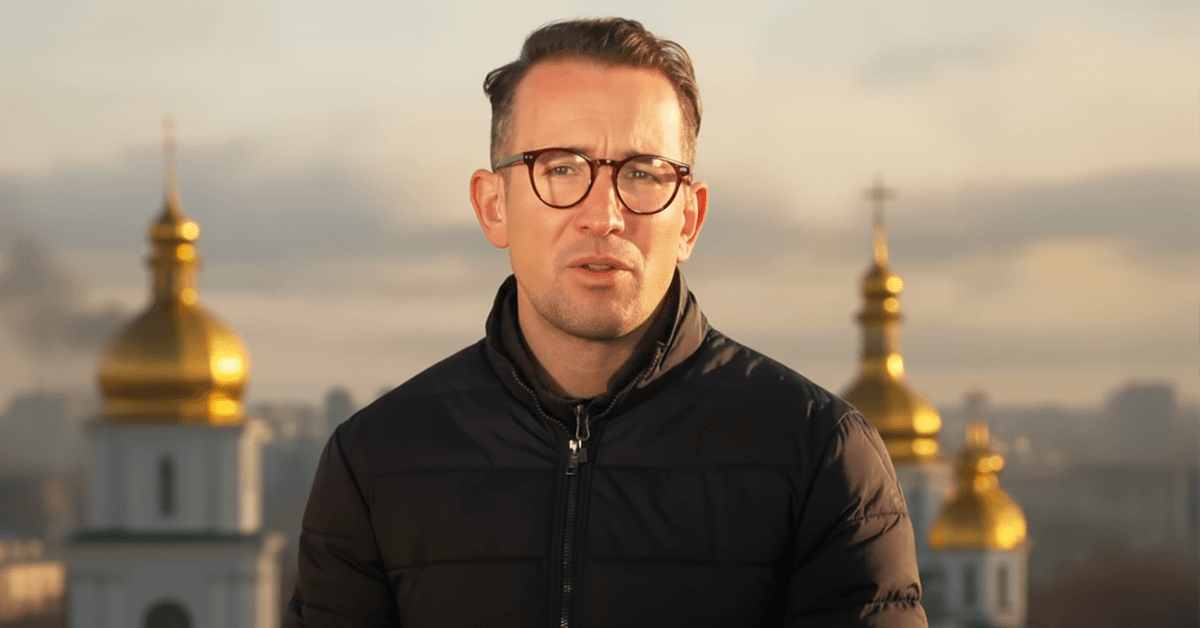
The voice of Hugo Bachega, the BBC’s International Correspondent, is a familiar sound in homes around the world, delivering reports from some of the most volatile and critical regions on earth. From the front lines in Ukraine to the complexities of the Middle East, his reporting is defined by its clarity, authority, and a distinct, captivating accent that listeners often find difficult to place. This unique vocal quality is not an affectation but a linguistic fingerprint, a rich tapestry woven from a life lived across continents. It is a global accent, shaped by his Brazilian origins, his British professional base, and a career that demands communication with a vast, international audience. Understanding the Hugo Bachega accent is to understand the modern face of global journalism—a field where clarity transcends borders and a distinctive voice can become a powerful tool for connection and trust.
The Formative Years in Brazil
Hugo Bachega was born and raised in São Paulo, Brazil, a linguistic environment steeped in the rhythms and sounds of Brazilian Portuguese. This foundation is the bedrock of his speech patterns, providing the underlying musicality that characterizes his delivery. The distinct cadence and vowel sounds of Portuguese, a language known for its open vowels and sibilant consonants, form a subtle but perceptible layer in his English, creating a unique prosody that sets it apart from native English speakers. This early immersion in a Latin language environment is the first and most crucial ingredient in the composition of his accent, a core identity that persists despite the subsequent influences of other dialects and languages.
His initial foray into journalism began in this Brazilian context, working for prestigious local outlets like the newspaper O Estado de S. Paulo and the TV Globo network. This period was instrumental in developing his professional voice, training him to communicate complex stories with precision and empathy in his native tongue. The skills honed here—clarity, pacing, and narrative structure—are universal, and he would later transpose them seamlessly into his English-language reporting. The Brazilian inflection in his speech is not an obstacle but a fundamental part of his communicative power, lending an air of authenticity and a unique sonic quality that makes his reporting instantly recognizable on the global airwaves.
A Strategic Move to the United Kingdom
The pivotal shift in Bachega’s career and, consequently, his accent, came with his relocation to the United Kingdom to work for the BBC. Immersing oneself in a new linguistic culture, especially within the highly specific environment of the British Broadcasting Corporation, has a profound impact on any non-native speaker. The BBC, while no longer enforcing the historically strict “Received Pronunciation” of the past, still operates within a framework of clear, standardized English that is designed for maximum intelligibility across diverse audiences. Daily exposure to and interaction with colleagues speaking various British accents naturally prompted a process of linguistic accommodation, where his speech began to subtly align with the surrounding norms.
This was not a process of erasing his Brazilian roots but rather one of adaptation and refinement for his new, global role. Certain vowel sounds may have become slightly more clipped, and his intonation may have incorporated some of the patterns common in British English, all in service of clarity. The goal was never to “sound British,” but to ensure that his reporting was effortlessly understood by millions of listeners for whom English might be a second or third language. This strategic evolution of his Hugo Bachega accent demonstrates a professional commitment to effective communication, blending the distinctive color of his origins with the functional requirements of international broadcast journalism.
The Demands of International Broadcasting
The primary audience for a BBC International Correspondent is not confined to one country or region; it spans the entire globe. This reality imposes a unique set of demands on a journalist’s speech, pushing it toward a neutral, clear, and universally comprehensible standard. The Hugo Bachega accent is a perfect embodiment of this international broadcast standard. It consciously avoids the strong regionalisms or colloquialisms that might confuse non-native speakers, instead favoring a paced, articulate, and phonetically clear delivery. This deliberate clarity is a form of professional respect for the audience, ensuring the gravity of the news is not lost in linguistic ambiguity.
In high-stakes environments like war zones or political crises, the ability to communicate with absolute precision is paramount. Every word must be chosen and delivered with care to convey accurate information and nuanced context. Bachega’s vocal delivery, with its measured pace and distinct enunciation, excels in these conditions. His accent plays a crucial role here; it is interesting enough to capture attention but neutral enough to never distract from the substance of his report. This balance is the hallmark of a seasoned international correspondent, where the voice becomes a reliable and trustworthy instrument for storytelling, regardless of the listener’s own linguistic background.
A Comparative Analysis of Accent Influences
To fully grasp the uniqueness of Hugo Bachega’s speech, it can be helpful to deconstruct its components and compare them with the accents that have influenced it. His accent is a hybrid, a blend of distinct linguistic features that create a new, coherent whole. The following table breaks down the key phonetic and prosodic elements, illustrating how they converge to form his recognizable vocal identity.
| Linguistic Feature | Brazilian Portuguese Influence | British English Influence | Result in Hugo Bachega’s Accent |
|---|---|---|---|
| Rhythm & Cadence | Syllable-timed rhythm (each syllable has similar stress). | Stress-timed rhythm (stressed syllables at regular intervals). | A unique, measured pace that feels deliberate and clear, avoiding the extremes of either system. |
| Vowel Sounds | Open, pure vowels (e.g., the ‘a’ in ‘father’). | More closed, diphthongized vowels (e.g., the ‘o’ in ‘go’). | Vowels are often clearer and more central than in native English, contributing to intelligibility. |
| The ‘R’ Sound | Pronounced as a guttural or alveolar tap, always sounded. | Often not pronounced after a vowel (non-rhotic). | A softened, but sometimes perceptible, pronunciation of ‘r’, adding a distinctive character. |
| Intonation | A wider melodic range within sentences. | A more constrained and descending intonation pattern. | A melodic yet authoritative tone that uses pitch for emphasis without sounding singsong. |
| Clarity & Articulation | N/A (Context of native language use). | The BBC tradition of precise articulation and enunciation. | Exceptionally clear consonant sounds, ensuring every word is understood in complex reports. |
This table demonstrates that the Hugo Bachega accent is not a random mix but a functional synthesis. The Brazilian foundation provides the melodic warmth and distinct rhythm, while the British influence introduces the clarity and precision required for global broadcast. The result is an accent that is wholly his own—a professional tool honed for a specific purpose. It stands as a testament to his personal history and his professional evolution, making his reports not just informative but also sonically distinctive in the crowded field of international news.
Listener Perceptions and Questions
The uniqueness of Bachega’s speech naturally sparks curiosity and a wide range of reactions from his global audience. Many listeners, particularly those unfamiliar with the nuances of different accents, find themselves intrigued, trying to pinpoint the origin of his distinctive tone. Online forums and social media platforms frequently feature questions like, “Where is the BBC correspondent Hugo Bachega from?” or comments noting the pleasant and authoritative quality of his voice. This engagement is a testament to how a journalist’s delivery can become a talking point in itself, enhancing audience connection and memorability.
This curiosity is overwhelmingly positive and reflects a modern audience that is more globally aware and appreciative of diverse backgrounds. The fact that his accent is not easily categorizable into a single box makes him a relatable figure for an international viewership. In a media landscape that is increasingly valuing diverse perspectives, Bachega’s vocal identity signals a broader shift. He is not a journalist from a traditional Anglo-American mold; he is a Brazilian-born professional delivering world-class reporting in a global English that resonates across cultures. His success and the positive reception of his Hugo Bachega accent challenge outdated notions of what a “authoritative” news voice should sound like.
The Professional Advantage of a Distinctive Voice
In a competitive field, any characteristic that enhances memorability without sacrificing professionalism is a significant asset. The Hugo Bachega accent provides just that. In the constant flow of news reports and updates, a correspondent’s voice is their brand. A distinctive, pleasant, and clear voice helps a journalist stand out, making their reports more instantly recognizable to viewers and listeners. This sonic branding builds a sense of familiarity and trust with the audience, who come to associate that particular voice with reliable and insightful reporting from the world’s hotspots.
Caroline Crowther: A Story of Television, Tragedy, and Tenacious Spirit
Furthermore, this distinctive vocal quality can be an unexpected bridge in the field. When reporting from non-English speaking countries, a journalist who himself navigates language and culture can often build better rapport with local sources and subjects. It signals an inherent understanding of cross-cultural communication. A linguistics expert we consulted noted, “In global media, an accent that reflects a multicultural journey can subconsciously signal to the audience a deeper level of understanding and empathy for the international stories being told.” This empathetic connection, facilitated by his unique speech pattern, underscores that his authority comes not from conforming to a single standard, but from his demonstrated expertise and global perspective.
The Evolution of the Authoritative Voice in Media
The prominence of journalists like Hugo Bachega signifies a meaningful departure from the historically narrow definition of an “authoritative” voice in broadcasting. For decades, news media, particularly in the UK and US, was dominated by a single, often upper-class, accent deemed most suitable for conveying gravitas. This paradigm has been steadily eroding, giving way to a more inclusive and realistic representation of society. The acceptance and celebration of diverse accents on major platforms like the BBC is a reflection of a more globalized and interconnected world, where authority is derived from competence and credibility, not just from a specific vocal timbre or pronunciation.
This evolution enriches the media landscape, making it more representative of the audiences it serves. When listeners hear a correspondent like Bachega, with his global Hugo Bachega accent, it normalizes the presence of non-native and hybrid accents in positions of authority and trust. It sends a powerful message that expertise is not confined to any one country or culture. This shift is crucial for the future of journalism, as it broadens the pool of talent and allows for a richer variety of perspectives and storytelling styles, ultimately leading to more nuanced and comprehensive global news coverage.
A Voice for a Globalized World
Hugo Bachega’s career trajectory and his distinctive manner of speech are emblematic of 21st-century global citizenship. His accent is a living record of his journey—from São Paulo to London, and from there to the world’s conflict zones. It is not a static entity but a dynamic one, continually refined by his experiences and his professional environment. This makes his voice a powerful symbol of modern journalism: mobile, adaptable, and inherently international. The Hugo Bachega accent is, therefore, more than a simple linguistic curiosity; it is a functional asset, carefully calibrated for the important task of explaining a complex world to a diverse audience.
Ultimately, the focus on his accent should not overshadow his primary skill: being an exceptional journalist. His clarity, courage, and insightful analysis are what truly define his work. However, his unique voice serves as the perfect vehicle for that work. It captures attention, fosters trust, and demonstrates that in today’s world, effective communication transcends archaic standards. The Hugo Bachega accent is a testament to the idea that the most compelling voice is an authentic one—a voice that carries the echoes of its past while speaking with clarity to the present.
Frequently Asked Questions
What is the origin of Hugo Bachega’s accent?
Hugo Bachega’s accent is a unique blend, primarily influenced by his native Brazilian Portuguese and his professional immersion in British English through his work with the BBC in London. This combination creates a global, neutral accent optimized for international broadcast clarity.
Where is Hugo Bachega from originally?
Hugo Bachega is originally from São Paulo, Brazil. He began his journalism career there before moving to the United Kingdom to join the BBC, which significantly shaped his current professional persona and vocal delivery.
Why does Hugo Bachega’s accent sound so unique and clear?
The uniqueness and clarity of the Hugo Bachega accent stem from its hybrid nature. The melodic rhythm of Brazilian Portuguese underlies the precise articulation and enunciation required by the BBC’s international broadcasting standards, resulting in a distinct, easily understandable, and authoritative voice.
Has Hugo Bachega’s accent changed over time?
Yes, like any person living in a new linguistic environment, his accent has evolved. Since joining the BBC, his speech has naturally incorporated some features of British English, such as slightly modified vowel sounds and intonation patterns, making the Hugo Bachega accent a refined tool for his global role.
Is Hugo Bachega’s accent an advantage in his field?
Absolutely. His distinctive Hugo Bachega accent makes his reporting instantly recognizable and memorable. It also serves as a symbol of a global perspective, fostering trust and connection with an international audience that values diverse and authentic voices in journalism.
About the Author