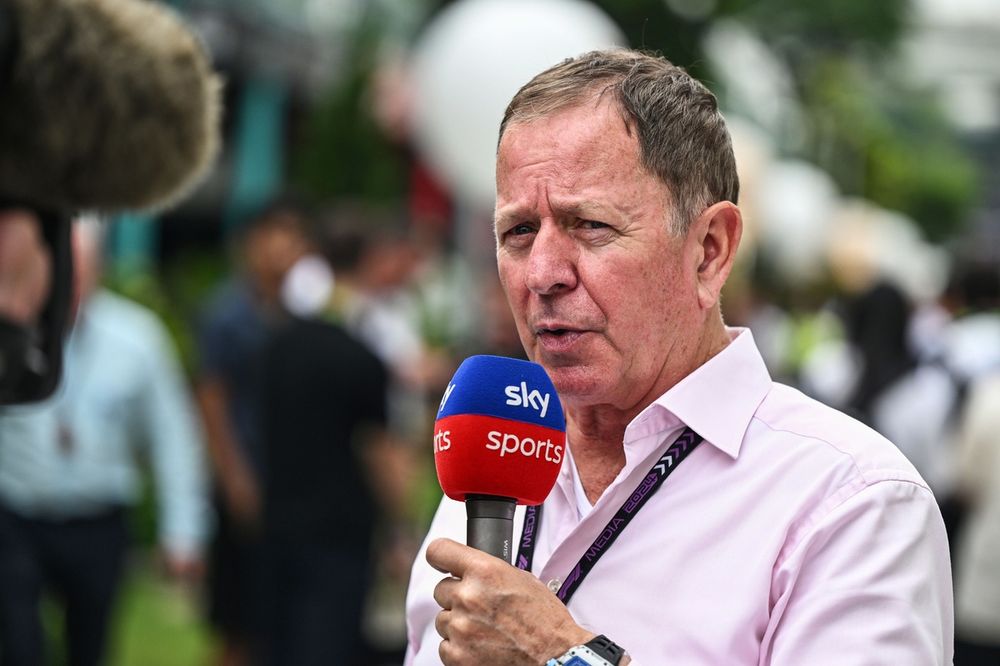
Martin Brundle: The Definitive Voice of Modern Formula 1
In the high-octane, politically charged world of Formula 1, few figures command the universal respect and immediate recognition of Martin Brundle. His presence is a constant, a thread woven through decades of the sport’s evolution. To some, he is the voice of a generation of fans, the expert analyst in the commentary box. To others, he is a reminder of a grittier racing era, a driver of immense talent who stood shoulder-to-shoulder with greats. More than anything, Martin Brundle represents a rare and invaluable blend of hard-won experience, fearless critique, and an unwavering passion for the pure sport of motor racing. This article delves deep into the multifaceted career and unparalleled influence of a man who has become synonymous with F1’s truth.
Brundle’s journey is not a simple linear path from cockpit to commentary booth. It is a story of resilience, adaptation, and intellectual rigor. He navigated the lethal danger of 1980s Formula 1, battled and beat the best, and then masterfully translated that visceral understanding for a global audience. His authority is not borrowed; it is earned through every gearshift, every daring overtake, and every difficult conversation in the paddock. In an age of polished media training and corporate messaging, Martin Brundle remains refreshingly, necessarily unfiltered. He is the sport’s conscience, its most trusted narrator, and its most compelling bridge between a legendary past and a dynamic present.
From Norfolk Karting to the Global Grand Prix Stage
Long before his voice became familiar to millions, Martin Brundle was a prodigious talent behind the wheel. Hailing from King’s Lynn, Norfolk, his racing story began in karts, a traditional proving ground where raw speed and racecraft are first honed. His progression through the junior formulae was rapid and impressive, marked by a fierce rivalry with a contemporary who would define an era: Ayrton Senna. Their duel in the 1983 British Formula 3 Championship is the stuff of legend, a season-long showdown that demonstrated Brundle’s sheer pace and tenacity. Though Senna narrowly triumphed, it announced Brundle as a force of nature, ready for the ultimate challenge.
Brundle’s Formula 1 debut followed in 1984 with the Tyrrell team. His rookie season was solid, but the true crucible of his driving career was defined by machinery and circumstance. He drove for a variety of teams, from Zakspeed to Williams, Brabham to Benetton. In an era of wildly varying car performance, his reputation was built on extracting maximum results from often sub-optimal equipment. His two standout podiums—second at Monaco in 1992 and third at Monaco in 1994—were masterclasses in precision and opportunism on the most demanding circuit. However, his career was brutally interrupted by a horrific accident at the 1984 Dallas Grand Prix, which shattered his ankles and feet. The long, painful rehabilitation and his determined return spoke volumes about his physical and mental fortitude.
Key Takeaway: Martin Brundle’s driving career forged the foundational expertise that defines his broadcasting, built on direct competition with legends and a relentless battle against adversity.
The Seamless Transition: From Driver to Analyst
The end of a top-level driver’s career often presents a crossroads. For Martin Brundle, the move into broadcasting was not a consolation prize but a natural evolution. He began with Murray Walker at the BBC in 1997, and the pairing was instantly electrifying. Walker’s iconic, enthusiastic commentary found its perfect counterbalance in Brundle’s calm, technical, and insightful analysis. He didn’t just describe what was happening; he explained why it was happening. He could deconstruct a complex tire strategy, anticipate a team’s tactical blunder, or explain the aerodynamic reason a car couldn’t follow closely through a high-speed corner. This was a perspective viewers had never been offered with such clarity.
What set Brundle apart immediately was his use of language. He spoke in the accessible, analogy-rich vernacular of a driver. Phrases like “the rear end is nervous,” “he’s struggling with front-end grip,” or “that lap was on a knife-edge” translated complex vehicle dynamics into relatable sensations. He combined this with a deep understanding of the human element—the pressure on the pit wall, the psychological battle between drivers, the exhaustion of a wet-race stint. His commentary became an education, turning casual viewers into informed fans and satisfying the deepest curiosities of long-time enthusiasts. The role of the expert analyst in F1 broadcasting was, in many ways, defined by him.
Key Takeaway: Brundle revolutionized F1 commentary by applying a driver’s lexicon and strategic mind to live analysis, creating an educational and deeply authentic narrative for viewers.
The Grid Walk: A Masterclass in Unscripted Broadcasting
Perhaps the most iconic and anticipated segment in modern F1 broadcasting is the Martin Brundle Grid Walk. It is a televisual high-wire act, a venture into the chaotic, high-pressure minutes before a race where access is contested and time is critical. Brundle, microphone in hand, weaves through mechanics, officials, and celebrities with a singular mission: to secure insightful soundbites that enhance the pre-race story. The grid walk is pure, unvarnished live television, and its success hinges entirely on Brundle’s unique blend of authority, charm, and sheer nerve.
The challenges are immense. Uncooperative PR minders, distracted drivers, unexpected celebrities, and the constant risk of technical issues create a minefield. Brundle’s skill lies in his improvisation and persistence. His famous encounters—being ignored by a pop star, challenging a team principal on a strategic gamble, or extracting a telling comment from a champion under pressure—are legendary. They provide unfiltered glimpses of personality and tension that formal interviews cannot. The grid walk underscores a central tenet of Brundle’s philosophy: the broadcast should take the audience to the heart of the action, bypassing the spin to capture the authentic mood and stories of the moment.
Key Takeaway: The grid walk exemplifies Brundle’s journalistic bravery and improvised skill, delivering unique, unscripted access that has become an indispensable part of F1’s pre-race ritual.
The Brundle Philosophy: Principles of Commentary and Critique
The enduring authority of Martin Brundle stems from a clearly defined and consistently applied set of broadcasting principles. First and foremost is his commitment to calling the action as he sees it, without fear or favor. He is famously impartial, critiquing a mistake by Lewis Hamilton or Max Verstocken with the same directness he would for a backmarker. This objectivity is the bedrock of his credibility. Furthermore, he operates with a clear moral and sporting compass. He is quick to praise brilliant, fair racing and equally swift to condemn dangerous driving or unsportsmanlike conduct, his voice often tinged with palpable anger at reckless behavior.
His analysis is always constructive. He identifies problems not to shame but to explain and contextualize. A critique of a driver’s line is followed by the correct approach. A dissection of a team’s failed strategy includes the logic of the alternative. He also possesses the wisdom to know when silence is the most powerful tool. During moments of high drama or solemn reflection—after a major incident or during a poignant victory—he lets the pictures and sounds of the sport breathe, understanding that the emotion of the moment needs no embellishment. This respectful, knowledgeable stewardship of the narrative is a masterclass in broadcast judgment.
Key Takeaway: Brundle’s commentary is governed by unwavering impartiality, a strong sporting ethos, and a pedagogical approach that builds viewer understanding rather than seeking cheap controversy.
Defining the Role: Expert Analyst vs. Commentator
For Featured Snippet eligibility, it is useful to define the specific role Martin Brundle occupies. In motorsport broadcasting, the expert analyst (or color commentator) is a former professional who provides technical insight, strategic interpretation, and driver perspective. This role contrasts with the lead commentator, who primarily narrates the on-track action and manages the broadcast’s flow. The analyst’s value lies in explaining the ‘how’ and ‘why’ behind the events called by the lead. Martin Brundle is the archetype of the expert analyst, using his firsthand experience to decode complex engineering, psychology, and strategy for the audience, thus adding a critical layer of depth that transforms watching a race into understanding it.
Key Takeaway: Brundle embodies the expert analyst role, translating professional experience into accessible, real-time insight that elevates the broadcast from mere narration to deep explanation.
The Technical Bridge: Simplifying Complexity for the Fan
One of Brundle’s greatest gifts is his ability to demystify Formula 1’s formidable technical complexity. The modern F1 car is a symphony of advanced aerodynamics, hybrid power unit energy management, and intricate material science. Brundle dissects these topics without resorting to jargon. He uses vivid analogies—comparing downforce to an upside-down aircraft wing, or tire thermal degradation to overworking a chewing gum—that create immediate mental pictures. His pre-race feature segments, where he walks a track or examines car parts, are masterpieces of concise technical education.
The Ivana Knoll Phenomenon: Deconstructing Influence, Aesthetic, and Modern
He also excels at explaining the strategic chess match unfolding in real-time. He decodes tire wear graphs, fuel load implications, and the risk-reward calculus of a pit stop under a Virtual Safety Car. He anticipates strategic options several laps before they are executed, allowing viewers to appreciate the team’s decision-making process. This ability to forecast creates suspense and engagement, making viewers feel like insiders. By building this technical and strategic literacy, Brundle empowers the audience, fostering a deeper, more satisfying connection to the sport’s intellectual battleground.
Key Takeaway: Brundle acts as a master translator, converting the sport’s extreme technical and strategic complexity into clear, engaging concepts that empower and educate the viewing audience.
A Voice for Safety and Sporting Integrity
Having raced in an era where danger was a constant companion, Martin Brundle carries a profound and unshakable commitment to driver safety. His commentary during serious incidents is immediately grave and focused. He draws on his own experiences and the sport’s tragic history to provide sober, informed context. He is a vocal advocate for continuous safety improvement, praising the Halo device after it saves a life, for instance, with the weight of someone who knows what the alternative looks like. This perspective lends immense moral authority to his words when the stakes are highest.
Similarly, he is a guardian of sporting integrity. He champions fair racing and is merciless in his criticism of moves he deems dirty or deliberately dangerous. He understands the unwritten code between drivers and holds them accountable when they breach it. This extends to team ethics; he will question the fairness of team orders or highlight potential breaches of sporting regulations. In a sport where competition and commercial interests constantly intersect, Brundle’s voice consistently prioritizes the fundamental principles of honest competition and respect, serving as the sport’s public conscience.
Key Takeway: Brundle’s historical perspective and personal experience make him a powerful, credible advocate for safety evolution and a fearless defender of core sporting ethics in Formula 1.
The Evolution of a Partnership: Collaborative Commentary
A significant aspect of Brundle’s broadcast legacy is his chemistry with co-commentators. His long and celebrated partnership with Murray Walker was based on complementary contrast. Later, his work with James Allen, David Coulthard, and others demonstrated his adaptability. However, his current partnership with David Croft on Sky Sports F1 has defined a generation of coverage. The dynamic between “Crofty” and Martin Brundle is now the gold standard. Croft’s exhaustive preparation, energetic narration, and fan-centric excitement provide the perfect launchpad for Brundle’s razor-sharp analysis and dry wit.
Their rapport is built on mutual respect and a clear division of labor, yet it allows for spontaneous, conversational exchanges that feel genuine and engaging. They can banter lightly one moment and dissect a critical tactical decision with intense focus the next. This partnership demonstrates Brundle’s ability to be a team player, enhancing his colleague’s work while seamlessly delivering his own unique value. The success of this duo highlights that great commentary is a dialogue, not a monologue, and that trust between voices is audible to the audience.
Key Takeaway: Brundle’s successful collaborations, especially with David Croft, show his ability to build synergistic on-air partnerships that blend excitement with expertise, creating a comprehensive and entertaining narrative.
The Business of Brundle: Beyond the Commentary Box
While commentary is his primary platform, Martin Brundle’s influence and activities extend well beyond it. He is a respected columnist, his written words carrying the same incisive clarity as his spoken ones. He undertakes selective corporate speaking engagements and ambassador roles, where his reputation for integrity is highly valued. Furthermore, he maintains a hands-on connection to driving through his son, Alex Brundle, a successful sportscar racer. This ongoing involvement at the coalface of professional motorsport provides a continuous feedback loop, keeping his perspective current and grounded.
He has also navigated the significant shifts in F1’s media landscape, from terrestrial TV exclusivity to the rise of dedicated satellite and streaming services. His decision to move to Sky Sports F1 was a landmark moment, aligning him with a broadcaster investing heavily in the sport. Through these transitions, his brand has not diluted; it has strengthened. He represents a rare constant in a changing world, a trusted figure whose opinion is sought by fans, media, and even stakeholders within the sport itself. His commercial appeal is directly tied to this perceived authenticity.
Key Takeway: Brundle has successfully expanded his role into writing, speaking, and mentoring, maintaining a 360-degree involvement in motorsport that reinforces his core credibility and brand authority.
Case Study: The 2021 Abu Dhabi Grand Prix Commentary
A powerful real-world example of Martin Brundle’s broadcast mastery occurred during the controversial finale of the 2021 season in Abu Dhabi. As the late Safety Car drama unfolded, his commentary was a masterclass in real-time processing under immense pressure. He immediately identified the regulatory dilemma, explaining the options available to Race Control and the sporting implications of each. As the situation developed in a highly unusual manner, his tone shifted from analytical to increasingly concerned and questioning.
His post-race analysis was pivotal. While the global F1 community erupted in debate, Brundle’s assessment on the world feed was measured, forensic, and principled. He avoided knee-jerk partisanship and instead focused on the procedural anomalies and their impact on the championship’s legitimacy. He gave voice to the confusion and frustration felt by many, but did so with legal and sporting precision. This moment encapsulated his value: he was the informed, calm, and authoritative center in a storm of controversy, providing a framework for understanding one of the most complex and disputed moments in the sport’s history.
Key Takeway: During high-stakes controversy, Brundle’s ability to provide calm, principled, and expert real-time analysis proves his irreplaceable role as a trusted interpreter of complex sporting drama.
Brundle’s Lasting Impact on F1 Media and Fandom
The impact of Martin Brundle on how Formula 1 is consumed and understood cannot be overstated. He has fundamentally raised the bar for what fans expect from technical analysis. He created a template that many subsequent analysts—often former drivers themselves—now follow. The audience is now more knowledgeable, more discerning, and more engaged with the strategic and technical layers of the sport because of the standards he set. He proved that deep expertise, when communicated effectively, is not a niche interest but a mass-appeal enhancement.
Furthermore, he has shaped the very language of F1 fandom. Phrases he coined or popularized are part of the common parlance. More importantly, he has fostered a culture of asking “why.” He taught viewers to look beyond the leaderboard, to appreciate the midfield battle, the tire strategy, the development war. By doing so, he expanded the narrative canvas of a Grand Prix weekend, revealing a sport rich with multiple, simultaneous stories. His legacy is a more intelligent, appreciative, and critically engaged global fanbase.
Key Takeway: Martin Brundle’s profound legacy is a more sophisticated, knowledgeable global fanbase and a permanent elevation of the standards for expert analysis in motorsport broadcasting.
The Future of the Role in a Changing Media Landscape
As Formula 1 continues to evolve with new audiences, digital platforms, and presentation styles, the question arises: what is the future of the Martin Brundle model? The trend towards shorter, social-media-friendly content might seem at odds with his detailed, race-long analysis. However, the enduring hunger for authentic expertise suggests his style will remain vital. The key will be adaptation—leveraging new formats like deep-dive podcasts or extended technical webinars while preserving the core principles of experience-based insight and fearless honesty.
The next generation of analysts will undoubtedly emerge, but they will walk the path Brundle forged. They will need his blend of credibility, clarity, and courage. The challenge for broadcasters is to recognize that this depth of analysis is not a relic but a premium product. In an age of information overload and superficial hot takes, the curated, expert insight that Brundle provides is more valuable than ever. His ultimate influence may be proving that in professional sports broadcasting, there is no substitute for true, hard-won authority.
Key Takeway: While media formats will change, the core demand for Brundle’s model of authentic, experienced-based authority will persist, setting the benchmark for future generations of analysts.
Actionable Insights: The Brundle Principles for Effective Communication
Before concluding, consider these distilled principles, observable in Martin Brundle’s work, that apply to effective communication in any expert field:
- Anchor in Experience: Ground your analysis in direct, firsthand knowledge. Credibility is earned, not granted.
- Simplify, Don’t Dumb Down: Translate complexity using clear analogies and accessible language without sacrificing accuracy.
- Prioritize Impartiality: Build trust by calling things fairly, even when it’s difficult or goes against popular sentiment.
- Embrace the Unscripted: Be prepared to think on your feet; the most valuable insights often come from live, unrehearsed moments.
- Respect the Subject and Audience: Balance critical analysis with a fundamental respect for the sport and the intelligence of those watching.
- Know When to be Quiet: Understand that emotion and atmosphere sometimes speak louder than words.
Conclusion: The Unwavering Core of Formula 1
Martin Brundle is far more than a commentator or a former driver. He is an institution. His journey from the cockpit of a turbocharged monster to the global broadcast booth mirrors Formula 1’s own journey from a niche, dangerous pursuit to a polished global spectacle. Through all that change, he has remained a fixed point of reference—a conduit of truth, a teacher of nuance, and a fearless guardian of the sport’s competitive soul. His voice provides continuity, context, and, when needed, necessary correction.
In a landscape often clouded by marketing hyperbole and political gamesmanship, Brundle’s perspective is the clarifying lens. He reminds us of the essential truths: that this is ultimately about drivers operating at the limit, teams outthinking each other, and a constant, thrilling pursuit of speed. He connects the modern fan to the sport’s history, its dangers, and its pure, unadulterated challenge. As long as there is a Formula 1 world feed, the presence of Martin Brundle, or someone forged in his mold, will be essential. He is the expert we trust, the guide we need, and the unwavering voice at the heart of the Grand Prix circus.
Frequently Asked Questions (FAQs)
What is Martin Brundle’s most famous moment as a driver?
While he achieved podium finishes, Martin Brundle’s most famous driving moment is arguably his fierce season-long battle with Ayrton Senna for the 1983 British Formula 3 Championship. This duel against a future legend cemented his reputation as an elite talent and is a foundational chapter in his racing story.
How did Martin Brundle get into F1 broadcasting?
After retiring from full-time racing, Martin Brundle was invited by the BBC to provide analysis, partnering with legendary commentator Murray Walker for the 1997 season. His immediate ability to translate complex racing concepts into clear, engaging insight made the role a natural fit, launching his iconic second career.
Why are Martin Brundle’s grid walks so popular?
Martin Brundle’s grid walks are popular because they are authentic, unscripted, and high-stakes. They offer viewers raw, immediate access to the tense pre-race atmosphere, and Brundle’s persistence and skill in securing spontaneous interviews with key figures provide drama and insight that formal coverage cannot match.
What makes Martin Brundle such a respected voice in F1?
Martin Brundle is respected due to his unique combination of a successful F1 driving career, his impartial and fearless analytical style, and his exceptional skill at simplifying technical and strategic complexity for viewers. This blend of earned authority, honesty, and communicative clarity creates unparalleled trust.
Has Martin Brundle ever driven a modern Formula 1 car?
Yes, Martin Brundle has driven modern F1 cars for demonstration and filming purposes, often for Sky Sports F1 features. These experiences are crucial, as they allow him to directly compare historical and contemporary machinery, grounding his technical commentary in up-to-date sensory feedback and maintaining the relevance of his driver’s perspective.
About the Author