Captain Tom Moore: A Legacy of Hope, Resilience, and Unassuming Heroism
In the uncertain spring of 2020, as the world locked down in the face of an unseen enemy, a different kind of battle was being prepared in a quiet English garden. Its commander was not a seasoned general in a war room, but a frail, ninety-nine-year-old former army captain leaning on a walking frame. His mission was simple, audacious, and profoundly human: to complete one hundred laps of his garden before his 100th birthday to raise money for the health service that was caring for him and the nation. No one, least of all the modest man himself, could have predicted that Captain Tom Moore’s walk would become a seismic event of collective spirit. His journey transcended fundraising to offer a global masterclass in resilience, a poignant reminder of the “Greatest Generation’s” enduring spirit, and a pure, unadulterated beacon of hope. This is not just the story of a man who raised millions; it is an exploration of the character, context, and extraordinary cultural moment that created a legend, and the timeless values his life embodied.
The Making of a Humble Hero
Captain Tom Moore’s extraordinary later life was built upon a foundation of quiet service and unassuming resilience forged decades earlier. Born in 1920 in Keighley, West Yorkshire, Thomas Moore came of age in the shadow of the Great Depression and entered his formative years as the clouds of world war gathered again over Europe. His early career as a civil engineer was abruptly redirected when he was conscripted into the British Army in 1940, a moment that would set the course for his military training and future sense of duty. Commissioned as a Second Lieutenant, he was selected for the demanding and elite role within the Royal Armoured Corps, specifically training to operate the formidable Churchill tanks. This period honed not only his technical skills but also the steadfast discipline and leadership under pressure that would define his character, long before the world knew the name Captain Tom.
His service took him to some of the most challenging theaters of the Second World War, including India and the Burma campaign. Serving with the 146th Royal Armoured Corps, Captain Tom Moore faced the brutal conditions of the Far Eastern front, where combat was compounded by monsoons, disease, and rugged terrain. This experience, away from the more documented European battles, ingrained in him a profound sense of camaraderie and a perspective on adversity that was both practical and philosophical. Surviving this conflict left him with the quiet, unheroic modesty common to many of his generation—a man who had done his duty, returned home, and built a life, carrying his stories lightly and without fanfare. This foundational period was the crucible that created the resilient spirit who, eighty years later, would stand up once more when his country called.
The Garden Walk That Captured a Global Audience
The concept was deceptively simple, born from a family conversation and a personal desire to contribute. In April 2020, with the UK’s National Health Service buckling under the strain of the first COVID-19 wave, Captain Tom, recovering from a broken hip and skin cancer treatment, set a goal for himself. Using his walking frame for stability, he aimed to complete one hundred laps of his 25-meter garden in Marston Moretaine, Bedfordshire, before his 100th birthday on April 30th. His initial fundraising target was a modest £1,000 for NHS Charities Together, a sum he hoped would thank the “magnificent” staff who had helped him. His daughter, Hannah, posted the plan on a local fundraising page, and a local newspaper ran a small story. This was the humble genesis of what would become a global phenomenon, a testament to how a single act of determination can ignite a collective spark.
What happened next was a viral wave of affection and support that defied all expectations. As news of the Captain Tom garden challenge spread via national media and social media, donations began to flood in not in trickles, but in a torrent. The public, isolated and anxious, latched onto his mission as a symbol of positivity and defiance. His daily progress, shared in updates, showed his steady, determined laps, his witty remarks, and his unwavering “Tomorrow will be a good day” mantra. The fundraiser shattered its initial goal within 24 hours, reached £1 million within a week, and continued to climb astronomically. By his 100th birthday, he had completed his laps to a guard of honour from the 1st Battalion of the Yorkshire Regiment, had received over 150,000 birthday cards, and had raised an unimaginable £33 million. The walk transformed Captain Tom Moore from a private citizen into a beacon of global hope.
Decoding the Phenomenon: Why Captain Tom Resonated
In a moment of profound collective fear and isolation, Captain Tom Moore represented the antithesis of the pandemic’s narrative. While the news cycle was dominated by graphs of rising deaths, overwhelmed hospitals, and the dystopia of lockdown, here was a man embodying action, optimism, and intergenerational solidarity. His advanced age connected him to a generation that had survived world war, providing a powerful frame of resilience that comforted a populace facing a new kind of invisible threat. People were not just donating to the NHS; they were investing in a story of hope, a tangible counter-narrative to the despair. The figure of Captain Tom became a psychological anchor, a reminder of human goodness and endurance that people desperately needed to believe in.
Furthermore, his appeal was multifaceted and crossed all demographic divides. For older generations, he was a peer and a symbol of their often-overlooked contributions. For younger people, he was a viral internet sensation, a “legend” whose hashtags and video clips dominated social platforms. For the national psyche, he tapped into deep-seated cultural touchstones: respect for the military, reverence for the NHS, and the beloved archetype of the plucky, humble Englishman. His communication was masterful in its simplicity—no political messaging, no complex agenda, just clear, heartfelt gratitude and determination. This purity made the phenomenon impossible to cynically dismiss and easy for everyone, from schoolchildren to world leaders, to embrace and share, creating a unified moment of national pride in a time of fracture.
The Military Bearing and Metaphor of a Final Campaign
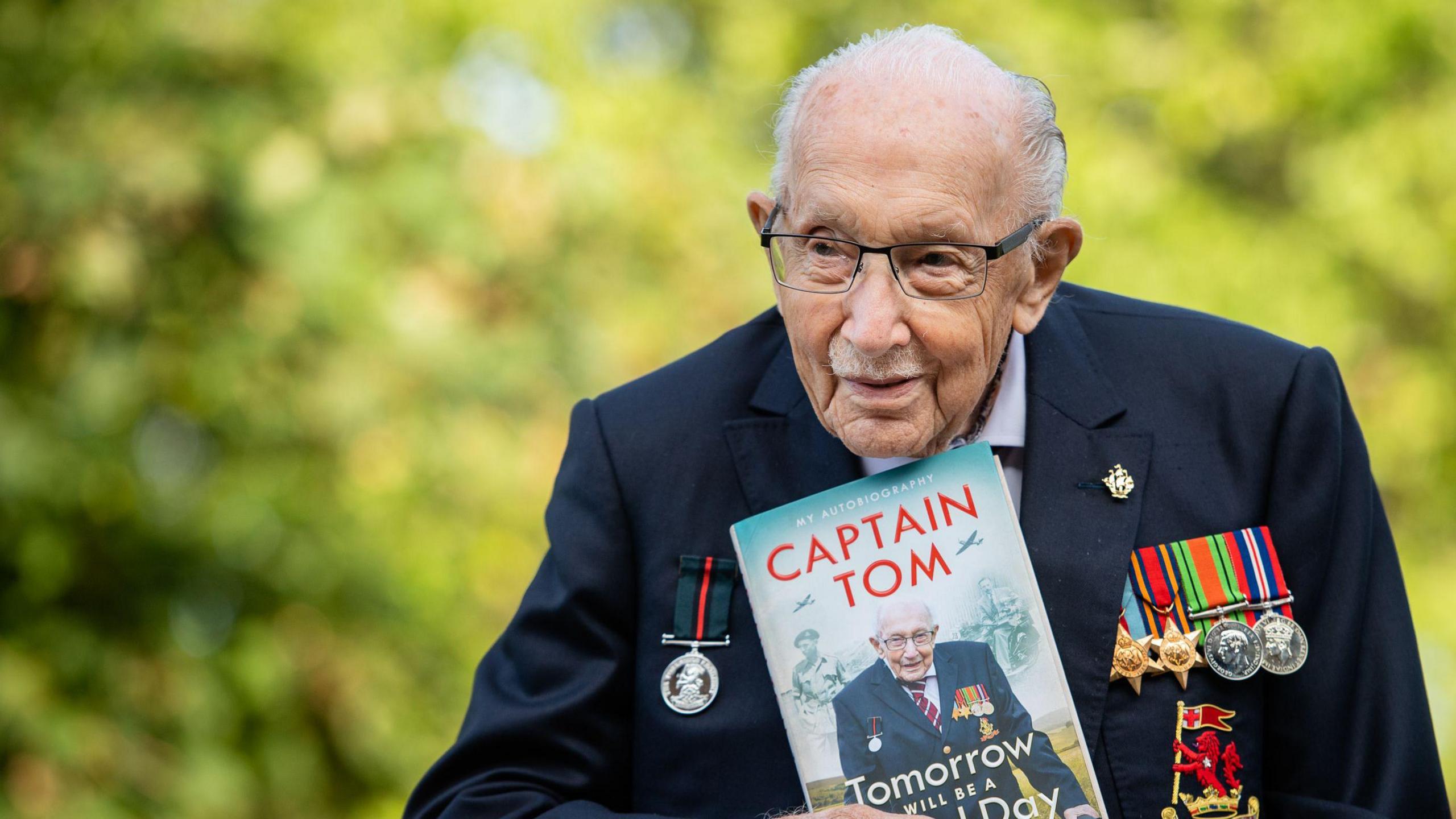
Captain Tom Moore’s military background was not a incidental detail; it was the essential framework through which he approached his fundraising challenge. He consciously framed his garden laps as his “final campaign,” applying the language and discipline of his army service to this new mission. The walking frame became his battalion, the garden path his field of operation, and the fundraising total his objective to be secured. This mindset provided a powerful structure for both him and the public to understand his endeavour. He wasn’t just taking a stroll; he was a veteran mobilising once more for a national emergency, his uniform swapped for a blazer adorned with his war medals, his salute as crisp as ever. This conscious echoing of his past service added a layer of profound symbolic weight to his actions, elevating them from a simple charitable act to a call to arms for public spirit.
The military metaphor extended to the public’s response, which took on the characteristics of a mass mobilisation. People saw themselves as enlisting in Captain Tom’s army of donors, each contribution a act of solidarity in the fight against the virus’s fallout. His military honours, prominently displayed, served as a constant visual reminder of a lifetime of service, making his new campaign feel like a continuation of duty. Regiments, veterans’ groups, and serving personnel rallied to support him, further strengthening the connection. In a time of war against a pandemic, the nation found an unlikely but perfect commander in a nonagenarian captain, whose strategic objective—morale and funding for the frontline—was achieved with stunning, record-breaking success.
The Unprecedented Fundraising Impact and Distribution
The sheer scale of the funds raised by Captain Tom Moore’s effort remains breathtaking. The final total for his original JustGiving page settled at over £33 million, contributed by more than 1.5 million donors from across the globe, making it the single largest fundraiser on the platform’s history. This sum, however, was only the beginning. His efforts inspired a wave of ancillary fundraising, from sales of his bestselling autobiography and a chart-topping single to corporate partnerships and licensed merchandise, with all his profits directed to his newly formed Captain Tom Foundation. The total financial impact attributable to his initiative is estimated to have comfortably exceeded £70 million, a monumental testament to his influence. This money transformed from abstract numbers into concrete, life-saving resources for the NHS and its charitable arm.
The distribution of these funds was managed with careful intention to maximise their benefit. NHS Charities Together allocated the millions to a wide range of critical areas, focusing on the well-being of NHS staff and patients beyond what government funding could provide. The following table outlines the primary allocation channels for the funds raised, demonstrating the broad and strategic impact of Captain Tom’s walk:
Poppy Coburn: The Definitive Guide to Her Art, Influence, and Enduring Legacy
Table: Allocation of Captain Tom-Inspired Funding for NHS Charities Together
| Area of Impact | Specific Use of Funds | Intended Outcome |
|---|---|---|
| Staff Wellbeing & Support | Funding for rest areas, psychological support, hot meals, and overnight accommodation for frontline workers. | To reduce burnout and support the mental and physical health of NHS staff during extreme pressure. |
| Community & Patient Care | Grants for community groups supporting vulnerable patients, funding for hospital charities to aid recovery services, and support for palliative care. | To extend care beyond hospital walls and address the holistic needs of patients and communities. |
| Technology & Equipment | Investment in communication devices for isolated patients (e.g., tablets for video calls), and specialised equipment not covered by core NHS budgets. | To maintain patient-family connections during visitor bans and enhance care delivery with modern tools. |
| Long-Term Legacy Projects | Contributions to major appeals for new staff facilities, mental health hubs, and innovative research projects into staff welfare. | To create a lasting infrastructure of support for the health service, honouring the legacy of the fundraising. |
The Philosophy of “Tomorrow Will Be a Good Day”
The now-iconic phrase, “Tomorrow will be a good day,” evolved from a personal mantra into a national slogan of optimism. For Captain Tom, this was not a pollyannaish denial of difficulty, but a hard-earned philosophy forged across a century of life’s trials—war, economic hardship, personal loss, and recent health battles. It represented a conscious choice to face adversity with a forward-looking perspective, a commitment to hope as a daily practice. In his own words, it was about focusing on what lay ahead with positivity rather than dwelling on present troubles. This mindset was the engine of his garden walk; each lap was a step toward a better tomorrow, both literally for his birthday and figuratively for the cause he supported. His unwavering repetition of the phrase during media interviews gave the public a simple, portable piece of wisdom to cling to.
The cultural adoption of this phrase was immediate and widespread. It appeared on social media banners, was quoted by politicians and celebrities, and was literally etched into the nation’s consciousness. It cut through the pervasive anxiety of the moment with a disarmingly simple and resilient message. In many ways, it became the verbal counterpart to his visual image—both were accessible, warm, and powerfully defiant. The phrase encapsulated the entire Captain Tom phenomenon: it was about action today fuelled by faith in a brighter future. It transformed from a personal coping mechanism into a collective affirmation, a shared agreement to believe in and work toward better days ahead, making his campaign as much about emotional fundraising as it was about financial.
National Recognition and the Knighthood
The sheer magnitude of Captain Tom Moore’s achievement demanded formal recognition, and it arrived in a uniquely fitting manner. A public petition to award him a knighthood garnered hundreds of thousands of signatures, creating an undeniable groundswell of popular support. The Prime Minister, Boris Johnson, immediately nominated him for the honour, and Queen Elizabeth II approved the appointment. In a specially arranged ceremony at Windsor Castle in July 2020—the Queen’s first official engagement in person since lockdown—Captain Tom Moore was knighted, becoming Captain Sir Tom Moore. The image of the near-centenarian, standing proudly with his walking frame before the monarch, was a historic and deeply moving tableau. It represented the state honouring one of its most humble yet impactful citizens, a moment where formal tradition met grassroots heroism.
His knighthood was significant beyond the personal honour. It symbolised a nation expressing its gratitude not just for the millions raised, but for the hope he provided. In knighting him, the establishment was validating the public’s adoration and cementing his place in the national story. Furthermore, it created a new kind of national treasure: Sir Captain Tom Moore, a folk hero with a title. The honour also extended his platform, allowing him to use his new title to continue advocating for causes close to his heart, including the NHS and the welfare of older people. It was the perfect capstone to his spring campaign, transitioning him from a viral sensation to an enduring institutional figure while losing none of his approachable, everyman charm.
Navigating the Public Sphere and Media Scrutiny
With unprecedented fame came intense media attention and the complex realities of life in the public eye. Captain Tom and his family were suddenly navigating a whirlwind of interview requests, documentary offers, book deals, and brand partnership proposals. They made strategic decisions, such as working with a professional talent agency to manage inquiries and ensure all commercial activities remained aligned with his charitable mission. The release of his autobiography and his recording of “You’ll Never Walk Alone” with Michael Ball were examples of projects that successfully channelled his popularity toward further fundraising. For a time, the narrative remained overwhelmingly positive, focused on his uplifting message and the tangible good his efforts were achieving.
However, the transition from private individual to public property also brought scrutiny and challenges. In early 2021, a planned holiday to Barbados, facilitated by British Airways and a tourism board, sparked some public debate, though largely muted. More significantly, after his passing, questions arose regarding the governance and stated objectives of the Captain Tom Foundation. These later complexities highlighted the difficult transition from a spontaneous, personality-driven campaign to a structured charitable organisation with all the requisite legal and operational frameworks. They served as a poignant reminder that even the purest of stories can become entangled in the administrative and reputational complexities of the modern world, though they do little to diminish the authenticity of the original, glorious act.
The Final Salute and a Nation in Mourning
Captain Tom Moore’s passing in February 2021, following a brief battle with COVID-19 and pneumonia, prompted an outpouring of grief on a scale rarely seen for a non-royal public figure. The announcement was met with a universal sense of personal loss. People who had never met him felt they had lost a beloved grandfather, a symbol of their own resilience during the pandemic’s darkest days. His family’s statement, noting that his final year had been “nothing short of remarkable,” resonated deeply. Tributes poured in from every corner of society—from the Queen and the Prime Minister to schoolchildren who had drawn pictures of him. Social media was flooded with the hashtag #TomorrowWillBeAGoodDay, now transformed from a mantra of hope into a tribute of remembrance.
His funeral was a testament to his unique status. It featured full military honours, with a flypast by a WWII-era C-47 Dakota aircraft and a firing party from the Yorkshire Regiment. Soldiers carried his coffin, draped in the Union Flag, as his regimental motto, “Onwards,” was displayed. While pandemic restrictions limited public attendance, thousands lined the route to his crematorium to pay their respects, and millions more watched the service online. This send-off was a powerful fusion of the two identities he held in the public imagination: the respected military veteran and the humble national hero. It was a final, fitting salute that acknowledged his service to his country in both war and peace, closing the chapter on his physical presence while solidifying his legend.
The Enduring Legacy Beyond the Headlines
The true legacy of Captain Tom Moore extends far beyond the monumental sum of money he raised. His most profound impact lies in the demonstration of individual agency. He proved that one person, regardless of age or physical limitation, can make a staggering difference and inspire a chain reaction of goodwill. He redefined society’s perception of the elderly, presenting old age not as a period of decline but as one of potential, wisdom, and continued contribution. Countless subsequent charity walks, runs, and challenges by people of all ages cited him as their inspiration, creating a lasting “Captain Tom effect” within the charitable sector, where personal challenges for good causes became even more popularised.
Furthermore, he left a permanent mark on the UK’s cultural and physical landscape. Hospitals, wards, and medical equipment have been named in his honour. A train, a bus, and a Royal Mail postbox in his village carry his name. Perhaps most symbolically, the Captain Tom Foundation, despite its later challenges, was established with the enduring mission to combat loneliness, support hospices, and champion causes important to him. His story is now a permanent part of British social history, a go-to reference for resilience and hope. As a cultural icon, Captain Tom represents the best of the national character—modesty, determination, and humour in the face of adversity—ensuring his story will be told for generations to come as a parable of how to light a candle in the darkness.
Separating the Man from the Myth
As with any figure who captures the public imagination, it is crucial to distinguish between Captain Tom Moore, the man, and “Captain Tom,” the public symbol. The man was Thomas Moore: a father, grandfather, former engineer and army officer, who enjoyed a glass of gin and tonic, was proud of his family, and possessed a dry, witty sense of humour. He was a complex human being with a full lifetime of experiences, relationships, and personal opinions. The public symbol, in contrast, was the curated image of the determined veteran on his walking frame, the embodiment of hope and selflessness. This symbol became a canvas onto which the public projected their own needs for inspiration and unity during a crisis. The media, understandably, focused almost exclusively on this uplifting symbol.
This distinction is not a criticism but an important clarification for a balanced understanding. The man willingly stepped into the role of the symbol because he believed in the cause. He performed it with incredible grace and consistency, but he was always more than just the figure in the garden. Recognising this duality allows us to appreciate his genuine generosity and character without deifying him in an unrealistic way. It also helps contextualise the later complexities faced by his family; they were navigating the management of a powerful public symbol while grieving for their beloved relative. The enduring power of the story lies in the authentic alignment between the man and the symbol—his actions were real, his determination was genuine, and his impact was undeniable.
Conclusion: The Unconquerable Spirit of Captain Tom
The story of Captain Tom Moore is, at its heart, a timeless one. It is a narrative about the power of the human spirit to rise with dignity and purpose in the face of shared adversity. In a digital age often characterised by cynicism and division, his journey was an analogue revolution of the heart—a physical, slow, determined act that connected with millions on the most fundamental level. He did not set out to be a hero; he set out to do his bit, a mentality ingrained in him eight decades prior. In doing so, he reminded a anxious world of enduring values: perseverance, gratitude, community, and the simple, transformative power of setting one foot in front of the other.
His legacy is not encased in stone but lives on in the continued acts of kindness he inspired, in the shifted perceptions of ageing, and in the enduring benchmark of charitable endeavour. Captain Tom Moore’s final campaign taught us that our capacity to generate light is not diminished by age or circumstance, but is often refined by it. He proved that heroes can be found leaning on walking frames in suburban gardens, and that the most powerful weapons against despair are often not grand plans, but quiet resolve and an unwavering belief that tomorrow will be a good day. As long as his story is told, it will serve as a compass pointing toward our better selves.
Frequently Asked Questions
Who was Captain Tom Moore?
Captain Sir Tom Moore was a British Army officer and WWII veteran who, at the age of 99, raised over £33 million for the UK’s National Health Service (NHS) charities by walking 100 laps of his garden before his 100th birthday during the first COVID-19 lockdown in 2020. His extraordinary effort made him a global symbol of hope and resilience.
How much money did Captain Tom actually raise?
The initial fundraiser on JustGiving for NHS Charities Together concluded at over £33 million, contributed by 1.5 million donors. Furthermore, proceeds from his book, a charity single, and other licensed ventures, directed through his Captain Tom Foundation, brought the total financial impact linked to his initiative to an estimated £70 million or more.
Why did Captain Tom become so famous?
Captain Tom became a phenomenon because his act arrived at a precise moment of global fear and isolation during the pandemic. His advanced age, military bearing, modest goal, and uplifting mantra (“Tomorrow will be a good day”) offered a powerful, unifying story of defiance and hope that resonated across generations and cut through the prevailing anxiety.
What happened to the money Captain Tom raised?
The £33+ million from the original walk was managed and distributed by NHS Charities Together. It was allocated across the UK to support NHS staff wellbeing (e.g., rest areas, psychological support), aid patients and communities (e.g., recovery groups, communication devices), and fund long-term legacy projects for hospital charities, as detailed in the article’s allocation table.
What is the Captain Tom Foundation?
The Captain Tom Foundation is a charitable organisation established in May 2020 to continue Captain Tom’s philanthropic legacy. Its initial stated missions were to combat loneliness, support hospices and mental health charities, and champion causes close to his heart. The foundation has been the subject of regulatory scrutiny and operational changes following his passing.