Andrew Neil: The Architect of Modern Political Interrogation
For over four decades, the name Andrew Neil has been synonymous with forensic political interviewing in British media. More than just a presenter, he is an institution—a formidable intellectual force whose steely gaze and relentless preparation have defined the standards of political accountability on television. His career is a lens through which to view the seismic shifts in British politics, from the Thatcher revolution through Brexit and beyond. This article explores the man behind the microphone, tracing his journey from a Scottish working-class background to the editor’s chair at The Sunday Times and, ultimately, to becoming the UK’s most recognized and feared political interviewer. To understand the evolution of British broadcast journalism is to understand the influence and methodology of Andrew Neil.
Early Life and Formative Influences
Andrew Neil was born in 1949 in Paisley, Scotland, a background he frequently references as foundational to his worldview. The son of a telephone engineer and a secretary, he was educated at Paisley Grammar School before winning a scholarship to the University of Glasgow. This journey from a modest, industrious background to the heart of the establishment informed his later suspicion of elite orthodoxies and his ability to connect with audiences beyond the London media bubble. His early political awakenings were shaped by the economic realities of post-war Scotland, fostering a keen interest in the mechanics of power, economics, and social mobility.
At Glasgow University, Neil studied politics and economics, later obtaining a Master’s degree as a Ford Foundation Scholar. He cut his teeth as editor of the university newspaper, Glasgow University Guardian, where his conservative-leaning editorials in a largely left-wing environment hinted at the contrarian spirit that would define his career. This period was crucial, sharpening his writing, his ideological convictions, and his appetite for debate. Before the television lights, Andrew Neil was a print journalist and thinker, a background that would forever distinguish his approach from that of career broadcasters.
The Sunday Times Era: Forging an Editorial Titan
In 1983, Rupert Murdoch appointed the 34-year-old Andrew Neil as editor of The Sunday Times, a move that stunned the media world. Over the next eleven years, Neil transformed the paper, expanding its sections, championing investigative journalism, and fiercely advocating for the free-market policies of Thatcherism. His tenure was marked by both triumph and controversy, including landmark campaigns and costly legal battles. This experience at the pinnacle of print journalism endowed him with an insider’s understanding of political strategy, media ownership, and the sheer weight of editorial decision-making—a perspective few pure broadcasters ever acquire.
Neil’s editorship was defined by a belief in robust, challenging journalism that often made powerful enemies. He oversaw the paper’s move to Wapping, a bitter industrial dispute that reshaped the British newspaper industry. This baptism of fire in management, finance, and high-stakes confrontation was arguably his real education. Leaving the editor’s chair in 1994, he carried into broadcasting not just interview techniques, but the seasoned instincts of a former editor-in-chief who had been responsible for everything from headline writing to multi-million-pound budgets. This executive experience is the bedrock of his authority.
Defining a Genre: The Birth of the Political Interview Show
Andrew Neil’s transition to the BBC and the launch of This Week in 2003 created a new template for political television. The show, with its late-night slot, informal studio, and mix of serious interview and satirical commentary, broke the mould. It was here that the “Neil interview” became a rite of passage—and often a nightmare—for politicians. Unlike the more conversational style of contemporaries, his approach was built on meticulous research, a mastery of complex briefs, and an unwavering focus on contradictions and evasions. The show’s success proved there was a substantial audience for deep, adversarial political scrutiny outside of primetime news bulletins.
The format leveraged Neil’s unique strengths: his ability to distill complex economic data into sharp questions, his long memory for past political statements, and his theatrical use of silence. Guests were not there for a chat; they were there for an audit. This created must-watch television, where the drama derived from intellectual combat rather than raised voices. Through This Week and later The Andrew Neil Show, he cultivated a loyal viewership that trusted him to ask the questions they wanted answered, irrespective of party line. In doing so, Andrew Neil didn’t just host a show; he curated a weekly masterclass in political accountability.
The Method Behind the Mastery
The potency of an Andrew Neil interview is never accidental; it is the product of an industrial-grade preparation process. His team, often referred to as the “Neil HQ,” conducts exhaustive research, compiling dossiers that trace a politician’s career-long positions on key issues. Neil himself immerses in this material, emerging with a script that pinpoint inconsistencies between past and present statements. This groundwork allows him to control the interview’s trajectory completely, making it difficult for subjects to pivot to rehearsed soundbites. The famous “long pause” is a strategic tool, weaponizing silence to pressure guests into filling the void, often to their regret.
His on-screen persona—the firm tone, the slight leaning into the desk, the direct eye contact—is designed to convey total command of the facts. He rarely shows emotion, favoring a relentless, forensic pace that prizes clarity over confrontation for its own sake. This methodology transforms the interview from a publicity opportunity for the guest into a public examination. For viewers, the value is immense: they witness a process that cuts through political spin to reveal core arguments, or the lack thereof. It is a public service masquerading as peak-time television.
Notable Interviews and Defining Moments
Certain Andrew Neil interviews have entered political folklore. His 2019 interrogation of then-Labour leader Jeremy Corbyn on anti-Semitism and economic policy was a landmark, lasting nearly 30 minutes and dissecting the party’s manifesto with surgical precision. Similarly, his 2017 interview with then-Lib Dem leader Tim Farron on homosexuality and sin showcased his willingness to pursue deeply personal lines of questioning when they intersected with public policy and leadership. These moments transcended daily news, becoming standalone events that shaped public perception of the politicians involved.
Perhaps no interview was more anticipated than his scheduled sit-down with Prime Minister Boris Johnson during the 2019 general election campaign—a meeting Johnson famously avoided. This evasion became a story in itself, highlighting the symbolic power of a Neil interview as a credibility test. Earlier, his 2014 clash with then-Scottish First Minister Alex Salmond on the economics of independence was a pivotal moment in the Scottish referendum campaign. These encounters demonstrate how his chair became the nation’s de facto accountability seat, where political fortunes could be made or damaged.
Political Philosophy and Evolving Ideology
Labeling Andrew Neil simply as a “conservative” broadcaster is a significant oversimplification. His philosophy is rooted in Thatcherite economic liberalism—a strong belief in free markets, limited government, and individual enterprise. However, on social issues and governance, he often displays a classical liberal or even libertarian streak, championing free speech and expressing scepticism towards what he sees as overreach by the state or “woke” ideology. This blend creates an unpredictable profile; he is as likely to chastise a Tory minister for fiscal irresponsibility as a Labour leader for socialist policies.
His ideology has evolved, particularly in reaction to modern political movements. While a foundational Eurosceptic, he became a vocal critic of the Brexit campaign’s claims, especially around the NHS. He has expressed growing disenchantment with what he perceives as the decline of the moderate, economically literate Conservative Party. This intellectual journey is key to his interviewing style: he is not a party loyalist but an ideologue with a core set of principles, which he applies inconsistently across the political spectrum. This principled inconsistency is what makes him so hard for politicians to pigeonhole and prepare for.
The BBC and Beyond: A Shifting Landscape
Neil’s relationship with the BBC, his primary broadcasting home for decades, has been complex and, at times, fraught. He was a defining star of its political coverage, yet frequently criticized its management for perceived bias, inefficiency, and a lack of conviction. His 2020 departure from the corporation to help launch the rival channel GB News was a seismic event in UK media. It signaled a direct challenge to the BBC’s dominance in news and a bet on a new model of opinion-driven, right-of-centre broadcasting. His subsequent, acrimonious exit from GB News after just a few months highlighted the tensions between his journalistic standards and the channel’s populist direction.
This period underscored a critical aspect of Neil’s career: his role as a disruptor. At the Sunday Times, he disrupted the print industry. At the BBC, he disrupted the style of political interviewing. With GB News, he attempted to disrupt the broadcast news market itself. The venture’s initial struggles and his rapid departure were a rare, public professional setback. However, it reinforced his unwavering commitment to a specific brand of serious, fact-anchored journalism, even when venturing into explicitly partisan territory. The chapter illustrated that for Andrew Neil, the principles of forensic scrutiny were non-negotiable, even on a platform built to challenge establishment media.
Author, Columnist, and Constant Commentator
Beyond the screen, Andrew Neil maintains a powerful voice through his writing. His weekly column for the Daily Mail is a must-read for political insiders, offering expansive, data-driven critiques of government policy, economic trends, and global affairs. His 1996 autobiography, Full Disclosure, remains a vital text on the media politics of the Thatcher-Major era. This written output complements his broadcasting, allowing him to develop arguments with a depth and nuance that a 10-minute interview segment cannot accommodate. It cements his status as a full-spectrum political commentator, not just an interviewer.
His writing style mirrors his broadcasting: direct, confident, and rich with empirical detail. He uses his platform to champion issues like economic literacy and the dangers of populism, from both left and right. This duality—broadcast interrogator and print pundit—creates a feedback loop where his written opinions inform his interviews, and vice-versa. It ensures his influence persists across multiple media channels, making him a ubiquitous presence in the British political conversation. Whether on TV or in print, the audience receives the same undiluted, rigorously argued perspective.
Public Persona Versus Private Reality
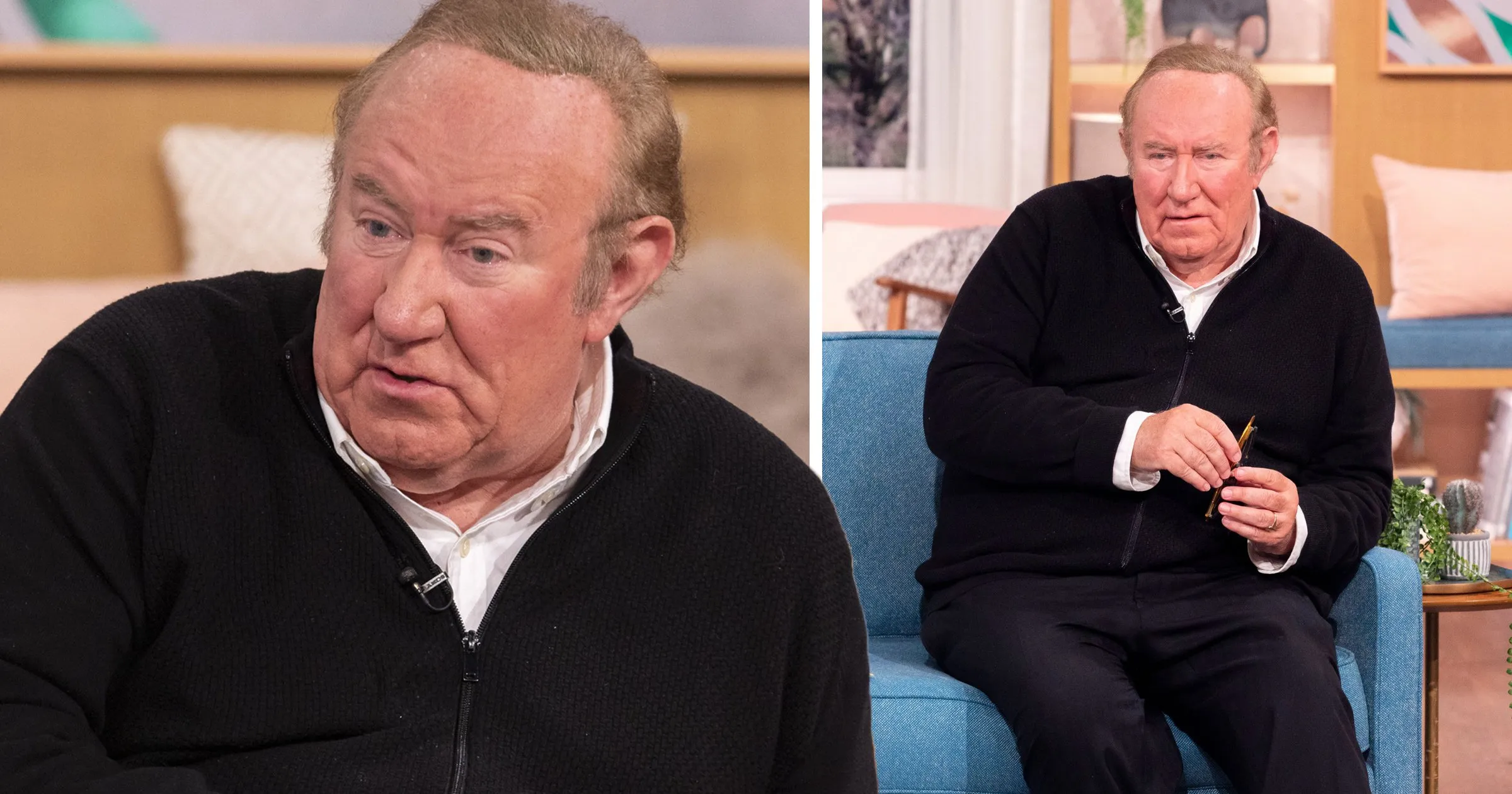
The public knows Andrew Neil as “Brillo,” a nickname referencing his steel-wool hair and abrasive style—a persona of intimidating intellect and unflappable calm. This is a carefully constructed professional tool. Those who have worked with him describe a demanding but inspiring figure, with a fierce loyalty to his team and a legendary work ethic. Off-camera, he is known to be witty, a generous host, and deeply private, fiercely separating his professional ferocity from his personal life. This dichotomy is essential; the on-screen Neil is a instrument for a specific purpose, not a reflection of his full character.
Understanding this separation is key to appreciating his longevity. The persona protects the individual from the pressures of the role and prevents interviews from becoming personal. It allows him to grill a politician mercilessly one evening and share a civil drink with them off-air later. This professional detachment is a common trait among the most effective interrogators; it turns the interview into a chess game, not a grudge match. The private Andrew Neil, a golf enthusiast and avid consumer of culture, is the pressure valve that makes the sustained intensity of the public figure possible.
Legacy and Influence on Journalism
Andrew Neil’s most enduring legacy is the elevation of the political interview to a central pillar of democratic accountability in the UK. He proved that detailed, policy-focused interrogation could command prime-time attention and shape national debates. A generation of journalists, from BBC stalwarts to newer faces on outlets like Times Radio, where he now presents, have emulated his emphasis on research and persistence. He created a benchmark; today, any serious political interviewer is measured against the “Neil standard” of preparedness and tenacity.
His influence extends to how politicians prepare. Facing Neil is a dreaded, meticulously rehearsed ordeal because the political class knows the cost of being underprepared is televised humiliation. This has, arguably, raised the level of detail required from those in public life. Furthermore, his career arc—from print editor to broadcasting icon—stands as a powerful argument for the value of deep journalistic experience over mere presentational skill. He didn’t just report on politics; he operated at its highest levels, and that authority was forever baked into his questioning.
Comparative Analysis: Andrew Neil’s Interview Style Versus Contemporaries
| Feature | Andrew Neil | Jeremy Paxman | Emily Maitlis | David Dimbleby |
|---|---|---|---|---|
| Core Style | Forensic, data-driven, silent pressure. | Theatrical, incredulous, persistent repetition. | Narrative-driven, psychological, contemporary focus. | Parliamentary, ceremonial, chair-like facilitation. |
| Primary Tool | Mastery of brief and strategic pauses. | Iconic, sceptical single questions repeated. | Deep, contextual framing and eloquent delivery. | Vast institutional knowledge and neutral tone. |
| Typical Approach | “You said X in 2012, now you say Y. Explain.” | “You what? Are you serious?” | “Let’s explore the wider story here, which is…” | “The House will want to know…” |
| Persona | The Auditor. | The Bulldog. | The Storyteller. | The Headmaster. |
| Lasting Impact | Made economic literacy essential to interviews. | Made “not answering” itself a dramatic story. | Elevated the interview as a cohesive narrative arc. | Defined the civic ritual of election night coverage. |
Criticisms and Controversies
No figure of Andrew Neil’s stature is without criticism. Detractors argue that his ideological leanings, particularly his foundational Thatcherism, inevitably color his interviews, leading to a perceived asymmetry in aggression. Some claim he disproportionately targets left-wing figures, a charge he vehemently denies, pointing to his equally tough sessions with Conservatives. Others contend that his “prosecutorial” style can sometimes eclipse clarification, creating dramatic television at the expense of genuine dialogue. The criticism highlights the fine line between holding power to account and performing a stylized act of accountability.
Further controversy surrounded his move to GB News and his sharp criticisms of the BBC, with some accusing him of hypocrisy for critiquing from within a publicly funded institution before leaving for a commercial rival. His short tenure there also raised questions about his judgment in associating with the venture. These episodes demonstrate the tensions inherent in a career built on challenging establishments while becoming, inevitably, part of a media establishment oneself. As one media analyst noted, “Andrew Neil’s entire career is a debate about what impartiality really means—is it the absence of views, or the consistent application of method regardless of view?”
The Future of the Neil Model in a Changing Media World
The digital age, with its short clips, social media virality, and declining attention spans, poses a challenge to the long-form, detailed Andrew Neil interview model. Yet, paradoxically, it may also be its salvation. In an era of misinformation and superficial hot takes, the value of a thoroughly researched, extended interrogation is arguably higher than ever. The most viewed segments of his interviews are often the most devastating clips, shared online as proof of a politician’s failure—a distillation of his work that reaches new audiences.
His current work on Times Radio suggests a adaptation, not a retreat. The audio format allows for even longer, more discursive conversations while maintaining his rigorous core. The future of his model likely lies in this hybrid space: the creation of deep, authoritative content that can be strategically atomized for digital consumption. As long as there is a market for truth-seeking and a public desire to see politicians tested beyond slogans, the demand for the methodology he perfected will persist. The platforms may change, but the fundamental appetite for accountability he helped cultivate endures.
Conclusion
Andrew Neil is more than a broadcaster; he is a one-man argument for the necessity of rigour, preparation, and intellectual courage in journalism. From the newsrooms of Wapping to the BBC studio and beyond, he has wielded his influence with a consistent philosophy: that those in power must be challenged on their facts, their logic, and their consistency. He reshaped the political interview from a polite exchange into a vital democratic audit. While his ideological leanings will always be debated, his contribution to the craft of journalism—raising the bar for both interviewer and interviewee—is indisputable. In an age of noise, Andrew Neil built a career on signal, leaving an indelible mark on the British political landscape and setting a standard that will challenge and inspire for generations to come.
Frequently Asked Questions
What is Andrew Neil’s political background?
While often labelled a conservative, Andrew Neil’s background is rooted in Thatcherite economic liberalism rather than traditional Toryism. He was a key editorial supporter of Margaret Thatcher’s policies during his time at The Sunday Times. However, his views on social issues and governance often align with classical liberalism, making him a complex and sometimes unpredictable figure. His ideology is best understood as a foundational belief in free markets and individual liberty, which he applies as a critic across the political spectrum.
Why did Andrew Neil leave the BBC?
Andrew Neil left the BBC in 2020 after over 25 years, citing a combination of factors. He expressed frustrations with the corporation’s management, its bureaucratic structure, and what he perceived as a lack of commitment to genuine impartiality. His departure was directly linked to his role as the founding chairman and lead presenter of the new channel GB News, which aimed to provide a right-of-centre alternative to the established UK news broadcasters.
What are some of Andrew Neil’s most famous interviews?
Some of the most defining interviews conducted by Andrew Neil include his 2019 grilling of Labour leader Jeremy Corbyn, his intense 2014 debate with SNP leader Alex Salmond during the Scottish independence referendum, and his 2017 interview with Tim Farron on personal faith and public policy. The notable non-interview—Boris Johnson’s avoidance of him during the 2019 election—also became a famous moment, underscoring the symbolic weight of appearing in his chair.
Where can I watch or listen to Andrew Neil now?
Following his brief stint at GB News, Andrew Neil now presents a regular programme on Times Radio, where he conducts long-form interviews and discussions. He also writes a weekly political column for the Daily Mail. His previous interviews and shows for the BBC, such as This Week and The Andrew Neil Show, are often available on the BBC iPlayer or clipped and shared on social media platforms like YouTube.
How does Andrew Neil prepare for his interviews?
The preparation for an Andrew Neil interview is famously exhaustive. His research team compiles detailed dossiers on the interviewee, tracing years of their public statements, voting records, and policy positions. Neil immerses himself in this material, identifying specific contradictions and weaknesses to target. This process allows him to script precise, evidence-based questions that prevent politicians from relying on rehearsed soundbites, creating the forensic and controlled dynamic for which he is known.
About the Author