Eagles Rookie Trade Attempt
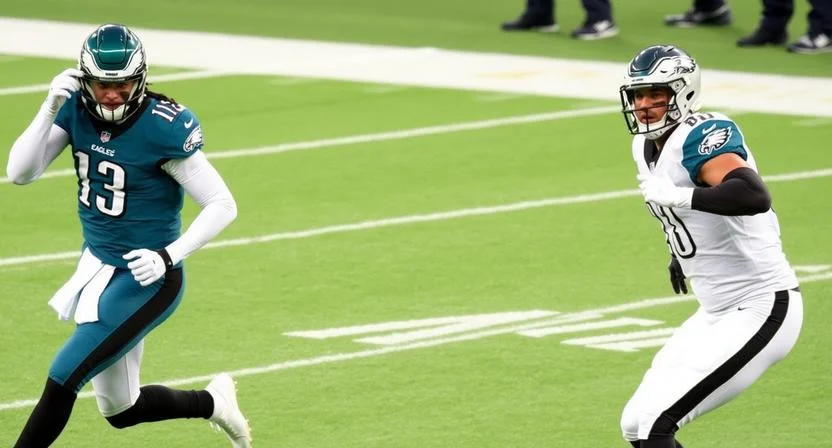
The story of the eagles rookie trade attempt is one of those offseason narratives that perfectly captures how unpredictable, strategic, and sometimes downright chaotic NFL roster building can be. For fans of the Philadelphia Eagles, this situation created a blend of curiosity, debate, and speculation. Any time draft picks or rookies become part of potential trade discussions, emotions run high—after all, rookies represent hope, upside, and the future. But the Eagles have also built a reputation, especially under their general manager Howie Roseman, for being one of the most aggressive, forward-thinking front offices in the league.
So when news surfaced about the Eagles considering a rookie trade attempt, the NFL world immediately perked up. But what exactly happened Eagles Rookie Trade Attempt? Why did the attempt occur? And what does it reveal about the team’s strategy moving forward?
This article breaks it all down, offering a detailed, expert-level but friendly look at the entire scenario.
Understanding the Eagles Rookie Trade Attempt Identity and Why Trades Are Inevitable
Before diving into the specific rookie trade attempt, it’s important to understand the organizational DNA of the Eagles. For years now, Philadelphia has adopted a philosophy of strategic aggression, especially in roster construction. They’ve been unafraid to make big moves—whether that’s trading draft capital, acquiring veteran talent, moving down the board, or even making unexpected cuts.
This culture of flexibility has allowed the Eagles to stay competitive in most seasons. Rather than sitting still and “waiting to see how things play out,” the team constantly explores ways to maximize value. This explains why trade rumors, including those involving rookies, tend to emerge frequently around this franchise. Even if many of these discussions never materialize into official transactions, the mere existence of them showcases how deeply involved the Eagles are in the trade market.
Another thing to note is the franchise’s dedication to matching roster construction with their coaching staff’s evolving needs. No matter who is Eagles Rookie Trade Attempt coaching, the front office places an emphasis on building through the trenches, maintaining depth, and planning two to three years ahead. This forward-thinking mindset means rookies, even recently drafted ones, may become part of trade conversations if it helps fill an urgent gap.
The Context Behind the Eagles Rookie Trade Attempt
Every trade attempt has a context, and this one was no different. During the offseason leading up to the rookie trade attempt, the Eagles faced several roster-related questions. Some positions were aging. Others had injuries stacked against them. And then there were areas in which the team felt strong but still had interest in upgrading if the price was right.
Reports suggested the rookie involved in the attempted trade was someone the team liked, but possibly not enough to turn down the chance at acquiring a more proven player. This is where the nuance of the situation becomes clear. When a team drafts a player, they do so with excitement—but that excitement doesn’t guarantee long-term investment. Football is a business, and value is always shifting.
The Eagles may have seen the opportunity Eagles Rookie Trade Attempt to use a rookie as part of a package that could bring in a veteran who fit a more urgent need. It’s not necessarily an indication that they disliked the rookie; rather, it was a sign that the franchise believed it could improve the roster in a meaningful way. In the NFL, everything has a price, and that includes players who have barely stepped onto the practice field.
In addition, salary-cap management played a role. Rookie contracts are affordable, making them desirable trade chips. Teams with cap limitations—something the Eagles have danced around for years—often explore such moves to create financial maneuverability. The rookie trade attempt aligned with this long-standing strategic pattern.
Media Reaction and Fan Response: The Noise Surrounding the Attempt
Once rumors began circulating, sports media outlets immediately amplified the story. On social media platforms and sports shows, analysts quickly began forming narratives about why the Eagles would consider moving a rookie so soon. This led to a swirl of reactions that ranged from excitement to concern.
Many fans were initially frustrated. There’s an emotional connection that forms when a franchise drafts a player—especially one expected to play a role in the future. When that player suddenly becomes part of a rumored trade, fans worry they’re losing potential they haven’t even seen yet. Others were confused, questioning whether the team had miscalculated the player’s fit. And of course, there was the optimistic segment of the fanbase that saw the trade attempt as a sign the team was pursuing a major upgrade.
This rollercoaster of emotions is typical Eagles Rookie Trade Attempt for Philadelphia, a city known for its passionate and outspoken sports culture. The fans care deeply, and they want consistency. A rookie trade attempt feels anything but consistent, especially when it happens before the player even takes a preseason snap.
The media also played a major role in shaping how the story evolved. Reporters analyzed the situation from every angle, bringing speculative details into the conversation. Some insisted the team’s front office had concerns about the rookie’s performance in early workouts. Others suggested the trade was an attempt to leapfrog another team in pursuit of a coveted veteran target. The truth likely sits somewhere in the middle, but the frenzy shows just how closely every Eagles move is scrutinized.
The Rookie’s Fit on the Roster and Why He Became a Trade Chip
To understand why a rookie becomes involved in a trade attempt, one must look at roster fit. NFL rookies are often drafted for a variety of reasons—depth needs, long-term potential, special teams ability, and scheme fit. But sometimes, a rookie drafted for one purpose suddenly becomes expendable if another opportunity arises.
In this case, the Eagles may have discovered that the rookie’s development curve didn’t match the immediate needs of the team. Or perhaps the team realized a different rookie or free agent was outperforming expectations. Depth chart dynamics can change rapidly in the NFL, and when they do, players who once seemed locked into a role can find Eagles Rookie Trade Attempt themselves part of trade discussions.
Another important factor is versatility. Some rookies thrive because they can fit into multiple roles. Others struggle if they have a narrower skill set. If the Eagles felt the rookie didn’t offer the flexibility required for the current roster blueprint, it would make sense for them to explore his market value.
There is also the possibility—rare, but real—that the rookie simply wasn’t living up to the internal expectations set during scouting. Training camp performance, football IQ, and adaptability all play a role in determining a rookie’s future. If any of those areas fell short, the front office might have considered it wiser to capitalize while the player’s draft value was still fresh.
Why the Trade Attempt Didn’t Materialize
Although the Eagles were open to moving the rookie, no deal ultimately happened. Why? Several explanations make sense—and together, they help paint a broader picture of how NFL trade attempts work behind the scenes.
First, the other teams involved may not have been willing to offer the value the Eagles wanted. Philadelphia is known for setting high asking prices. If negotiations didn’t match the team’s expectations, they would not hesitate to walk away. The lack of a completed deal suggests the front office simply didn’t see a return worth accepting.
Second, the team may have received positive updates about the rookie’s progress. Sometimes early impressions change quickly once players get more comfortable in the system. If the rookie began showing signs of improvement, the Eagles may Eagles Rookie Trade Attempt have reconsidered their stance.
Another factor could be the shifting needs of the roster. An injury to another player or a change in scheme approach can influence decisions. The Eagles may have realized they needed the rookie after all, especially if depth became thinner than initially expected.
Finally, the veteran player they were pursuing may have been acquired by another team or taken off the market altogether. Once that happened, the incentive to move the rookie likely diminished.
Implications for the Rookie Moving Forward
What happens to a rookie who was almost traded? While it might seem awkward, players understand that the NFL is a business. They know that trade rumors are part of the league’s fabric.
In some cases, a rookie may become motivated to prove the team wrong for attempting to trade them. They might show up to practice with renewed focus, determined to earn their role. On the other hand, the coaching staff has a responsibility to ensure the rookie remains confident and supported. The Eagles, in particular, have a reputation for handling such situations professionally.
If handled well, the rookie may grow from the experience. Feeling valued—even after a trade attempt—comes down to how the coaching Eagles Rookie Trade Attempt staff and teammates maintain communication. Some players even credit near-trades for pushing them to become better versions of themselves.
How This Attempt Signals the Eagles’ Long-Term Strategy
The rookie trade attempt offers a glimpse into the Eagles’ long-term planning—even without a completed deal. It suggests the team is comfortable exploring all options to remain competitive. This is entirely consistent with their history.
The Eagles view roster building as a fluid process. There is no such thing as “set in stone” in their philosophy. Every player, whether a rookie or a seasoned veteran, is part of a broader mechanism designed to keep the team strong from year to year. And if the front office sees a potential window to improve the roster, they will at least consider pursuing it.
This strategy has worked in Eagles Rookie Trade Attempt the past and continues to shape the Eagles as one of the most strategically advanced franchises in the league.
The Bigger Picture: What Fans Should Take Away
Fans may have mixed reactions to the rookie trade attempt—but in truth, the situation is a sign of a healthy, proactive front office. Rather than standing still or relying purely on draft outcomes, the Eagles show a willingness to make tough decisions when necessary.
It also reveals that Philadelphia is Eagles Rookie Trade Attempt aiming to stay ahead of the curve. Winning in the NFL is not just about coaching or player development—it’s also about smart asset management. The rookie trade attempt, whether it leads anywhere or not, proves that the Eagles remain one of the most analytically driven teams in the league.
At the end of the day, the rookie is still on the roster. He now has a chance to carve out a meaningful role and show the Eagles—and the entire league—why he was drafted in the first place. And fans can look forward to seeing how the situation unfolds, knowing that their team is always striving to get better in ways that most franchises hesitate to even explore.
Final Thoughts
The story of the eagles rookie trade attempt is more than just a headline—it’s a reflection of how modern NFL roster construction works. It sheds light on the Eagles’ unwavering commitment to improvement and their realistic, business-first approach to player management. While it stirred debate among fans and the media, the situation ultimately showcased the team’s ambition, adaptability, and strategic mindset.
About the Author