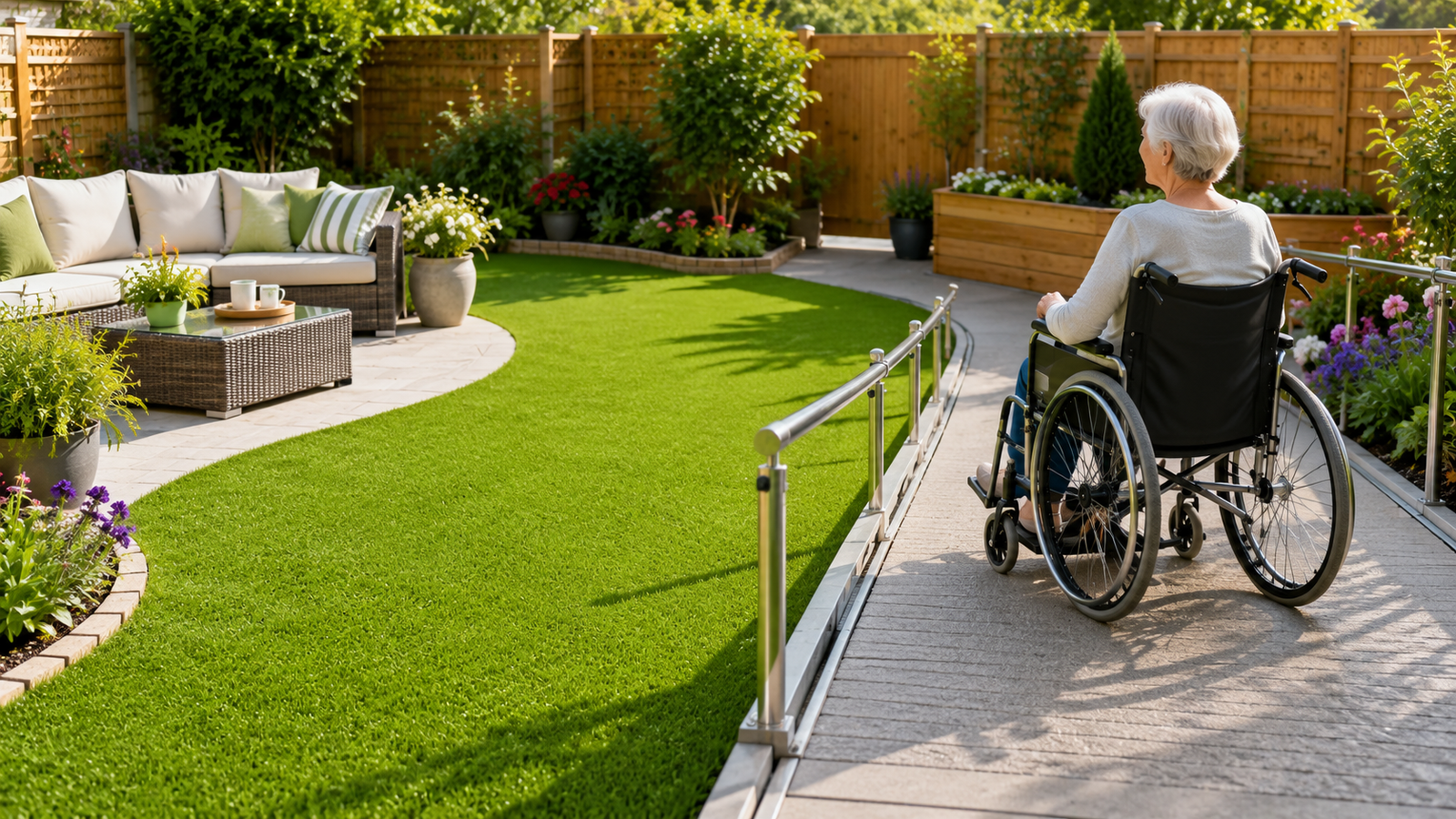
Creating an accessible garden means designing an outdoor space that more people can enter, move around, and enjoy comfortably. Uneven lawns, muddy ground, loose gravel, narrow paths, and sudden changes in level can make a traditional garden difficult to use for wheelchair users, older adults, people with limited mobility, and families with pushchairs.
Artificial grass can create a more accessible garden by providing a stable, consistent, and low-maintenance surface throughout the year. It can be installed around ramps, seating areas, raised planting beds, paths, and existing landscape features to improve movement across the garden.
However, accessibility depends on more than choosing artificial turf. The pile height, sub-base, drainage, route width, edging, surface transitions, and overall layout must all be planned carefully.
Why Use Artificial Grass for an Accessible Garden?
Natural lawns can become uneven as soil settles, tree roots grow, and heavily used areas wear away. During wet UK weather, grass may also become soft, muddy, or slippery.
These conditions can make movement difficult for people using wheelchairs, mobility scooters, walking frames, sticks, or pushchairs.
Artificial grass offers a more predictable surface when it is installed over a firm and correctly prepared base. It does not develop muddy patches, need regular mowing, or become overgrown around paths.
The main benefits of artificial grass for accessible gardens include:
- A smoother and more consistent surface
- Better year-round usability
- Reduced mud and standing water
- Lower garden maintenance
- Flexible installation around ramps and paths
- A cleaner surface for seating and play areas
- Easier access to raised beds and garden features
Artificial grass is not automatically accessible, but it can support an effective mobility-friendly garden design.
Create Wheelchair-Friendly Garden Paths
A clear route through the garden is one of the most important parts of accessible landscaping.
The route should connect the house with the main lawn, seating area, gate, raised beds, shed, and any other frequently used features. Avoid forcing users to cross loose gravel, bark, mud, or stepping stones.
Artificial grass can be used to form a continuous wheelchair-friendly garden surface. It can also sit beside paved paths where a firmer route is preferred.
Paths should be wide enough for the people who will use them. Extra space may be needed near corners, doors, seating areas, and raised beds so wheelchair and mobility scooter users can turn comfortably.
Keep routes clear of planters, tools, toys, hoses, and overhanging plants.
Choose the Best Artificial Grass Pile Height
Pile height affects how easy artificial grass is to move across.
Very long and soft artificial grass may look luxurious, but its deeper fibres can increase rolling resistance for small wheelchair wheels, walkers, and pushchairs. It may also flatten more noticeably along regularly used routes.
Short to medium pile artificial grass is often a more practical choice for an accessible garden. It can provide a balance between comfort, durability, and easy movement. For households with pets or assistance animals, pet-friendly grass should also offer effective drainage and an easy-to-clean surface.
When choosing artificial grass, consider:
- Pile height and density
- Fibre recovery after foot or wheel traffic
- Strength of the backing
- Drainage performance
- Comfort underfoot
- Ease of brushing and cleaning
- Suitability for regular use
Testing artificial grass samples with the wheelchair, walking aid, or pushchair that will be used in the garden can help identify the most suitable option.
Install a Firm and Level Sub-Base
The surface beneath artificial grass is just as important as the turf itself.
Artificial grass installed over soft, uneven, or poorly compacted ground may develop dips, ripples, and movement. These defects can create barriers for wheels and possible trip hazards.
Before installation, existing grass, roots, loose soil, stones, and debris should be removed. A suitable free-draining aggregate base can then be installed and compacted in layers.
The finished sub-base should be:
- Firm enough to support regular wheel traffic
- Smooth without sudden dips or raised areas
- Stable around edges and joins
- Permeable enough to support drainage
- Shaped to create a controlled water flow
For artificial grass installation in Stevenage, accessibility requirements should be discussed with the installer before groundwork begins so the base, levels, and transitions suit the intended users.
Professional groundwork can make a major difference to the long-term accessibility of the garden.
Keep Surface Transitions Smooth
Changes between artificial grass, paving, decking, concrete, and ramps require careful attention.
A raised edge or sudden drop can make movement difficult for wheelchair users and increase the risk of trips. Loose turf edges may also curl or lift over time.
Plan the final height of every surface before installation begins. Artificial grass should meet adjoining paths and patios as smoothly as possible.
Strong edging helps hold the turf in position and prevents the sub-base from moving. It should provide a secure finish without creating a noticeable barrier.
Check transitions around:
- Doors and thresholds
- Garden gates
- Ramps
- Patios
- Decking
- Drain covers
- Raised planting areas
- Sheds and garden rooms
Small level differences that appear insignificant to a person walking may be much more noticeable to someone using wheels.
Use Gentle Slopes Instead of Steps
Steps can prevent some people from reaching important areas of a garden.
Where space permits, gentle slopes or ramps can provide a more accessible alternative. Artificial grass can be installed beside a ramp or on a mild incline when the groundwork and fixing system are suitable.
Sloped artificial grass requires secure anchoring because gravity can pull the turf downwards. The sub-base must also be stable so loose material does not move after heavy rainfall.
Avoid steep gradients where possible. Any ramp or slope should be designed around the mobility needs of the people using it.
Plan Artificial Grass Drainage
Good drainage is essential for a safe and accessible garden.
Although most artificial grass contains drainage holes, rainwater also needs to pass through the sub-base and move towards a suitable outlet. Poor drainage can lead to puddles, moss, algae, unpleasant smells, or soft areas beneath the turf.
Inspect the existing garden after rainfall before planning the installation. Look for low spots, clay soil, compacted ground, and water flowing from patios or paths.
Possible drainage solutions include:
- A permeable aggregate sub-base
- A gentle gradient across the lawn
- Channel drains beside hard surfaces
- French drains in waterlogged areas
- Land drains beneath difficult ground
- A suitable soakaway
Water should be directed away from the house, doors, ramps, and main access routes.
Add Accessible Seating Areas
An accessible garden should include places to rest.
Position seating close to the main route and avoid placing it across uneven or difficult ground. Paving or decking may provide a more stable base beneath tables, benches, and chairs, while artificial grass can soften the surrounding area.
Leave enough open space beside a bench or chair for a wheelchair, walking frame, or companion. Seating with supportive backs and armrests may be easier for some users.
Shade can also make the area more comfortable during warmer weather. Pergolas, parasols, and planted screens can create sheltered places without blocking movement.
Combine Artificial Grass with Raised Garden Beds
Raised beds can make gardening more accessible for people who find bending, kneeling, or reaching the ground difficult.
Artificial grass can create a clean, mud-free route around raised planters. It also reduces the need to weed or maintain a natural lawn between planting areas.
Raised beds should be positioned so users can reach the plants without stretching too far. Leave sufficient space around each bed for wheelchairs or garden seats.
Herbs, flowers, vegetables, and scented plants can all be grown at a more comfortable height.
Build a Sensory and Accessible Garden
Artificial grass can also support an accessible sensory garden.
The consistent lawn surface can connect different sensory features without introducing loose or uneven materials into the main route.
Ideas include:
- Fragrant lavender, rosemary, thyme, or mint
- Plants with soft, smooth, or textured leaves
- Gentle water features
- Wind chimes and rustling grasses
- Brightly coloured planting
- Raised herb and vegetable beds
- Tactile panels placed beside paths
Sensory features should not project into access routes. Some users may prefer stimulating areas, while others may benefit from quieter sections with seating and shade.
Reduce Garden Maintenance
A low-maintenance accessible garden can be easier to manage for people who cannot regularly mow, water, weed, or repair a natural lawn.
Artificial grass removes the need for lawn mowing, feeding, and reseeding. It still requires some basic maintenance, but the tasks are generally less physically demanding.
Regular care includes removing leaves, brushing the fibres, rinsing dirty areas, and keeping drainage outlets clear.
Frequently used routes should be checked for flattened fibres, loose seams, or raised edges. Addressing small issues early helps keep the garden safe and comfortable.
Common Accessible Garden Design Mistakes
One common mistake is choosing artificial grass based only on softness or appearance. Very deep grass may be less convenient for wheels and mobility aids.
Other mistakes include:
- Installing turf over an uneven base
- Leaving raised edges beside paving
- Creating routes that are too narrow
- Ignoring existing waterlogging
- Using steep slopes without secure fixing
- Blocking routes with furniture or planters
- Placing seating beyond steps
- Failing to maintain drainage points
The whole garden should be planned around the people who will use it.
Final Thoughts
Artificial grass can create a more accessible garden by replacing uneven, muddy, and difficult-to-maintain lawn areas with a cleaner and more consistent surface.
For the best results, choose a suitable pile height, prepare a firm sub-base, plan effective drainage, and create smooth connections between the lawn, paths, ramps, and seating areas.
Raised beds, reachable seating, wide routes, gentle gradients, and sensory features can make the space more enjoyable for wheelchair users, older adults, people with limited mobility, children, and visitors.
When accessibility is considered from the beginning, artificial grass can help create a practical, attractive, and welcoming UK garden that remains easier to use throughout the year.