A laundry room is one of the hardest-working spaces in any home, yet it is often one of the last to receive thoughtful design attention. Homeowners usually put a lot of thought into designing beautiful and functional bathrooms and kitchens, but laundry room is often left with a washing machine and a couple of buckets for clothes. However, this is slowly changing: more and more homeowners are exploring the potential of laundry room, trying to create a more cozy and convenient space that will turn just another chore into a delightful experience.
Start by Rethinking the Layout
An outdated laundry room often suffers less from old finishes than from poor organization. Before selecting new materials or paint colors, take a close look at how the room actually functions.Simple adjustments, such as relocating storage closer to the washer and dryer or introducing a dedicated folding surface, can streamline everyday tasks. Wall-mounted drying racks, pull-out hampers, and vertical shelving make better use of limited square footage while keeping frequently used supplies within easy reach.
Design professionals frequently emphasize workflow when planning utility spaces. Creating logical zones for washing, drying, folding, and storage makes even compact rooms feel significantly more efficient.
Upgrade the Cabinetry Without Starting Over
Cabinetry has an enormous influence on whether a laundry room feels contemporary or stuck in another decade.
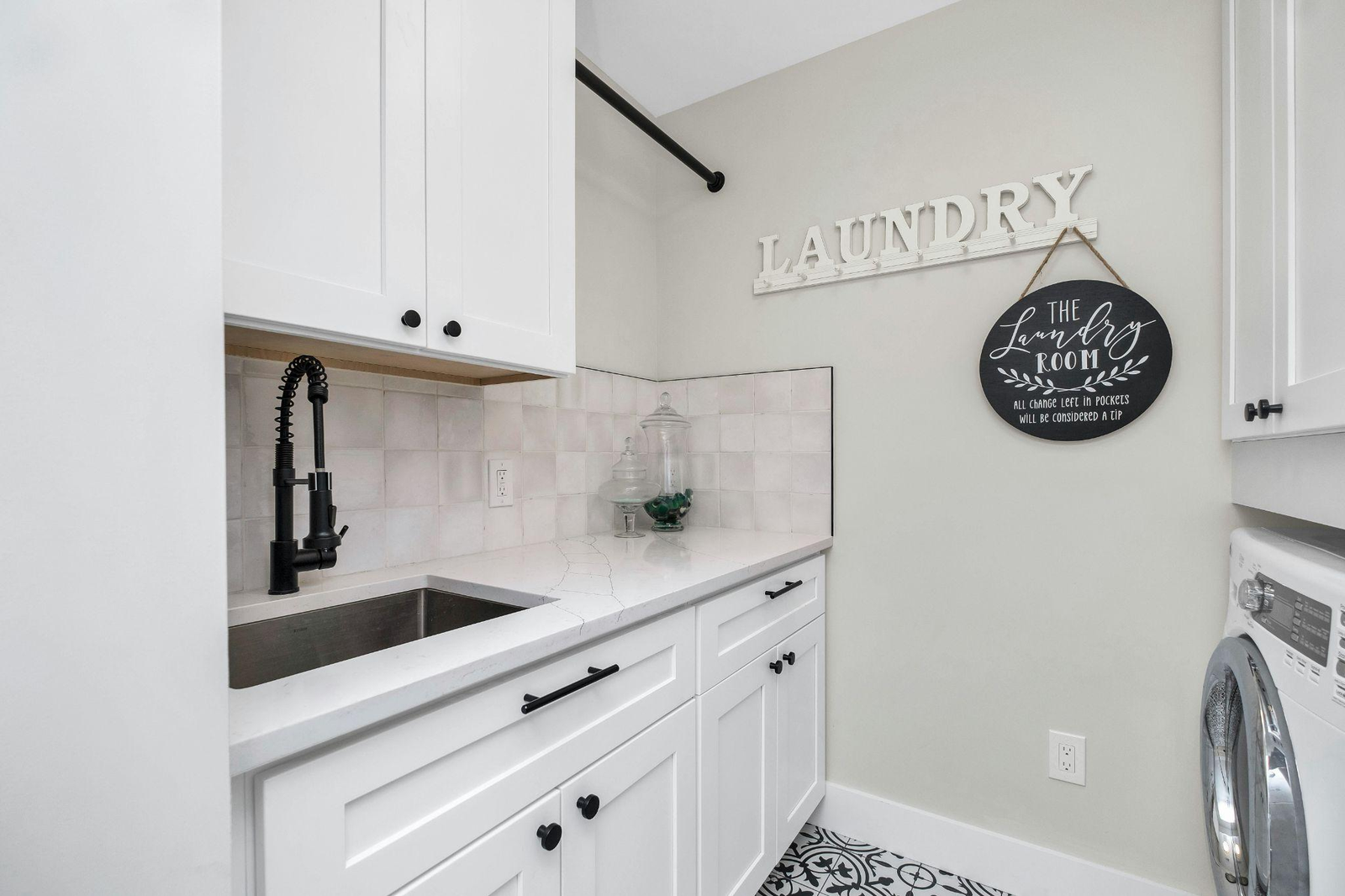
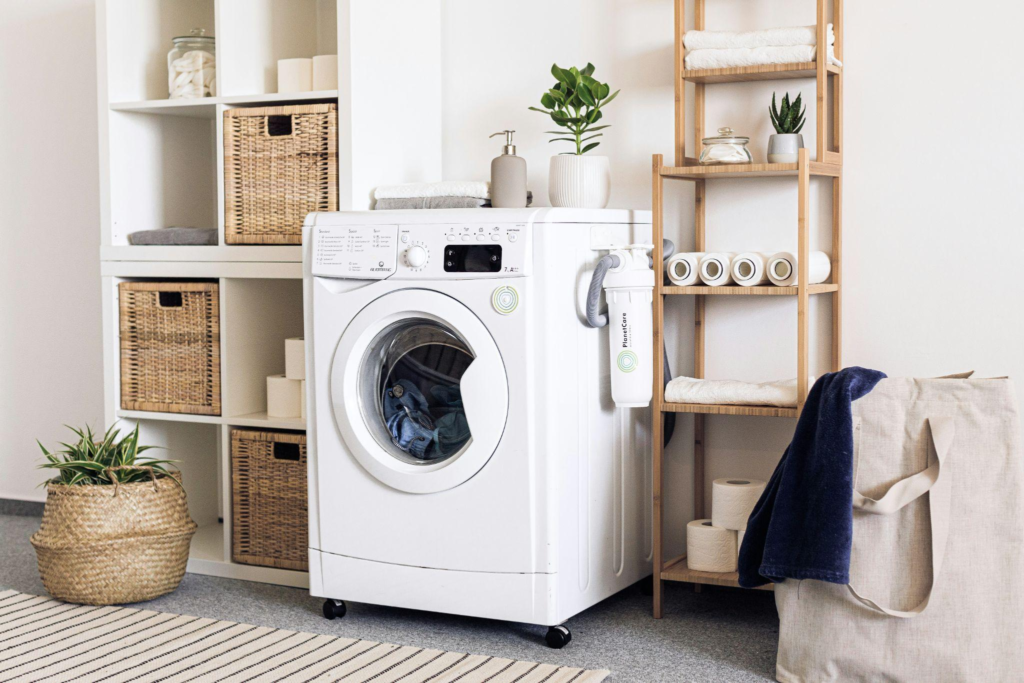
Replacing every cabinet isn’t always necessary. Fresh paint, updated hardware, and modern open shelving can completely change the room’s appearance at a fraction of the cost of a full replacement. Soft neutral shades continue to dominate interiors, but richer greens, warm taupes, and deep navy finishes are increasingly finding their way into utility rooms. Mixing closed storage with open display shelves also helps break up long walls of cabinetry while providing space for decorative baskets, glass jars, or neatly folded linens.
Make Flooring a Design Feature
Flooring is often overlooked in laundry rooms, despite enduring some of the highest levels of daily wear. Moisture, detergent spills, and heavy appliances demand durable materials that can stand up to constant use.
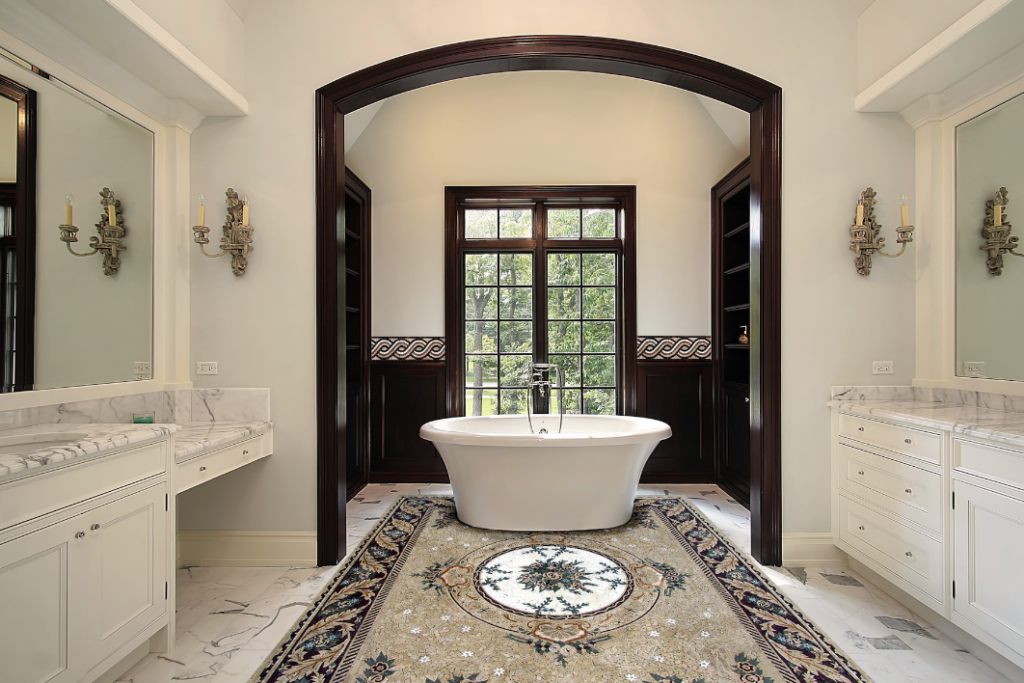
Instead of treating the floor as purely practical, many designers now use it as an opportunity to make the room look more sophisticated. Patterned porcelain tile, natural stone, and mosaic flooring introduce texture and unique aesthetics while maintaining excellent durability. Smaller tile formats can also improve slip resistance, making them particularly well suited to utility spaces.
Improve the Lighting Layer by Layer
Many older laundry rooms rely on a single overhead fixture that casts harsh shadows and makes everyday chores feel less inviting.
Modern lighting design focuses on layering illumination. Ambient ceiling lighting provides general brightness, while under-cabinet LEDs illuminate work surfaces for sorting, folding, and stain treatment. Decorative sconces or pendants can soften the atmosphere, helping the room feel more connected to the rest of the home’s interior design.
Introduce Texture Through Walls and Details
Flat painted walls can make a laundry room feel clinical. Try adding some texture instead.
Moisture-resistant wall paneling, textured wallpaper designed for humid environments, or tiled accent walls all contribute warmth and character. Even subtle architectural details such as beadboard or vertical slats can make the room feel intentionally designed.
For homeowners seeking a more tailored appearance, decorative tile accents like mosaic borders can frame backsplashes or shelving areas beautifully.
Invest in Better Storage Solutions
Clutter is one of the quickest ways for a laundry room to appear dated, regardless of how recently it was renovated.
Today’s storage solutions focus on flexibility. Adjustable shelving accommodates changing household needs, while labeled containers help you navigate daily tasks faster. Hidden pull-out organizers maximize awkward spaces between appliances, and custom cabinetry helps keep cleaning supplies safely out of sight.
Professional organizers often note that reducing visual clutter can make small rooms feel noticeably larger, a principle that applies particularly well in compact utility spaces.
Bring in Natural Materials
Laundry rooms have traditionally favored synthetic finishes chosen solely for durability. While resilience remains important, today’s interiors increasingly balance performance with warmth.
Wood accents, woven baskets, stone countertops, and natural textiles soften the room while complementing a wide range of design styles. Even incorporating a few indoor plants, if you have an adequate amount of light throughout the day, can improve the overall atmosphere and introduce a welcome sense of freshness.