Effective procurement serves as the foundation for modern electronics production. It ensures that components arrive when needed to maintain workflow continuity and prevents costly factory stoppages.
Strategic planning transforms the purchasing function into a competitive advantage. Manufacturers who align their sourcing strategy with broader business goals avoid the trap of reactive firefighting.
Maintaining a clean supply chain requires constant oversight of supplier performance and market dynamics. Leaders must prioritize visibility to ensure production quality remains consistent throughout the assembly process.
Synchronizing procurement with the product lifecycle
Aligning component acquisition with the product development stage prevents surplus inventory from gathering dust. Procurement teams must communicate closely with design engineers to understand specific BOM requirements early.
Phased purchasing allows for flexible adjustments as the design matures. This prevents premature investment in parts that may undergo revisions before final release.
By matching order quantities to specific prototype or production phases, teams optimize cash flow. This approach keeps operational expenses aligned with development milestones effectively.
Reducing lead time volatility through early engagement
Engaging potential suppliers during the earliest design stages helps identify long lead time items. Securing these components early protects the overall schedule from unpredictable shipping delays.
Clear communication regarding project timelines encourages vendors to prioritize your needs within their production queues. This proactive stance neutralizes common supply chain headaches before they manifest.
Early engagement also allows for alternative part suggestions if a specific component shows signs of limited availability. This flexibility is essential for maintaining momentum in complex product builds.
The financial impact of poor procurement practices on production schedules
Inefficient procurement methods often lead to inflated costs due to rush shipping and premium spot-market purchases. Avoiding these expenses preserves the bottom line for critical research and development activities.
Delayed components stall the entire assembly line, causing idle time for skilled technicians. These hidden costs often exceed the actual part expenses by a significant margin.
Implementing disciplined cost tracking and timely procurement cycles keeps projects within budget. Organizations must recognize that budgeting for component reliability protects the project’s total value.
Identifying and mitigating supply chain risks
Supply chain risks evolve rapidly in the global manufacturing environment. Proactive identification of these threats requires continuous monitoring of geopolitical developments and logistics trends.
Developing a culture of transparency allows teams to shift resources before a disruption hits the factory floor. Mitigating risks is essentially an exercise in maintaining operational flexibility.
Maintaining diverse supplier relationships acts as a primary buffer against localized failures. Organizations frequently partner with MPE Electronics to access their expertise in navigating these complex procurement challenges.
Analyzing global geopolitical impacts on component availability
Trade policies and regional conflicts often create sudden waves of uncertainty regarding component stock. Teams must track these developments to anticipate potential shipping bottlenecks or cost increases.
Building geographical diversity into the supplier base reduces reliance on any single unstable region. This ensures that a local crisis does not grind your entire production line to a halt.
Strategic procurement leaders maintain a dashboard of geopolitical risk factors to inform their purchasing decisions. Being informed allows the business to pivot to safer sourcing options in time.
Detecting potential bottlenecks in the bill of materials
Identifying single-source components within the bill of materials remains a critical task for engineering teams. These items often represent the greatest risk to production schedules during a supply disruption.
Analyzing every part for supply alternatives keeps the design as robust as possible. A well-vetted BOM significantly reduces the frequency of emergency procurement requests during active production.
Continuous auditing of part status serves to highlight obsolescence risks before they become critical issues. Data-driven detection turns a reactive process into a managed, orderly activity.
Developing contingency plans for critical raw material shortages
Contingency planning requires a documented strategy for every high-risk component class on the production list. These plans should highlight approved secondary sources and stockpiling thresholds for essential parts.
Regular testing of these contingency plans ensures that the team knows exactly how to activate alternatives when needed. A plan on paper remains useless without practical validation against real-world supply scenarios.
Developing these strategies effectively requires deep collaboration between procurement, engineering, and manufacturing leads. A shared understanding of risks fosters a more resilient organizational response to shortages.
Leveraging relationships with a contract electronics manufacturer UK
Selecting a reliable partner offers significant advantages for maintaining quality and throughput. A trusted contract electronics manufacturer UK provides the necessary stability for companies focused on high-precision assembly.
Close collaboration with a local manufacturer simplifies logistical hurdles and improves overall responsiveness to demand changes. This proximity makes troubleshooting far more efficient when issues arise.
Building a strong connection with a partner organization leads to mutual success through shared production goals. This alignment is vital for companies seeking to scale their output without sacrificing product excellence.
Tapping into local procurement networks for greater reliability
Local manufacturers often maintain established relationships with top-tier component distributors nearby. These connections grant clients access to inventory that might otherwise remain unavailable in a global spot market pool.
Using a local procurement network reduces the geographical distance parts must travel. This proximity lowers the inherent risk of damages often associated with long-haul international shipping routes.
Collaborating with domestic experts ensures that all components meet relevant local quality and safety standards. This alignment reduces compliance risks and simplifies the final inspection process for every unit assembled.
Integrating direct communication channels for buffer stock management
Direct lines of communication between your team and the manufacturing lead optimize inventory control processes. Sharing real-time demand data allows the manufacturer to adjust output schedules dynamically without significant delays.
Integrating digital portals or manual sync meetings provides transparency regarding current stock levels and pending arrivals. Open information creates trust and reduces the need for constant status inquiries by your staff.
This level of integration supports the creation of buffer stock, which serves as a shield against temporary supply spikes. When production needs shift, having an established relationship makes these adjustments much simpler to execute.
Benefits of local proximity for quick-turn assembly and prototype projects
Local proximity allows for rapid adjustments during the critical prototyping phase where speed is absolutely essential. Engineers can visit the production plant to observe the assembly process during early runs.
Physical access to the manufacturing floor facilitates immediate feedback loops for design improvements. This interaction is significantly faster than coordinating feedback across different time zones or continents.
Choosing a contract electronics manufacturer UK ensures that the development process remains agile and responsive. Projects gain from the ability to iterate quickly based on the specific capabilities and material availability of the local partner.
Implementing proactive inventory management strategies
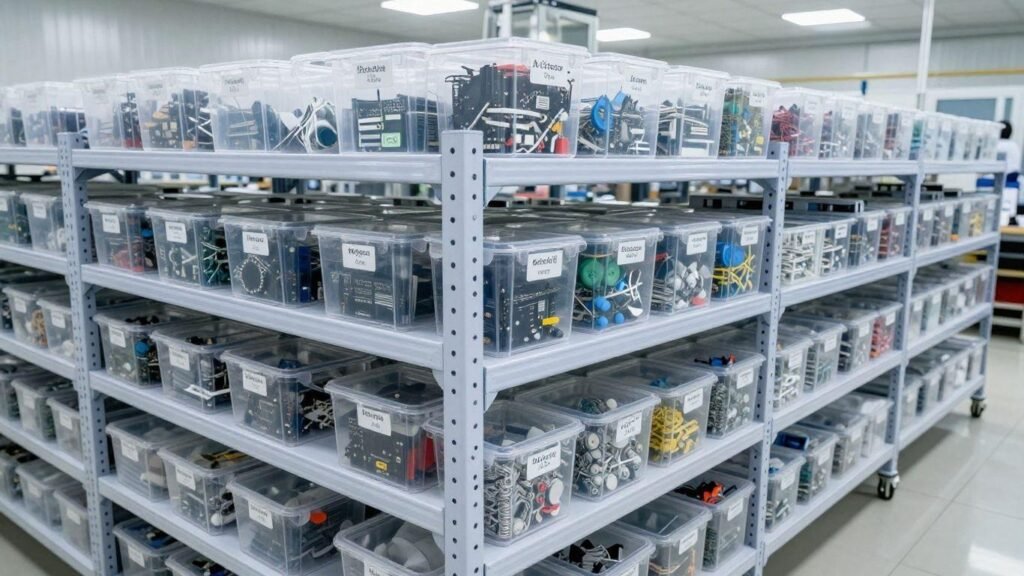
Proactive inventory strategies focus on maintaining the ideal balance between cost and availability. Efficient management prevents excess capital from being tied up in aging stock while ensuring production targets are met.
Modern inventory systems rely on accurate data to inform purchasing decisions and stock adjustments. By implementing these practices, teams reduce waste and maintain a clean, high-performing supply chain.
Effective oversight of inventory levels is a core strength of firms like MPE Electronics, which support high-volume clients with professional assembly services. These systems ensure that components are ready when the schedule demands them.
Balancing just-in-time delivery with necessary safety stock levels
Just-in-time delivery minimizes carrying costs but introduces risks if a supplier misses a window. Maintaining safety stock provides a necessary buffer for those unpredictable moments when supplies arrive later than planned.
Calculating the precise amount of safety stock requires analyzing historical delivery variance and lead time data. An ideal balance protects the production line without inflating the overall inventory burden.
Maintaining the right stock levels is a dynamic process that evolves alongside changing project requirements. Adjustments should be reviewed quarterly to ensure they reflect the current reality of the market.
Utilizing vendor-managed inventory programs to streamline supply
Vendor-managed programs allow the component supplier to monitor your stock levels directly. This setup automates the replenishment process, reducing the administrative burden on your internal purchasing desk.
These programs typically lead to improved accuracy in replenishment orders. Key benefits of adopting this model include:
- Decreased administrative labor for routine ordering
- Reduced probability of component stockouts
- Improved alignment between supplier production and usage
- Enhanced data visibility across the supply chain
Utilizing these programs as a standard operating procedure maintains focus on core engineering tasks. Suppliers gain reliability, and your production line runs with fewer interruptions.
The importance of adopting accurate demand forecasting models
Data-driven forecasting models shift procurement from a guessing game to a scientific process. By analyzing past consumption trends, companies can anticipate fluctuations in required parts with higher degrees of accuracy.
Accurate models also help in planning for seasonal peaks where component demand often outstrips standard supply rates. Preparation based on these estimates prevents emergency procurement charges.
| Component Type | Average Lead Time | Primary Risk Factor |
| Integrated Circuits | 16-24 Weeks | Fabrication Capacity |
| Passive Components | 4-8 Weeks | Global Logistics |
| Custom Enclosures | 6-12 Weeks | Material Sourcing |
Using this tabular data allows managers to see which parts need the earliest priority. This organized approach confirms that resources are allocated toward the most volatile items in the BOM.
Managing component obsolescence and life cycles
Component life cycle management prevents old parts from jeopardizing the success of long-term projects. Proactive teams screen designs for items prone to reaching end-of-life status prematurely.
Monitoring industry notices is a standard practice for maintaining design integrity over many years. When a part reaches its sunset, the business must be ready to replace it without needing a full system redesign.
Successful management requires regular checks of the entire project BOM to identify parts at risk. This focus on long-term project stability is a key differentiator for companies like MPE Electronics.
Monitoring product end-of-life notifications throughout the design phase
Designers must check active availability alerts during the initial selection of components for any new project. Choosing parts that are already slated for discontinuation creates avoidable problems for future versions.
Subscriptions to industry databases send push notifications whenever a part enters a sunset phase. Acting on these alerts immediately gives teams the longest possible window to source alternatives.
Staying up to date on these notices saves immense time and money in the future. It ensures that the current production build does not become obsolete due to a single missing part.
Designing for availability through validated secondary sourcing
Engineers should aim to select parts that have multiple viable secondary sources whenever possible. This strategy provides security against sudden supply changes while keeping the product design adaptable.
Validation of secondary components through rigorous testing confirms they match all electrical and functional requirements of the original choice. Documenting these results ensures that production can continue without delay despite component changes.
Building this flexibility into the design phase makes the final product more resilient to external changes. It is a hallmark of a mature engineering team dedicated to product longevity.
Strategic approaches to last-time-buy decisions for long-term project stability
A last-time-buy decision requires a clear calculation of potential lifetime needs for a specific product version. Firms must decide between purchasing a large final buffer or moving to a different component platform entirely.
The chosen path depends on expected product demand and the projected cost of a major redesign. Having historical sales data ready makes this financial conversation more straightforward for the management team.
Strategic last-time-buy cycles ensure that active projects remain supported even as the broader supply market shifts. This stability is vital for keeping clients satisfied over the product’s full operational life.
Best practices for vendor selection and qualification
Selecting the right vendor is as important as the quality of the components themselves. A rigorous qualification process weeds out unstable partners and favors those with clear, transparent communication channels.
Financial stability serves as an essential indicator of a partner’s ability to maintain operations during lean times. Prioritize vendors who demonstrate a professional approach to quality standards and order tracking.
Building strong partnerships often happens through regular communication and fair terms. A high-quality vendor treats your success as an integral part of their own business stability.
Verifying the financial stability and transparency of component suppliers
Before signing a contract, procurement teams should review public financial data for potential suppliers. A stable partner is less likely to face sudden supply chain disruptions or sudden pricing spikes.
Transparency regarding lead times and raw material sourcing is another vital factor for qualification. Vendors who share data freely allow you to plan your own production cycles with much greater confidence.
Choosing a supplier with a clear financial history and open communication style significantly lowers risk. Never ignore early red flags in business practices during the vetting phase of a partnership.
Evaluating the quality standards and historical track record of vendors
Quality certifications such as ISO standards provide a baseline for reliable operations. Investigating a vendor’s historical track record in similar industries provides insight into their true capabilities and performance consistency.
Requesting references from existing clients can confirm that a vendor maintains its quality across multiple projects. A good supplier will be happy to offer proof of their successes and certifications.
High-performing vendors prioritize consistency in every single delivery. Evaluating this track record prevents the loss of confidence that usually follows inconsistent manufacturing quality or delayed orders.
Building strategic partnerships to secure priority access during market shortages
Deep partnerships are built on long-term reliability and mutual cooperation rather than transaction-oriented business models. When market shortages occur, a loyal partner with a proven record is far more likely to secure priority access for your most sensitive orders.
Collaborating as partners turns the procurement process into a strategic asset. By treating the vendor as an extension of your own operations, you foster a culture of shared responsiveness to market needs.
Consistent communication remains the best bridge between your production needs and the supplier’s output. Success in these partnerships ultimately comes down to treating every phase of the project with clear expectations.
Conclusion
Implementing robust procurement and inventory strategies essentially creates a shield against production delays and supply uncertainty. By choosing a qualified contract electronics manufacturer UK and maintaining transparent communication with partners, companies can ensure their assembly lines run smoothly and efficiently for the long term.