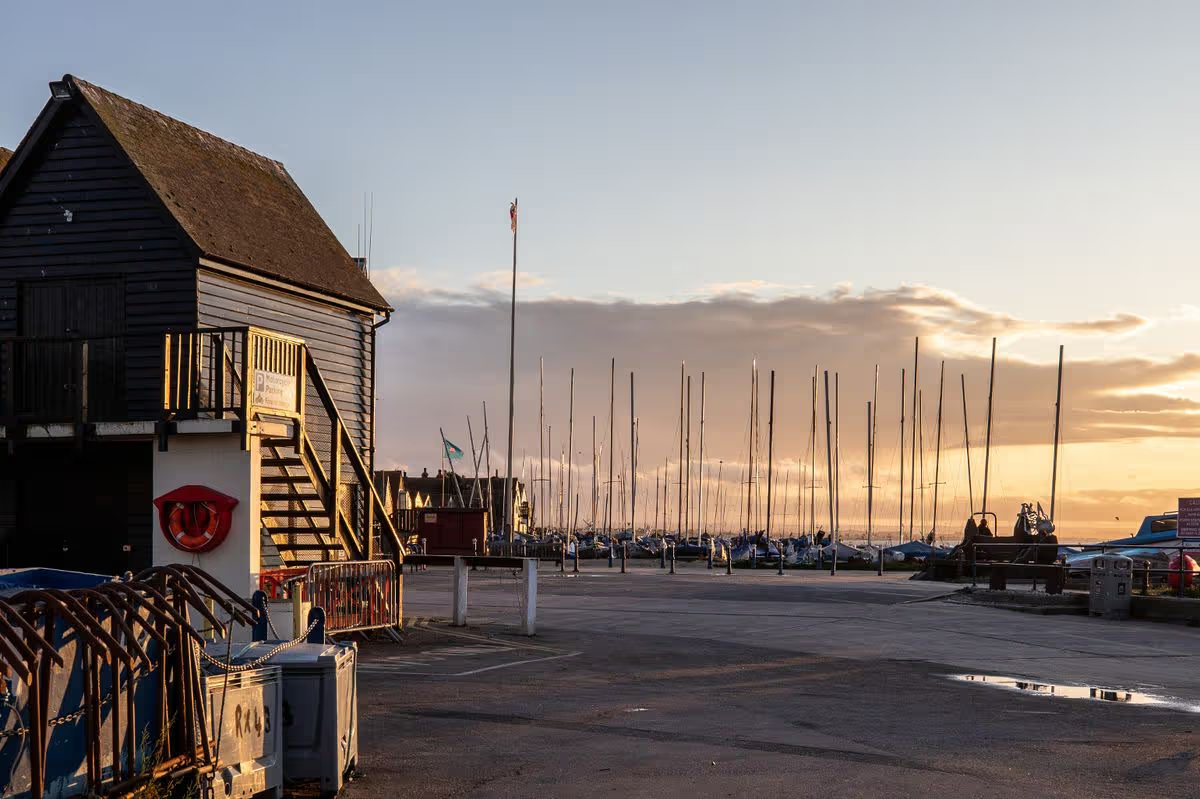
For years, Whitstable has been affectionately dubbed “Islington-on-Sea”, a nickname that reflects its popularity with London buyers looking for a coastal lifestyle without completely disconnecting from the capital. Today, estate agents in Whitstable continue to see interest from buyers drawn to the town’s independent character, seaside setting and strong sense of community. However, as the property market continues to evolve, an important question remains: is Whitstable still the fashionable London escape it became known for, or is the market entering a new chapter?
Where Did the ‘Islington-on-Sea’ Nickname Come From?
Whitstable’s transformation over the past two decades has been remarkable. Once primarily known as a traditional Kentish fishing town famous for its oysters, it gradually became a favourite destination for Londoners searching for something different.
The nickname “Islington-on-Sea” emerged as increasing numbers of buyers from North and East London discovered the town. They were attracted by its colourful streets, period cottages, independent shops, galleries, cafés and, of course, the beach.
Whitstable offered something that many London neighbourhoods could not: space, fresh air and a slower pace of life, while still being within commuting distance of the capital. With direct train services connecting the town to London and the high-speed rail link making journeys even more convenient, Whitstable became particularly appealing to professionals and families seeking a better balance between work and lifestyle.
As demand increased, so did property prices. Homes close to the harbour, beach and town centre became especially sought after, with buyers willing to pay a premium for character properties and coastal views.
Has the London Buyer Market Changed?
There is no doubt that buyer behaviour has changed in recent years. The sharp increase in remote and hybrid working following the pandemic encouraged many people to reassess where they wanted to live.
For some London buyers, the need to be close to the office five days a week disappeared almost overnight. This created new opportunities for coastal towns such as Whitstable, where buyers could enjoy a larger home and a different lifestyle while travelling into London only occasionally.
However, the property market has become more complex since the height of the post-pandemic buying boom. Higher mortgage rates and increased living costs have affected affordability, while some employers have introduced more regular office attendance requirements.
This means that the typical buyer relocating from London may now have different priorities. Instead of simply searching for a weekend retreat or an escape from city life, many buyers are carefully considering commuting costs, mortgage affordability and long-term value.
Yet Whitstable continues to hold a strong appeal. Its popularity is no longer based solely on a fashionable reputation. The town has developed into a well-established lifestyle destination with a broad range of buyers.
More Than Just a London Escape
One reason Whitstable has remained resilient is that demand does not come exclusively from London.
The town attracts local buyers moving within Kent, families looking for good schools and access to Canterbury, retirees seeking a coastal lifestyle and people purchasing second homes.
There is also increasing interest from buyers who want to relocate permanently rather than simply own a weekend property.
This is important because a market that depends on one particular type of buyer can become vulnerable when circumstances change. Whitstable, however, has a wider appeal.
The town offers a combination of factors that are difficult to replicate elsewhere. There is the working harbour, the beach, the independent High Street, excellent restaurants and cafés, cultural events and a strong local identity.
For many buyers, Whitstable feels authentic. While it has become more popular and property values have increased, it has retained much of the character that attracted people in the first place.
Property Prices and the Search for Value
The Whitstable property market is not a single market. Different areas of the town appeal to different buyers and offer varying levels of affordability.
Properties close to the beach, harbour and town centre remain highly desirable. Character cottages, Victorian homes and properties with sea views often attract strong interest because they offer something distinctive.
However, buyers are increasingly looking beyond the most obvious locations.
Areas slightly further from the town centre may offer more space, larger gardens and better value for families. For buyers who are prepared to walk, cycle or travel a short distance into central Whitstable, there can be opportunities to find homes that better suit their budget and lifestyle.
This shift towards value is becoming increasingly important.
During periods of intense demand, buyers may feel pressure to make quick decisions. In a more balanced market, they have greater opportunity to compare properties and consider what they are receiving for their money.
That does not necessarily mean demand for Whitstable has disappeared. Instead, buyers are becoming more selective.
Homes that are realistically priced, well-presented and located in desirable areas are likely to continue attracting attention. Properties that are priced according to the conditions of a previous market may take longer to find a buyer.
The Importance of Lifestyle
The lifestyle factor remains one of Whitstable’s greatest strengths.
The town offers a different rhythm of life from London without feeling isolated. Residents can enjoy morning walks along the seafront, fresh seafood at local restaurants and independent businesses while still having access to larger towns and cities nearby.
Canterbury is within easy reach, offering shopping, entertainment and educational opportunities, while London remains accessible for commuters and visitors.
This balance is one of the reasons the “Islington-on-Sea” nickname has endured. Whitstable may be geographically distant from North London, but there are similarities in its appeal to people who value independent businesses, food culture, creativity and a strong community atmosphere.
However, Whitstable is not simply a seaside version of a London borough.
The town has its own history and identity. Its fishing heritage, maritime character and local traditions are an important part of what makes it unique.
What Does the Future Hold for Whitstable?
The future of the Whitstable property market is likely to depend on several factors, including mortgage rates, buyer confidence and the wider UK economy.
However, the town has advantages that should support long-term demand.
Coastal locations continue to appeal to buyers who are prioritising lifestyle, particularly those with flexible working arrangements. At the same time, the desire for access to outdoor space and a stronger work-life balance remains important.
Whitstable’s challenge will be maintaining the qualities that make it attractive.
As more people discover the town, there will always be concerns about affordability and the impact of rising demand on the local community. For Whitstable to remain successful, it needs to balance its popularity with the preservation of its character.
For homeowners, buyers and sellers, understanding the local market will be essential. National property headlines do not always reflect what is happening on individual streets or in specific neighbourhoods.
Local knowledge can make a significant difference when assessing property values and understanding buyer demand.
So, Is Whitstable Still ‘Islington-on-Sea’?
The answer is both yes and no.
Yes, Whitstable remains popular with London buyers, and its reputation as a stylish coastal destination is still firmly established. The independent shops, food scene, period homes and seaside lifestyle continue to attract people looking for an alternative to city living.
But Whitstable has also grown beyond the nickname.
Today, its property market is supported by a wider range of buyers, including local families, retirees, remote workers and people relocating from across the country.
The market may not experience the same intense demand seen during previous property booms, and buyers are understandably more cautious about affordability. However, Whitstable’s appeal is deeper than a passing trend.
It is no longer simply a place where Londoners buy weekend homes by the sea. It is a town where people choose to build a life.
So, while “Islington-on-Sea” may still raise a smile, Whitstable has earned its place as one of Kent’s most desirable coastal communities in its own right.