Mud on public roads is one of the quickest ways for a construction or quarry operation to attract complaints. Tracked-out soil makes surfaces slippery, blocks drains and can lead to enforcement action. Cleaning vehicles before they leave site is the most reliable way to stop the problem at source.
The risks of mud on the road
Wet clay and soil reduce grip and increase braking distances, which is a genuine hazard for other road users. When it dries, it turns into dust that spreads across neighbouring streets. Highway authorities can require operators to clean roads at their own expense, and repeated incidents may put planning conditions at risk.
How a wheel wash works
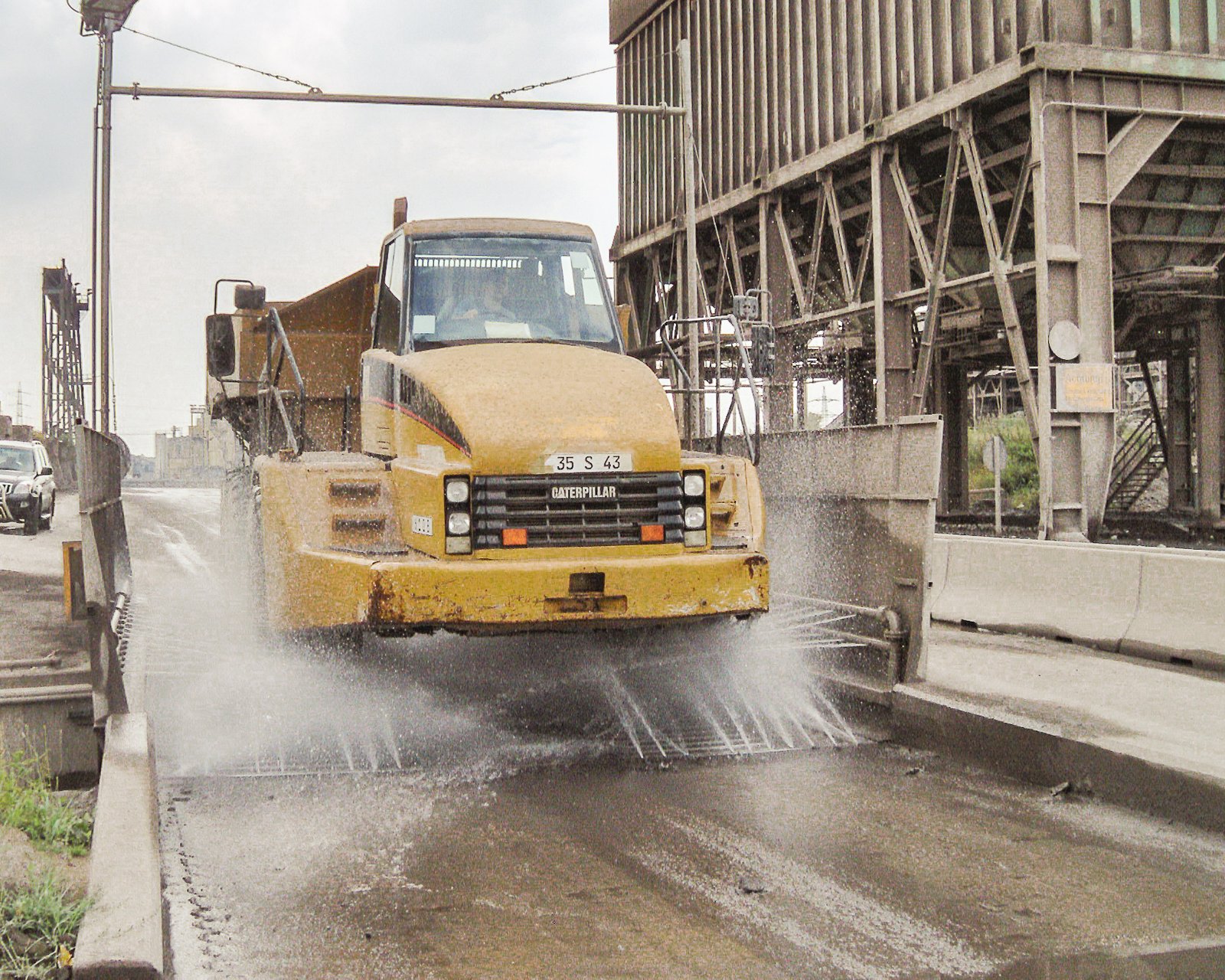
A wheel wash system cleans tyres, wheel arches and the lower parts of vehicles as they drive through or over it. High-pressure nozzles remove soil, and the dirty water is collected, treated and recycled. Because the process is built into the exit route, drivers do not need to stop for manual cleaning, so site traffic keeps flowing.
What to consider when choosing a system
Think about vehicle types and volumes: a few trucks a day need a different setup from a busy quarry with dozens of movements an hour. Check the available space, since some units need a long approach while compact models fit tighter sites. Water supply and drainage matter too. Closed-loop recycling cuts consumption and avoids discharging silty water.
Placement and routine
Place the facility close to the site exit, followed by a stretch of clean hardstanding. Keep sumps and filters maintained, because a system that is full of silt cleans poorly. A short daily check, such as nozzles, water level and sediment, keeps performance stable.
Conclusion
Preventing mud from leaving site protects public roads, reduces complaints and avoids costly clean-up. A properly specified wheel cleaning installation is a modest investment compared with the cost of disruption.