Large language models are becoming central to how businesses, developers, and researchers interact with information. They power chatbots, summarization tools, coding assistants, and much more. But as these models grow in capability, so does the potential for misuse, unintended outputs, and safety failures.
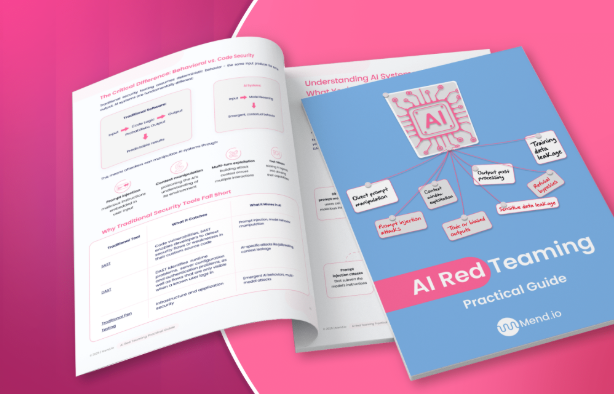
Red teaming is one of the most effective methods to identify these risks before they cause harm. Borrowed from cybersecurity, red teaming in the context of LLMs involves deliberately probing a model with adversarial inputs to uncover weaknesses in its safety guardrails. Understanding this process is increasingly valued in AI development, and it forms a critical component of any serious gen ai training in Hyderabad or elsewhere.
What Is Red Teaming in the Context of LLMs?
Red teaming originally described a practice in military and security settings where a dedicated group would simulate an enemy’s tactics to test an organization’s defenses. In AI, the concept translates directly: a team of testers deliberately attempts to make a model behave in unsafe, biased, or harmful ways.
The goal is not to break the model for malicious purposes. It is to find vulnerabilities before real users — or bad actors — do. Red teamers craft prompts designed to bypass safety filters, extract sensitive information, generate harmful content, or manipulate the model into ignoring its guidelines.
Common techniques include:
- Prompt injection: Embedding hidden instructions within seemingly normal text to override the model’s original directives.
- Jailbreaking: Using carefully structured prompts to convince the model to abandon its safety constraints.
- Role-playing exploits: Asking the model to “pretend” it is a different AI without restrictions, bypassing built-in filters through fictional framing.
- Indirect attacks: Providing documents or external content that contains adversarial instructions the model then follows unknowingly.
Each of these techniques reveals a different category of vulnerability, and a thorough red teaming exercise typically tests all of them systematically.
Why Red Teaming Matters for Safe AI Deployment
Deploying an LLM without adversarial testing is comparable to launching software without security audits. The risks are real and the consequences can be significant.
A model with undetected safety gaps can be manipulated to produce harmful content, reinforce dangerous misinformation, or expose private data it was trained on. In enterprise settings, these failures can damage trust, expose companies to legal liability, and cause direct harm to end users.
Red teaming helps in several specific ways. First, it reveals failure modes that standard benchmarks miss. A model can score well on accuracy tests and still be vulnerable to targeted adversarial prompts. Second, it produces concrete examples of harmful outputs, which can be used to fine-tune the model or adjust its safety filters. Third, it builds organizational awareness of where AI systems are fragile, enabling better design decisions.
For those enrolled in gen ai training in Hyderabad, red teaming offers a practical lens through which to understand model alignment — the broader challenge of ensuring AI systems behave in accordance with human values and intentions.
How Red Teaming Is Conducted in Practice
A structured red teaming exercise typically follows a defined process. It begins with scoping: defining what the model is supposed to do, what it must never do, and what risks are most critical to test.
Next, a team — often a mix of AI safety researchers, domain experts, and ethical hackers — generates adversarial prompts across different categories. These may target harmful content generation, privacy violations, factual manipulation, or social engineering scenarios.
The outputs are then reviewed, categorized by severity, and used to inform model improvements. This might involve adding new training examples that demonstrate correct refusals, adjusting the model’s system prompt, or updating content filtering layers.
Automation is increasingly used to scale red teaming efforts. Tools can generate thousands of adversarial prompt variations and flag outputs that deviate from expected safety behavior. However, human judgment remains essential for evaluating nuanced cases.
Organizations like Anthropic, OpenAI, and Google DeepMind all conduct extensive red teaming before releasing major models. Regulatory frameworks in the EU and other regions are beginning to require documented safety testing as well, making red teaming a formal part of responsible AI development.
Conclusion
Red teaming is not optional for organizations serious about deploying safe and reliable LLMs. It surfaces vulnerabilities that other testing methods miss, provides actionable data for model improvement, and builds the kind of institutional knowledge necessary for long-term AI safety.
As AI systems become embedded in more critical applications, the demand for professionals who understand adversarial testing will only increase. Whether you are a developer, a safety researcher, or a student pursuing gen ai training in Hyderabad, adding red teaming to your skill set positions you to contribute meaningfully to the responsible development of AI.