Modern datasets often contain dozens, hundreds, or even thousands of features. While this high-dimensional data can capture rich information, it also becomes difficult to analyse, visualise, and interpret. This is where dimensionality reduction becomes useful. It helps transform complex data into fewer dimensions while preserving the most meaningful patterns.
Stochastic Neighbor Embedding, commonly referred to as SNE, is one such dimensionality reduction technique. It is designed to preserve the local structure of data, which means it tries to keep similar data points close together after reducing the number of dimensions. This makes it especially useful for visualising clusters, relationships, and hidden structures in large datasets. For learners enrolled in a data science course in Coimbatore, understanding methods like SNE is important because real-world data analysis often depends on clear visual interpretation.
What Is Stochastic Neighbor Embedding?
Stochastic Neighbor Embedding is a non-linear dimensionality reduction method. Unlike linear methods such as Principal Component Analysis, SNE focuses on preserving neighbourhood relationships rather than just maximising variance.
The main idea behind SNE is simple. In high-dimensional space, the algorithm measures how likely one data point is to choose another as its neighbour. It then tries to create a lower-dimensional representation where the same neighbour relationships are preserved as closely as possible.
This probabilistic approach makes SNE different from many other reduction methods. Instead of only concentrating on distances, it pays attention to how points relate to each other locally. If two points are close in the original dataset, SNE attempts to keep them close in the reduced space as well. This is particularly valuable when working with image data, text embeddings, gene expression data, or customer behaviour datasets.
How SNE Works in Practice
SNE begins by converting distances between points in high-dimensional space into probabilities. A high probability means that two points are very similar or close to one another. A low probability means they are far apart.
Next, the algorithm places the same points in a low-dimensional space, usually two or three dimensions, and again calculates probabilities based on their new distances. The goal is to minimise the difference between the probability distributions in the original and reduced spaces.
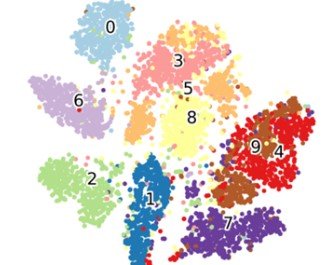
This optimisation process helps the model produce a map where nearby points remain nearby. That is why SNE is often used for visualisation tasks. It can reveal patterns that may not be visible in raw tabular form.
However, the process is computationally expensive. It may also become sensitive to the starting configuration and parameter choices. In practice, later methods like t-SNE were developed to improve some of these limitations, but the original concept of SNE remains foundational for understanding neighbourhood-preserving algorithms.
Why Preserving Local Structure Matters
In many datasets, the most useful information lies not in the overall global arrangement, but in local relationships. For example, in a customer dataset, buyers with similar purchasing patterns may form a small group even if the broader dataset is very diverse. In a medical dataset, patients with similar symptoms may cluster together despite variations across the full population.
Preserving local structure helps analysts detect these meaningful neighbourhoods. It supports better exploratory data analysis and can improve the interpretation of complex datasets. Instead of losing fine-grained relationships, SNE aims to retain them during dimensionality reduction.
This is especially helpful in machine learning workflows where visual inspection is important before modelling. Students taking a data science course in Coimbatore often encounter clustering, classification, and feature engineering tasks where local patterns influence the final outcome. Learning how SNE handles these relationships gives a stronger understanding of how data behaves beyond raw numbers.
Applications of Stochastic Neighbor Embedding
SNE and related methods are widely used in domains where visualisation of high-dimensional data is necessary. In image recognition, it can help project image feature vectors into two-dimensional space for cluster analysis. In natural language processing, it can reveal how word or sentence embeddings group according to meaning. In bioinformatics, it assists in analysing gene expression data where thousands of variables must be interpreted together.
Another important use case is anomaly detection. If most points form dense neighbourhoods and a few remain isolated in the reduced space, those isolated points may indicate unusual observations. This can be used in fraud detection, network security, and fault monitoring.
SNE also supports communication. Data scientists often need to explain model inputs or dataset patterns to business teams that are not highly technical. A visual map created through dimensionality reduction can make abstract feature relationships easier to understand. This practical value is one reason why techniques like SNE are discussed in a data science course in Coimbatore, where learners are expected to connect theory with applied analytics.
Limitations and Practical Considerations
Although SNE is conceptually strong, it has some limitations. It does not always preserve global structure well, which means far-away clusters may not appear with accurate relative distances. It can also be slow for very large datasets. Another challenge is that the results may vary depending on parameter settings and initial point placement.
Because of these issues, SNE is often studied more as a foundation than as the final preferred technique in industry projects. Variants such as t-SNE and UMAP are more common in practical applications. Still, learning SNE is valuable because it explains the logic behind neighbourhood-based dimensionality reduction.
When using SNE, it is important to standardise data where needed, choose parameters carefully, and treat the visual output as an exploratory tool rather than a final proof of structure.
Conclusion
Stochastic Neighbor Embedding is an important dimensionality reduction technique that focuses on preserving local data relationships. By converting neighbour similarity into probabilities and reproducing those similarities in lower dimensions, it helps uncover clusters and patterns in complex datasets. Although it has computational and interpretational limitations, it remains a key concept for understanding non-linear dimensionality reduction. For anyone building strong analytical skills, especially in fields involving visual data exploration, SNE offers a solid foundation in how meaningful data structure can be retained even after reducing dimensions.