Introduction: The ‘S’ That Changed Everything
There is a deliberate and meaningful distinction between Afrobeat, the term Fela Anikulapo-Kuti coined for his politically charged, jazz-and-funk-infused genre in the 1970s, and Afrobeats, the contemporary plural term that encompasses the broader wave of Nigerian and West African pop music that emerged in the early 2000s. The addition of that single ‘s’ is not merely grammatical. It marks a shift from one man’s politically radical vision to a collective commercial and cultural movement.
But as explained in Afro Beats: Origin, Struggles and Global Dominance, the thread between them has never been entirely cut. Nigerian popular music has always carried a political charge, even when it wears the most commercially accessible clothing. Understanding that thread is essential to understanding what Afrobeats actually is.
Fela Kuti: The Foundation
Fela Anikulapo-Kuti was not simply a musician. He was a political philosopher, an activist, and a one-man opposition party to the series of corrupt military governments that ruled Nigeria from the 1960s through the 1990s. His Kalakuta Republic, a commune and recording studio in Lagos, was repeatedly raided by soldiers. His mother was thrown from a window during one raid and later died of her injuries. He was imprisoned multiple times. He buried his mother’s coffin at the gates of the military headquarters. And through all of it, he kept recording, kept performing, kept speaking truth to power in song.
Fela’s music, ‘Zombie,’ ‘Sorrow Tears and Blood,’ ‘ITT (International Thief Thief)’, was not protest music in the Western singer-songwriter tradition. It was extended, hypnotic, collective ritual built on Yoruba polyrhythm and American funk, designed to move bodies and minds simultaneously. It was one of the most radical acts of cultural resistance in 20th-century African history.
The Political Inheritance in Modern Afrobeats
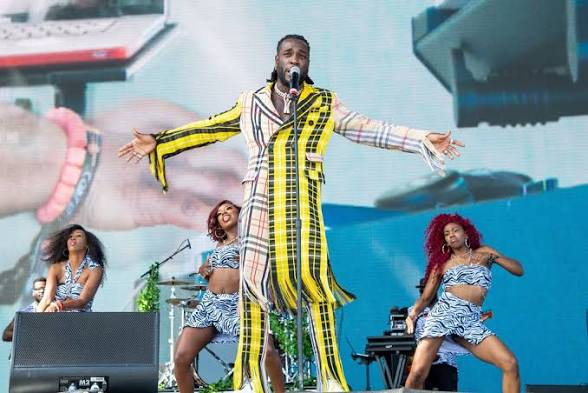
Burna Boy has explicitly claimed Fela’s mantle, and not just aesthetically. His music regularly addresses inequality, police brutality, pan-African political consciousness, and the failures of African leadership. ‘Monsters You Made,’ released in the immediate aftermath of the 2020 #EndSARS protests against police brutality in Nigeria, was as direct and furious as anything in the Fela catalogue.
The #EndSARS movement, in which Nigerian youth took to the streets to protest the Special Anti-Robbery Squad’s documented history of targeting young people, particularly those in creative industries, was, at its peak, inseparable from Afrobeats. Artists organised, performed, documented, and amplified the protests. Music was not background to the movement; it was infrastructure.
The Tension Between Commerce and Conscience
Not all Afrobeats artists carry the political torch with equal consistency, nor should they be expected to. The pressure on Black artists globally, and particularly African artists, to be permanently political is itself a form of cultural expectation that deserves scrutiny. An artist has the right to make joyful music about love and celebration without that being read as political abdication.
And yet, the Nigerian context makes full disengagement difficult. When SARS officers were documented assaulting young people wearing dreadlocks or carrying laptops, the markers of the creative class that produces Afrobeats, the political was not abstract. It was personal.
Conclusion
From Fela’s calabash to Burna Boy’s Grammy-winning microphone, Nigerian music has never entirely left the political arena. The ‘s’ that separates Afrobeat from Afrobeats marks a genuine evolution, toward plurality, toward pop accessibility, toward global reach, but it does not mark a departure. The music still knows what Nigeria is, what Africa is, and what both deserve to be.