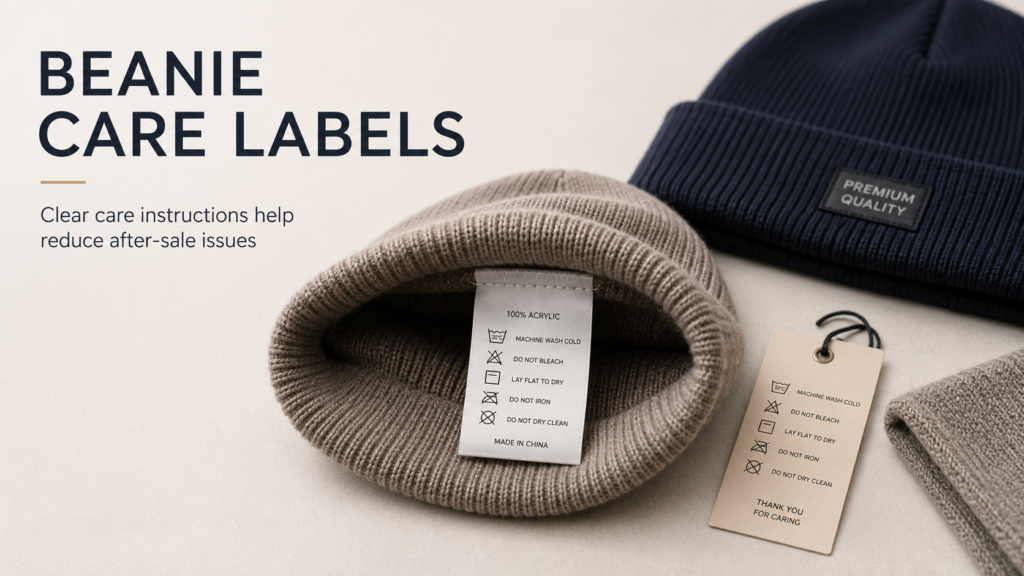
Care labels may seem like a minor detail, but they can affect customer satisfaction after the beanie is delivered. A beanie can look good on arrival, then lose shape, shrink, pill, or become rough after the wrong washing method.
For buyers ordering branded merchandise, care instructions protect more than the product. They protect the brand experience. When customers know how to wash and dry the beanie correctly, the item is more likely to stay wearable for longer.
Why Beanies Need Clear Care Instructions
Beanies are knit products, so they react to heat, water, friction, and drying methods differently from woven caps or simple cotton apparel. A care label should explain whether the beanie should be hand washed, machine washed gently, dried flat, or kept away from high heat.
A simple care label may include:
- Wash cold or hand wash.
- Do not bleach.
- Dry flat.
- Avoid high heat.
- Do not iron decoration directly.
These instructions are especially important when the beanie includes embroidery, woven patches, leather-style patches, printed labels, or lining.
Material Changes the Care Risk
Acrylic is often easier to manage for daily use. It usually handles care better than many natural fibers and is practical for group orders. Wool or wool-blend beanies can feel warmer and more premium, but they may need gentler washing to avoid shrinkage or shape change.
A buyer reviewing an acrylic vs wool beanie comparison should look beyond warmth. Care requirements matter if the product will be sold to customers or distributed to people who may not read detailed washing instructions.
Retail Orders Need Better Label Planning
If the beanie will be sold in a shop, included in a merchandise drop, or given as a premium gift, the care label becomes part of the product presentation. A clear inner label can make the beanie feel more complete and professional.
For a 25-piece internal order, a simple care tag may be enough. For a 100–300 piece retail-style order, buyers may want a more finished label system, including brand label, size information, fiber content, and washing guidance.
Decoration Methods Can Affect Washing
Embroidery is usually durable, but it still needs proper care. Woven patches may hold detail well, but the attachment method matters. Leather-style patches can be sensitive to heat or soaking, depending on the material. Printed details may need gentler washing.
When ordering custom beanies with logo, buyers should ask whether the care instruction matches both the base fabric and the decoration method.
Common Mistakes to Avoid
One mistake is using the same care instruction for every material. Acrylic, wool, cotton blends, and lined beanies may require different guidance.
Another mistake is ignoring the patch or label. The base beanie may tolerate washing, but the decoration may not.
A third mistake is making care instructions too long. Customers need clear, simple instructions they can follow quickly.
Conclusion
Care labels are small, but they reduce after-sale problems and make the product feel more trustworthy. They help customers protect the beanie and help brands avoid unnecessary complaints.
For custom beanie orders, care instructions should be planned together with material, lining, decoration, and packaging. A clear label can make the final product feel more professional from the first wear to long-term use.