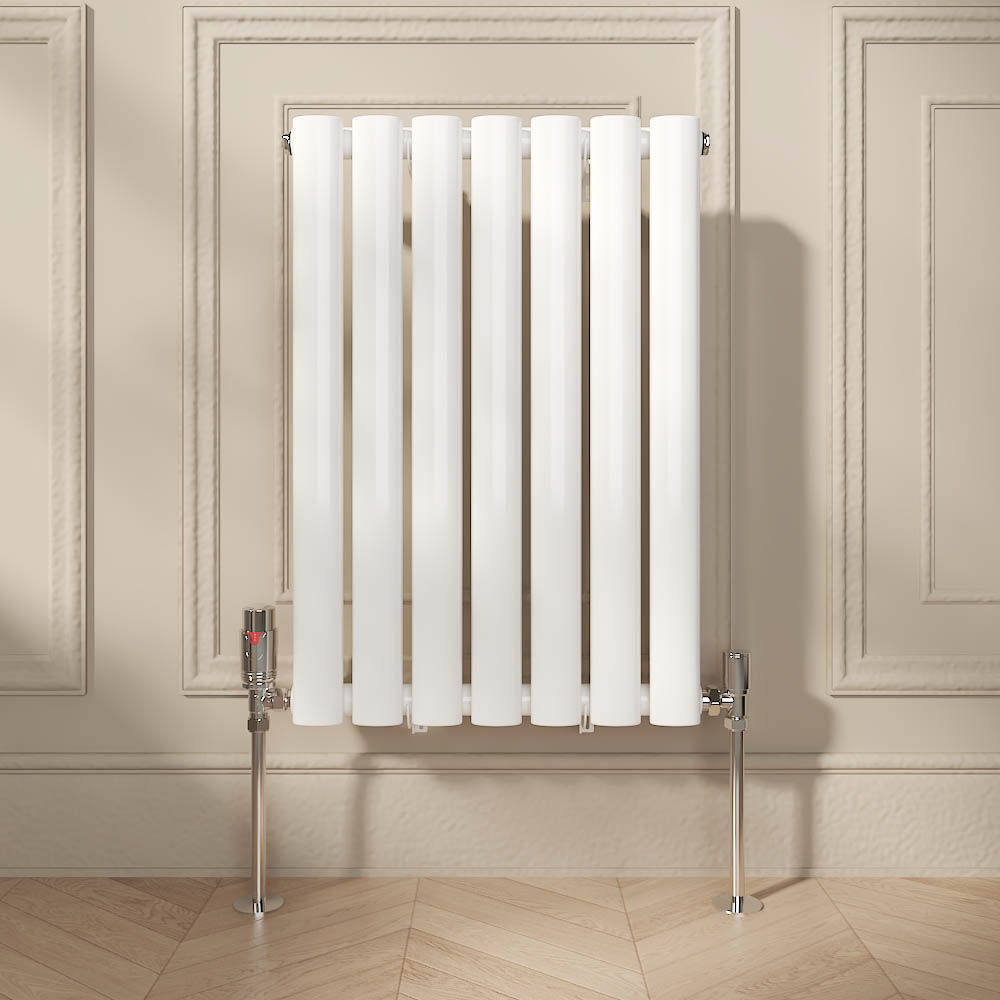
Vertical radiators are becoming an extremely popular choice, being used not only for their excellent heat output but also as a stylish feature of a room. Many properties these days do not have large areas of wall space, so a vertical designer radiator is a great space-saving option. One of the questions we get asked the most is whether vertical radiators are less efficient than horizontal radiators.
Vertical radiators are just as efficient as their horizontal counterparts. The main points of difference are how the heat is distributed from the radiator and how the radiator is fixed. These factors do need consideration, but do not necessarily mean that vertical radiators are less efficient than their horizontal ones.
This guide outlines the key things to consider when choosing between vertical radiators and horizontal radiators for your home.
How Do Radiators Work?
Here is a brief guide to how a radiator works, allowing us to compare the Vertical Radiator with the Horizontal style.
There are many types of radiators available on the market. The majority of them work on the same basic principle. They are connected to the heating system in your home and use the hot water from the system to heat the radiator. The heat is then released into the room by a combination of radiation and convection.
As the air closest to the radiator gets warm, it rises, allowing cooler air to come down and get warm too. This process is then repeated until all of the heat from the radiator has been distributed throughout the room.
Are Vertical Radiators Less Efficient?
There is a common misconception among the public that vertical radiators are less efficient than horizontal ones, due to hot air rising to the ceiling. This is often the opinion that a tall radiator will not spread the heat enough throughout the room.
Modern Vertical Radiators have been designed with efficiency in mind. Many feature multiple columns, double panels, and advanced internal waterways, which all work together to distribute heat in the most efficient way possible.
As long as the radiator has the correct amount of BTUs for the room, the form of the radiator becomes less of an issue, and a vertical radiator will provide the same warmth as a horizontal one.
The most important thing to consider when purchasing a radiator is the required heat output from the appliance to effectively heat the room in which it will be used.
Heat Distribution Differences
Although both radiator types are efficient, they distribute heat differently.
Horizontal Radiators
The Classic horizontal radiator is a wider, lower radiator compared to its vertical counterpart. Due to its larger surface area, the horizontal radiator distributes the same amount of heat over a greater area, thus effectively heating an entire room. Classic horizontal radiators are often mounted below windows and form a ‘wall’ of warmth to counteract the cold air entering a room.
Advantages include:
- Even heat distribution.
- Familiar and traditional design.
- Suitable for most rooms.
- A wide range of sizes available.
Vertical Radiators
Vertical radiators are taller and narrower. They release heat over a smaller width, making them ideal for rooms with limited wall space.
Benefits include:
- Excellent space-saving solution.
- Stylish and contemporary appearance.
- Ideal for small rooms and awkward layouts.
- Available in a variety of colours and finishes.
While the warmth may feel slightly different, this does not necessarily mean the radiator is less effective.
Do Vertical Radiators Produce Enough Heat?
Yes. Modern vertical radiators are available with impressive heat outputs.
Many double-panel or column-style vertical radiators produce heat outputs comparable to, or even greater than, standard horizontal radiators.
For example:
- A small single-panel vertical radiator may suit a bathroom or hallway.
- A larger double-panel vertical radiator can comfortably heat living rooms and bedrooms.
- Designer vertical radiators often provide high BTU ratings despite their slim profile.
When selecting any radiator, always calculate the required BTU for the room. Factors such as room size, insulation, window area, and ceiling height all influence the amount of heat needed.
Space-Saving Advantages
One reason homeowners choose vertical radiators is to make better use of available wall space.
Horizontal radiators can occupy valuable areas beneath windows or along walls where furniture might otherwise be placed. In contrast, a vertical radiator uses height rather than width, freeing up more room for sofas, storage units, and decorative features.
Vertical radiators are especially useful in:
- Kitchens.
- Hallways.
- Small bedrooms.
- Home offices.
- Bathrooms.
- Open-plan living spaces.
The slim profile of a Vertical Radiator allows it to be taller than it is wide, making perfect use of the height of a wall, even in the smallest of rooms.
Energy Efficiency Considerations
The efficiency of a radiator depends far more on its size and design than its orientation.
A properly sized vertical radiator will use the same amount of energy as an equivalent horizontal model. In fact, many modern radiators are manufactured using advanced materials and designs that improve heat transfer and reduce energy consumption.
To maximise efficiency:
- Choose the correct BTU rating.
- Install thermostatic radiator valves (TRVs).
- Bleed radiators regularly.
- Ensure your home is properly insulated.
- Service your boiler according to the manufacturer’s recommendations.
These factors have a much greater impact on energy bills than whether the radiator is vertical or horizontal.
Which Radiator Style Is Best?
The best option depends on your room layout and personal preferences.
Choose a Horizontal Radiator If:
- You have plenty of wall space.
- You prefer a traditional look.
- You want even heat distribution.
- You are replacing an existing radiator with minimal pipework changes.
Choose a Vertical Radiator If:
- Wall space is limited.
- You want a contemporary design.
- You need flexibility in furniture placement.
- You want the radiator to become a feature of the room.
Both styles are capable of delivering excellent performance when selected correctly.
Are vertical radiators less efficient than horizontal radiators?
No, vertical radiators are as efficient as horizontal radiators these days. It is key to select the correct-sized radiator for the room it will be installed in, as indicated by the BTU required for that room.
Horizontal radiators are so familiar to us that most people assume that all radiators have to be hung up horizontally. But no rule says that all radiators have to be hung up. The traditional style of radiator is horizontal, providing an even spread of heat, but modern vertical radiators are designed to provide great heat too. They are perfect for the modern home, providing a stylish alternative to the traditional design.
It’s really about choice. You need to pick the most suitable radiator for you and your home.