
Scotland does not do storms by halves. One night of driving rain and gusts coming off the Forth is often all it takes to turn a perfectly sound roof into a genuine worry, and Edinburgh homeowners know this better than most. Slipped slates, torn flashing, blocked valley gutters and battered chimney stacks are all common sights the morning after a named storm has passed through.
What you do in the first 24 hours matters more than most people realise. This guide walks through the right order to do things in, the mistakes worth avoiding, and one issue that is specific to Edinburgh’s tenement stock and catches a lot of flat owners off guard.
Why the First 24 Hours Matter
A damaged roof rarely stays “just a bit damaged” for long. A single gap where a slate has slipped can let water reach the sarking and roof timbers within hours, and once moisture is into a roof structure it spreads quietly. Insulation absorbs it, plaster stains, and timber that was sound last week starts to soften.
Acting quickly is not about panicking. It is about containing a manageable problem before it turns into damp walls, ruined insulation and structural rot that takes far longer to put right.
The First 24 Hours: A Five-Step Checklist
Work through these in order. The sequence matters, because each step protects the one after it.
Step 1: Check for Immediate Safety Risks, From the Ground
Before anything else, walk around the outside of your property and look up. Stay firmly on the ground while you do it.
Look for anything obviously hanging loose: dislodged slates, sagging guttering, lifted ridge tiles, or debris caught on the roofline. Anything hanging can come down without warning, and it does not need much wind to bring it. If you spot exposed electrical wiring, a leaning chimney stack, or masonry that looks unstable, keep well clear and treat it as an emergency.
Never climb up to inspect the roof yourself, however tempting it is to see the damage properly. A storm-damaged roof is far more dangerous than it looks: wet slate is slick, sections that appear intact may have lost their fixings, and there is no way to tell from the surface which parts will still hold your weight.
Step 2: Look Inside for Signs of Water Ingress
Once you are confident the exterior is safe to be near, head indoors. Check the loft space if you have access to one, and go room by room looking at ceilings, particularly in upstairs rooms and around chimney breasts.
Damp patches, discoloured or bubbling plaster, a musty smell, or a ceiling rose that looks stained are all early signs that the roof covering has been breached somewhere above. If water is actively coming through, place a container underneath to catch it and move furniture, electronics and anything valuable out of the way. If a ceiling is bulging, keep out of the room entirely and treat it as urgent, because trapped water is heavy and ceilings do give way.
Catching this early is what stops a contained leak from becoming a job that involves ceilings, flooring and electrics.
Step 3: Document Everything
Take clear photographs of any visible damage, both from inside and from a safe distance outside. This step is easy to skip in the moment, and it matters far more than people expect.
Insurance claims move much more smoothly when you have dated, timestamped evidence of the damage as it appeared shortly after the storm, rather than a description written weeks later once repairs are already under way. Photograph missing slates, damaged guttering, displaced flashing and any interior water marks, and keep a short written note of when you first noticed each issue.
If a named storm was forecast, note the date. Insurers often cross-reference claims against Met Office wind speed records for the area, and having the timeline straight from the outset saves a lot of back and forth later.
Step 4: Contact Your Insurance Provider
With photographs in hand, get in touch with your insurer as soon as you reasonably can. Most policies cover storm damage, and claims are generally processed faster when reported promptly rather than weeks after the event.
Ask specifically whether emergency temporary works, such as sheeting over an exposed section of roof, are covered under your policy. Temporary weatherproofing is often the single most useful thing that can be done in the first day or two, because it stops further water ingress while a permanent repair is arranged.
If you own a flat in a tenement, read the section below before you make the call, because it affects who should be making the claim in the first place.
Step 5: Call a Professional Roofer, Not a DIY Fix
It is understandable to want to sort things yourself, especially if the damage looks minor. Roof repairs are one of those jobs that genuinely belong to trained professionals.
Working at height on a storm-damaged roof carries real risk, and a rushed patch job can easily make the underlying problem worse or give an insurer grounds to question a claim. A tarpaulin fixed badly can also act as a sail in the next round of wind, which is how a single missing slate turns into a much larger area of damage.
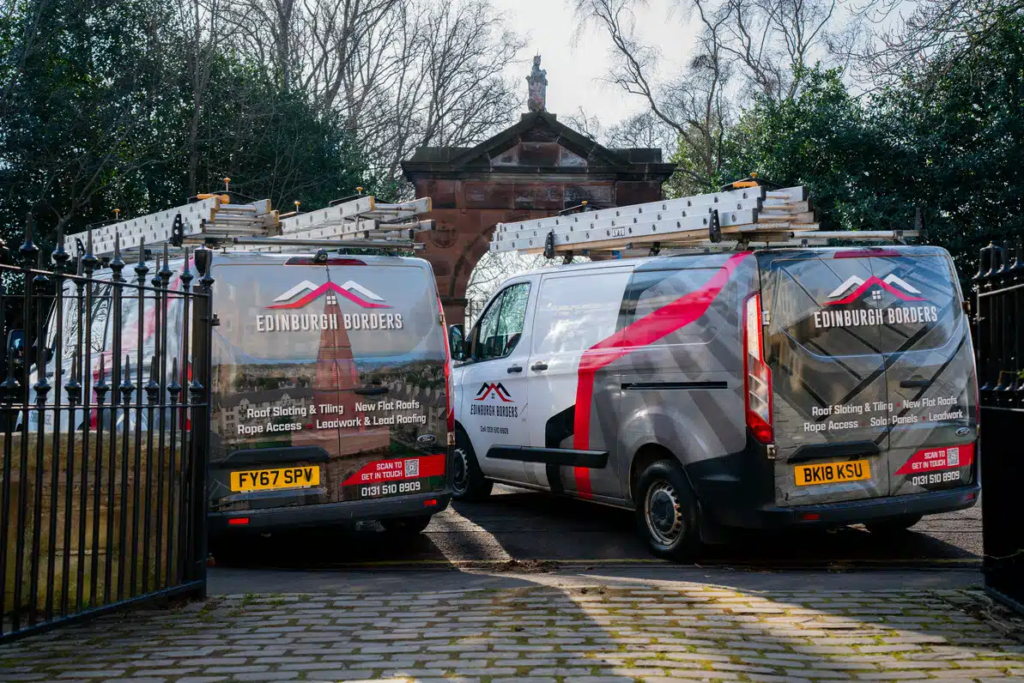
This is exactly where a trusted local team makes the difference. The roofers Edinburgh homeowners rely on for urgent storm call-outs will be able to assess the damage properly, carry out safe temporary weatherproofing where it is needed, and set out a clear plan for permanent repair.
Edinburgh Tenements: Check Whether the Roof Is Yours to Repair
This is the point that catches out a lot of Edinburgh flat owners, and it is worth understanding before you arrange anything permanent.
In most tenement properties, the roof is common property rather than something any single owner controls. Where the title deeds do not say otherwise, the Tenements (Scotland) Act 2004 applies its Tenement Management Scheme, under which responsibility for the roof and its repair is shared between the flat owners in the building, and decisions about repairs are taken collectively rather than by one owner acting alone.
In practice that means a few things:
- Read your title deeds first: They take precedence, and some buildings apportion shares differently from the default scheme.
- Notify your neighbours early: A repair that all owners have been told about promptly tends to progress far more smoothly than one that arrives as a surprise.
- Contact your factor if the building has one: Many factored buildings have their own process for common repairs and may have arrangements already in place.
- Check whether the building holds a block policy: Many tenements insure the common parts collectively, which changes who makes the claim.
None of this stops you arranging emergency work to make the building safe and watertight. It simply means that permanent repairs to a shared roof usually need to be handled as a common repair rather than as a private job.
What Happens During a Professional Assessment
A qualified roofer will inspect the full roof structure, not just the section that is obviously damaged. Storm damage almost always affects more of the roof than what is visible from street level, and the parts that fail next are usually the ones that were quietly weakened rather than the ones that came off first.
A proper assessment will typically cover:
- Flashing around chimneys, abutments and skylights
- Slipped, cracked or nail-sick slates across the whole slope
- Ridge and hip tiles, and the mortar bedding holding them
- Valley gutters, which block easily with storm debris
- Guttering and downpipes, checking for splits, sagging and pooling
- The chimney stack itself, including pointing and pots
- Sarking boards and roof timbers where access allows
Ridge tiles, valleys and the joints around skylights are the most commonly missed weak points after high winds, and they are difficult to judge without a trained eye and safe access.
Edinburgh Borders Roofing is an established Edinburgh roofing company offering free photographic roof surveys, which give you a clear and honest picture of what actually needs attention before anything is agreed. Their surveyors document the roof with photographs and provide a written report, so you know exactly what you are dealing with rather than taking someone’s word for it.
That written record is also useful for your insurer, since it gives them the same evidence you have.
Doors, Windows and Locks Take a Beating Too
The roof is understandably the priority, but severe weather affects the rest of a building’s envelope as well. Wind pressure can shift door frames slightly, and a frame that has moved by even a few millimetres will stop a multipoint locking mechanism from engaging cleanly. uPVC doors are particularly prone to this.
The instinct is to force the handle. That is usually what turns a minor alignment issue into a failed mechanism, because the gearbox inside the door is the part that gives way first. If a door suddenly needs shouldering or lifting to lock after a storm, stop using it that way and have the alignment checked instead.
This is not a Scottish quirk. It is one of the most common secondary storm callouts anywhere in the country, as familiar to a locksmith in Coventry as it is to a tradesperson working in Leith. Wherever you are, the advice is the same: do not force it.
Common Mistakes After a Storm
A few missteps come up again and again, and they are all avoidable.
Waiting because the damage “does not look that bad.” Water damage compounds quietly and rarely stays contained to the area where it started. What looks like one slate in October is often a section of sodden sarking by January. Hiring whoever turns up first. Storm damage brings out opportunistic and unqualified operators who work door to door while homeowners are under pressure and keen to have the problem gone. Check credentials properly. Membership of a body such as the NFRC, verifiable insurance, and a real trading history all matter more than how quickly someone can start.
Attempting a temporary fix yourself. Climbing up to nail down a loose slate puts you at genuine risk for the sake of a repair a professional can carry out safely in a fraction of the time. Arranging a private repair on a shared tenement roof. This one causes real friction later. Check the ownership position before committing to permanent works.
Final Thoughts
Storm damage is stressful, but a clear and methodical response in the first 24 hours puts you in a far stronger position, both for protecting the building and for any insurance claim that follows.
Stay on the ground, document what you see, understand who is responsible for the roof before you commit to permanent works, and bring in a qualified professional rather than risking a DIY fix. Edinburgh’s weather will keep testing the city’s roofs. A well-handled response now is what keeps the next storm from finding the same weak spot.
For anyone dealing with storm damage across Edinburgh, Leith, Musselburgh, Midlothian and the surrounding areas, Edinburgh roofing specialists Edinburgh Borders Roofing offer free photographic roof surveys with no obligation, giving you a documented picture of exactly what your roof needs.
Ready to protect your property?
Visit Edinburgh Borders Roofing to find out why so many homeowners and businesses across the city trust them with their roofing needs. With over 30 years of experience across Edinburgh, Leith, Musselburgh, Midlothian and the Scottish Borders, their fully insured team handles everything from emergency storm call-outs to complete roof replacements, all backed by a 100% guarantee.
Book a free, no-obligation photographic roof survey and get an honest, documented assessment of exactly what your roof needs.
Call us today at 0131 510 8909.
Location: https://share.google/Qb5skqCHFeEiE1hKZ