Structured data — stored in rows and columns across spreadsheets, databases, and data warehouses — powers the majority of business analytics worldwide. Whether it is customer transaction records, sensor readings, or hospital admissions data, making accurate predictions from tabular datasets remains one of the most common and valuable tasks in data science.
XGBoost (Extreme Gradient Boosting) has become the go-to algorithm for this type of work. Developed by Tianqi Chen and introduced in 2016, it consistently delivers top results on structured data problems and has powered winning solutions in hundreds of machine learning competitions. For anyone enrolled in a data scientist course in Kolkata, XGBoost is a fundamental tool — both for its practical utility and the understanding it builds around ensemble learning.
How XGBoost Works: The Gradient Boosting Foundation
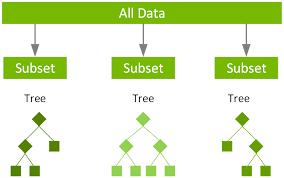
XGBoost is built on gradient boosting, an ensemble technique that combines many weak learners — typically shallow decision trees — into a single strong predictive model. Unlike bagging methods like Random Forest, which build trees independently and average their outputs, gradient boosting builds trees sequentially. Each new tree concentrates on correcting the errors made by the previous ones.
The process works as follows. A simple initial prediction is made — often the mean of the target variable. The residual errors from that prediction are calculated, and a new decision tree is trained specifically to predict those residuals. That tree’s output is scaled by a learning rate and added to the existing model. This cycle repeats for a set number of rounds.
XGBoost enhances this base framework with regularization terms (L1 and L2) to prevent overfitting, a built-in mechanism to handle missing values, support for parallel tree construction, and hardware-level optimizations that make it significantly faster than earlier gradient boosting implementations.
Key Hyperparameters and How to Tune Them
One reason XGBoost rewards careful attention is its range of configurable hyperparameters. Understanding what each one controls is essential for building reliable models.
n_estimators sets the number of boosting rounds. max_depth controls how deep each tree grows — shallower trees reduce variance, while deeper ones capture more complex patterns. learning_rate scales each tree’s contribution; lower values require more rounds but often yield better generalization.
subsample and colsample_bytree introduce randomness by training each tree on a random subset of rows and features respectively, which helps prevent overfitting. reg_alpha and reg_lambda apply L1 and L2 regularization to further constrain the model.
Tuning these parameters is typically done using cross-validation combined with grid search, random search, or Bayesian optimization. A well-structured data scientist course in Kolkata will include practical labs where learners tune these parameters on real datasets — building the intuition needed to make informed decisions rather than depending purely on trial and error.
Practical Applications Across Industries
XGBoost’s reliability on structured data has made it a standard tool across many sectors:
Finance and Banking: Credit scoring models use XGBoost to predict loan default probability by learning patterns from borrower history, income, and repayment behavior. Fraud detection systems apply it to flag suspicious transactions in real time.
Healthcare: Hospitals use gradient boosting models to predict patient readmission risk, helping clinical teams prioritize follow-up care. XGBoost also performs well on survival analysis tasks with tabular clinical data.
Retail and E-commerce: Demand forecasting and churn prediction models benefit from XGBoost’s ability to capture non-linear relationships across many variables simultaneously.
Energy and Manufacturing: Predictive maintenance models use XGBoost to flag equipment likely to fail before costly breakdowns occur.
In each context, XGBoost is a natural fit — often outperforming deep learning approaches, which require substantially more data and compute on structured problems.
Implementing XGBoost: What to Know Before You Start
Getting started with XGBoost in Python is straightforward. The library integrates cleanly with scikit-learn, pandas, and standard ML pipelines. A minimal implementation involves initializing the classifier with chosen hyperparameters, fitting it on training data, and evaluating predictions on a held-out test set.
Beyond basic usage, XGBoost supports early stopping — halting training automatically when validation performance plateaus — which saves time and prevents overfitting without manual intervention. It also provides built-in feature importance scores, making it easier to interpret which variables drive predictions most strongly. Integration with SHAP values takes this further, offering instance-level explanations increasingly required in regulated industries like finance and healthcare.
Conclusion
XGBoost remains one of the most dependable algorithms for structured data problems. Its combination of speed, predictive accuracy, regularization, and interpretability tools makes it applicable across a wide range of business and scientific challenges.
Mastering XGBoost requires hands-on practice, a solid grasp of the gradient boosting framework, and disciplined hyperparameter tuning. For learners in a data scientist course in Kolkata, it is one of the highest-return skills to develop early — delivering value across every domain where tabular data is involved.