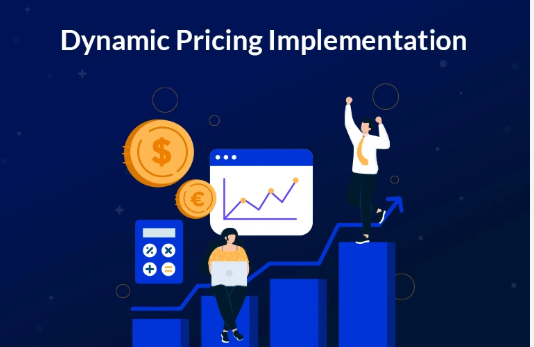
Price setting has for a long time been one of the most important business decisions. Previously, companies would set a fixed price and keep it for weeks or months. Nowadays, however, that method is quickly becoming obsolete. By using dynamic pricing algorithms businesses are able to modify their prices automatically and continuously, reacting in real time to changes in demand, competition, and market conditions. Whether it’s with ride-hailing apps, airline tickets or e-commerce websites, dynamic pricing is altering the way businesses earn revenue. It is worthwhile for not only technology specialists but also for business analysts who wish to make more informed, data-driven decisions to understand how these algorithms function.
What Is Dynamic Pricing?
Dynamic pricing is a method in which prices vary according to current data rather than remaining constant. The algorithm takes into account a number of factors such as the present level of demand, the amount of inventory available, the prices charged by competitors, the time of day, seasonal trends, and customer behaviour patterns. It then uses this data to work out the best price to charge at any particular moment.
For instance, if there is a sudden increase in demand for a hotel room during a festival weekend the pricing algorithm picks up on this rise and increases the price automatically; when demand decreases during the midweek the price is lowered in order to draw in more bookings. This ongoing adjustment enables businesses to maximise their revenue while at the same time keeping their prices competitive.
A dynamic pricing system consists of three main parts: a data collection layer, a machine learning or rules-based model, and a pricing engine which then sends the new prices to the customer-facing platform. Instead of merely reacting to demand after the fact, many current systems make use of predictive analytics to anticipate demand before it reaches its peak.
How Dynamic Pricing Algorithms Work
The dynamic pricing algorithms can take a number of different approaches depending on the industry and the business objectives.
Demand-based pricing is the simplest of the models; it keeps an eye on sales velocity and increases prices when demand goes up and reduces them when sales slow down. This approach is used by large retailers to get rid of surplus stock quickly or to guard their margins when there is high demand.
Competitive pricing means keeping an eye on your rivals’ prices in real time. Algorithms visit the competitors’ websites, compare the products that are listed, and then alter the prices so that they remain within a competitive range. E-commerce platforms place great trust in this approach.
Segmented pricing sets different price points aimed at various customer groups. For example, an airline can provide cheaper fares to those who book early and more expensive ones to last-minute travellers, since the algorithm knows that late buyers are generally less sensitive to price.
Pricing that is based on time refers to the time at which the purchase or usage takes place; electricity suppliers apply this by charging higher rates during the hours of peak consumption and lower rates at night in order to get customers to alter their patterns of usage.
In all cases the algorithm runs continuously, fetching new data and recalculating the optimal price many times each day or even each hour.
Business Analyst’s Role in Dynamic Pricing
Business analysts have a central role in the design, verification, and improvement of dynamic pricing systems; they convert business objectives into requirements for the model, specify the key performance indicators which the algorithm should optimise, and keep an eye on the results to make sure that the pricing strategy remains in line with the overall goals.
Analysts must understand the data inputs, the reasoning of the pricing model, and the effect that a change in one variable has on the outcomes. They also cooperate closely with data scientists and product teams in order to identify any pricing errors, odd trends, or unintended effects on customers before these issues worsen.
Anyone who wishes to enhance their expertise in this field should undertake structured learning; more and more programmes in Hyderabad that provide coaching for business analysts now include subjects like pricing analytics, demand forecasting, and algorithm interpretation, giving the professionals the practical abilities required to function in data-driven environments.
Challenges and Ethical Considerations
Dynamic pricing does have its disadvantages; it may upset customers if, when demand is high, they see prices suddenly go up. Airlines and ride-sharing companies have come under public criticism for what customers view as price gouging in emergencies or during bad weather.
Businesses should also make sure that their algorithms do not by accident, discriminate against particular customer groups or breach consumer protection regulations. Customers are more likely to trust a business when it maintains transparency, acts fairly, and clearly communicates its pricing policies, even when using a dynamic pricing model.
For those analysts new to the field, coaching as a business analyst coaching in hyderabad and similar programmes assist in developing the ethical judgement and analytical skills needed to design pricing systems that achieve a balance between profitability and fairness.
Conclusion
Dynamic pricing algorithms are a powerful means for businesses that want to optimise their revenue in competitive markets. Through the use of real-time data and smart models, companies are able to respond to changes in demand more quickly and accurately than is possible with any manual method. It has now become an essential aspect of the job for business analysts to understand the mechanics, limitations, and ethical considerations of these systems. Since pricing is becoming more and more a matter of data science, those analysts who undertake the appropriate training will be in a better position to provide real value to their organisations.