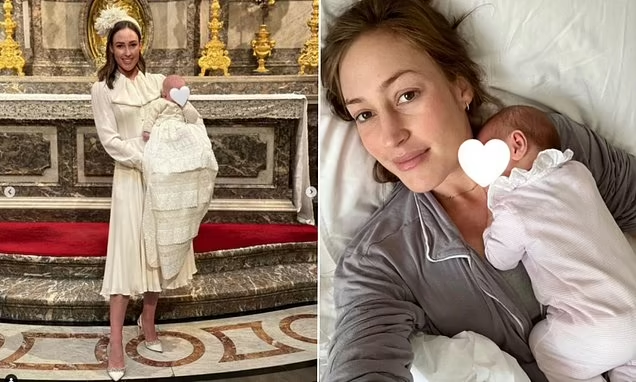
Introduction to lady tatiana mountbatten birth announcement
When people hear the phrase “Lady Tatiana Mountbatten birth announcement,” it may sound like a small historical footnote in the long and intricate story of European royalty. In reality, her birth represents much more than a single announcement in aristocratic circles. It marked the continuation of a lineage that connects British nobility, European royal houses, and the evolving identity of modern aristocracy. Lady Tatiana Mountbatten’s arrival came at a time when royal families were redefining their roles in a rapidly changing world, blending tradition with a more contemporary public presence.
Birth announcements within royal and noble families have always carried symbolic weight. They are not merely family news; they are moments that reinforce continuity, stability, and heritage. In the case of Lady Tatiana Mountbatten, the announcement resonated within elite social circles while also quietly reflecting how aristocratic traditions were adapting by the late 20th century. Unlike earlier centuries, when such announcements were formal state affairs, her birth was acknowledged with dignity but without excessive ceremony, signaling a shift in how noble families communicated with the public.
This article takes an expert yet casual deep dive into the context, meaning, and lasting relevance of Lady Tatiana Mountbatten’s birth announcement. From her family background and historical roots to the cultural implications of aristocratic births in modern Britain, we will explore why this moment still attracts interest today. By the end, you will understand not only when and how her birth was announced, but also why it continues to matter in discussions of lineage, identity, and heritage.
The Mountbatten Family Legacy Behind the Birth Announcement
To truly understand the significance of Lady Tatiana Mountbatten’s birth announcement, it is essential to appreciate the weight carried by the Mountbatten name. lady tatiana mountbatten birth announcement The Mountbatten family is deeply woven into British royal history, with roots extending into German and European nobility. Originally known as the Battenberg family, the name was anglicized during World War I due to anti-German sentiment, becoming “Mountbatten.” This change alone reflects how the family has historically adapted to political and social realities while preserving its noble standing.
Lady Tatiana Mountbatten was born into this lineage as the lady tatiana mountbatten birth announcement daughter of George Mountbatten, 4th Marquess of Milford Haven, and Sarah Walker. Her father’s title connects her directly to British peerage, while her extended family includes close ties to the British royal family. The Mountbattens are famously linked to Prince Philip, Duke of Edinburgh, making them part of the broader royal narrative familiar to many around the world.
The birth announcement, therefore, was not simply about welcoming a child. It reaffirmed the continuation of a family line that has played influential roles in military service, diplomacy, and royal life. While Lady Tatiana herself would later grow into a more private and modern role compared to ancestors who held official duties, her arrival still symbolized continuity within the aristocratic structure.
In aristocratic families like the Mountbattens, births are often viewed through a generational lens. Each new member represents not just personal joy but also the safeguarding of heritage. Lady Tatiana’s birth announcement subtly carried this message, reflecting pride in lineage while acknowledging that the family’s future would likely look different from its past.
The Historical Context of Aristocratic Birth Announcements
Royal and noble birth announcements have evolved dramatically over centuries. In earlier periods, such announcements were highly ceremonial events, sometimes accompanied by cannon fire, public proclamations, and official court notices. These practices reinforced the idea that noble births were matters of national or dynastic importance. By contrast, Lady Tatiana Mountbatten’s birth occurred in a far more restrained era, where privacy and normalcy were increasingly valued.
By the late 20th century, aristocratic families had begun balancing tradition with discretion. The public still held interest in noble lineages, but there was less expectation for elaborate celebrations or widespread public acknowledgment. Lady Tatiana Mountbatten’s birth announcement fit neatly into this modern approach. It was formal enough to respect tradition, yet understated enough to reflect contemporary sensibilities.
This shift also mirrored broader changes in British society. lady tatiana mountbatten birth announcement The role of aristocracy was becoming more symbolic than political, and public attention was increasingly focused on individual achievements rather than inherited titles. In this environment, the announcement of Lady Tatiana’s birth was meaningful within noble circles but did not dominate public discourse.
Despite this understated approach, such announcements still carry cultural significance. They act as markers of continuity in a society that values history while constantly reinventing itself. Lady Tatiana Mountbatten’s birth announcement stands as an example of how aristocratic customs adapted without disappearing entirely.
Understanding this context helps explain why her birth is still referenced today. It was a moment where tradition met modernity, creating a subtle yet meaningful entry in the ongoing story of British nobility.
Details and Tone of Lady Tatiana Mountbatten’s Birth Announcement
The tone of Lady Tatiana Mountbatten’s birth announcement reflected elegance and restraint, hallmarks of modern aristocratic communication. Unlike royal births that dominate headlines, her announcement was shared primarily within social and noble circles, maintaining a sense of privacy while acknowledging the importance of the event. This balance was intentional lady tatiana mountbatten birth announcement and aligned with how families like the Mountbattens chose to present themselves publicly.
The announcement confirmed her birth date and parentage, ensuring clarity about her place within the family lineage. While details were not excessively personal, they provided enough information to establish her identity within the aristocratic framework. This approach respected tradition without inviting unnecessary public scrutiny.
What stands out is how the announcement avoided spectacle. There were no grand ceremonies or public celebrations tied directly to the birth. Instead, the focus remained on the family itself, reinforcing the idea that noble status did not require constant public validation. This understated style resonates with many observers today, who view it as a dignified way to honor heritage.
The language used in such announcements often reflects continuity and respect for history. Lady Tatiana Mountbatten’s birth announcement followed this convention, subtly reinforcing her connection to a storied lineage while leaving room for her to define her own path in life.
In many ways, the tone of the announcement foreshadowed lady tatiana mountbatten birth announcement Lady Tatiana’s future public presence: connected to tradition, yet firmly grounded in modern values.
Public and Social Reaction to the Birth Announcement
Although Lady Tatiana Mountbatten’s birth announcement did not create widespread media frenzy, it was warmly received within aristocratic and social circles. For those familiar with the Mountbatten family, the news was seen as a positive continuation of a respected lineage. It reaffirmed the family’s place within Britain’s noble structure while acknowledging a new generation.
The broader public reaction was more subdued, reflecting changing attitudes toward aristocracy. By the time of her birth, public fascination with noble families had shifted toward more prominent royals, particularly those directly in line to the throne. As a result, Lady Tatiana’s arrival was noted rather than celebrated on a national scale.
This muted response does not diminish the importance of the announcement. Instead, it highlights how societal values were evolving. Aristocratic births were no longer viewed as events of national significance but as personal milestones within respected families. Lady Tatiana lady tatiana mountbatten birth announcement Mountbatten’s birth announcement fits perfectly within this cultural shift.
Among historians and royal enthusiasts, however, her birth remains of interest. It serves as a reference point in genealogical records and discussions about the Mountbatten family’s ongoing legacy. In that sense, the announcement continues to have relevance beyond its original moment.
Ultimately, the reaction to her birth reflects a society learning to appreciate heritage without placing it above all else, a balance that defines modern Britain.
Lady Tatiana Mountbatten’s Place in Modern Aristocracy
Lady Tatiana Mountbatten’s birth announcement did more than mark her arrival; it positioned her within the framework of modern aristocracy. Unlike past generations, she grew up in an environment where noble status coexisted with ordinary education, careers, and personal pursuits. This context reshaped how her title and heritage were perceived.
The announcement itself symbolized this transition. It acknowledged her noble background without imposing rigid expectations. As aristocracy increasingly embraced individuality, Lady Tatiana was free to develop her identity beyond traditional roles. This freedom reflects lady tatiana mountbatten birth announcement broader changes within noble families, where personal achievement often matters more than inherited titles.
Her upbringing and later life choices demonstrate how aristocratic identity has evolved. While her lineage remains significant, it does not define her entirely. The birth announcement marked the beginning of a life that would blend privilege with personal agency, tradition with modernity.
In discussions about aristocracy today, Lady Tatiana Mountbatten is often cited as an example of this evolution. Her birth announcement represents a quiet but meaningful shift toward a more adaptable and relatable noble identity.
This perspective adds depth to what might otherwise seem like a simple historical note. The announcement becomes a symbol of transformation rather than mere tradition.
Cultural and Historical Significance of the Birth Announcement Today
Decades after Lady Tatiana Mountbatten’s birth announcement, its cultural and historical significance continues to resonate. For historians, it serves as a snapshot of how noble families navigated the late 20th century. For genealogists, it provides clarity and continuity within an important lineage. For the general public, it offers insight into how aristocracy quietly adapted to modern life.
The announcement also highlights the enduring appeal of heritage. Even in an age dominated by technology and rapid change, people remain curious about lineage and history. Lady Tatiana’s birth connects the past with the present, reminding us that tradition can persist without dominating.
In academic and cultural discussions, such announcements lady tatiana mountbatten birth announcement are often used to illustrate broader societal trends. Lady Tatiana Mountbatten’s birth announcement reflects reduced formality, increased privacy, and a focus on personal identity. These themes are central to understanding modern aristocracy.
It also underscores the idea that significance does not always require spectacle. Sometimes, the quiet moments tell the most meaningful stories. Her birth announcement exemplifies this principle beautifully.
By revisiting this moment, we gain a deeper appreciation for how tradition evolves rather than disappears.
Conclusion:
The story of Lady Tatiana Mountbatten’s birth announcement lady tatiana mountbatten birth announcement is ultimately about continuity, adaptation, and identity. While it may not have captured global headlines, it holds lasting importance within the context of British nobility and cultural history. It marked the arrival of a new generation within a storied family while reflecting the changing values of the society around it.
Through its understated tone and respectful acknowledgment of heritage, the announcement demonstrated how aristocratic traditions were evolving. It balanced pride in lineage with a modern emphasis on privacy and individuality. This balance is precisely why the moment remains relevant today.