Rubber hoses play a very crucial role in hydraulic and industrial systems. They are used to transport oil, water, air, and other fluids under pressure. These hoses need to perform safely under various conditions, such as high pressure, heat, and cold.
For selecting the appropriate hose, it is critical to understand the important hose specifications. These include pressure, diameter, and temperature.
In this article, we will explain the Rubber Hose Specifications (Pressure / Diameter / Temperature) in very easy words.
Naturally, we will also feature the anchor text, Hydraulic Rubber Hose SAE 100 R1/EN 853 and Rubber Hose Hydraulic SAE100 R2/EN 853 2SN.
What Are Rubber Hose Specifications?
Rubber hose specifications are the technical information of a hose.
They tell us:
The amount of pressure the hose will endure
What size (Diameter) the hose is
The temperature range of the hose that it can operate in.
The information assists the user in selecting the appropriate hose for their machines.
The measurement of the pressure a rubber hose can withstand.
1. Pressure Rating of Rubber Hoses
It indicates the amount of force a hose can withstand during fluid flow in the hose.
The pressure can be of three types:
Working Pressure
This is the normal pressure when operating.
Always, this is the safest place for the hose to be working.
Burst Pressure
The highest pressure a hose will withstand without bursting.
Typically, much greater than working pressure.
Test Pressure
The pressure applied during testing to verify the strength of a hose.
Why Pressure Matters
If the hose has an insufficient pressure rating:
Hose can burst
The machine can fail
Safety risks increase
So always choose a hose with the correct pressure rating.
Hydraulic Rubber Hose SAE 100 R1/EN 853 1SN is a medium-high-pressure hydraulic hose and generally used in industrial machines.
2. Diameter of Rubber Hoses
Diameter is the opening in the hose.
Very important to fluid flow.
There are two basic varieties:
Inner Diameter (ID)
The inside Diameter of the hose.
It regulates the flow of fluid through.
Outer Diameter (OD)
Outside hose size: The total size of the hose outside.
Aids in fitting and installation.
Why Diameter Is Important
In the event that the Diameter is too small:
The flow of fluid is slowed down
As the pressure increases, air will be trapped inside the hose.
If the Diameter is too big:
You may experience a decrease in system efficiency.
There could be connection issues as follows:
Proper Diameter for smooth performance.
3. Temperature Range of Rubber Hoses
The other important specification is temperature.
Rubber hoses need to function in various hot and cold climates.
High Temperature
Some hoses can be used for hot environments, such as engines or factories.
Low Temperature
There are some hoses that are suitable for cold outside use.
Why Temperature Matters
If the temperature goes beyond these limits:
Rubber becomes weak
Hose may crack or become brittle.
Safety risks increase
Hence, temperature ratings are highly significant.
Common Temperature Range
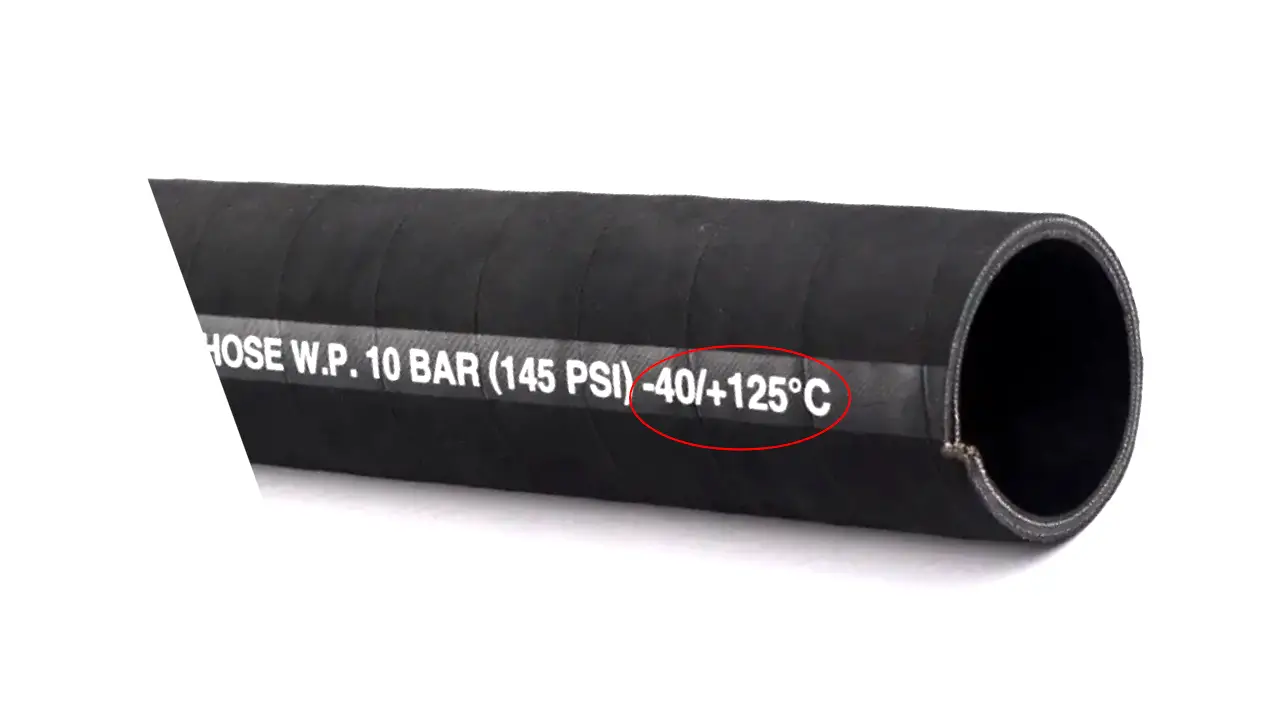
The majority of hydraulic rubber hoses can operate within:
-40°C to +100°C
There are certain special hoses that can withstand hotter temperatures.
Types of Hydraulic Rubber Hoses
Hydraulic hoses are used in many systems. Let’s take a peek at two popular ones.
Hydraulic Rubber Hose SAE 100 R1/EN 853 1SN
This hose is a common-use hose for use in hydraulic systems.
Features:
This steel wire reinforcement consists of one layer.
Medium pressure resistance
Flexible and strong
Long service life
Applications:
Construction machines
Agricultural equipment
Industrial machinery
This hose can be used in medium-pressure hydraulic systems.
Rubber Hose Hydraulic SAE100 R2/EN 853 2SN
This hose is a more robust hose than the R1 type.
Features:
Two layers of steel wire reinforcement sheets.
Higher pressure capacity
More durable structure
Improved performance in stressful situations.
Applications:
Heavy machinery
Mining equipment
High-pressure hydraulic systems
This hose comes into use when greater strength is required.
Difference Between R1 and R2 Hoses
Let’s use easy-to-understand language to make a comparison between the two types of them.
Reinforcement
R1: 1 layer of steel wire
R2: Two layers of steel wires
Pressure Handling
R1: Medium pressure
R2: High pressure
Flexibility
R1: More flexible
R2: Somewhat less flexible and sturdier
How to Choose the Right Rubber Hose
When deciding on a hose, always remember to inspect:
Pressure rating
Diameter size
Temperature range
Application type
Machine requirement
The proper hose selection ensures safety and performance.
The need for proper specification.
Importance of Correct Specifications
Machine safety
Longer hose life
Better performance
Reduced maintenance cost
System failure or accidents can result from wrong selection.
Applications of Rubber Hydraulic Hoses
Rubber hydraulic hoses are employed in a lot of industrial applications:
Construction
Mining
Agriculture
Manufacturing
Oil and gas
Transportation systems
They play a key role in hydraulic power systems.
Maintenance Tips
To ensure the safety and longevity of hoses:
Inspect for cracks on a regular basis
Avoid over-bending
Avoid sharp edges!
Replace old hoses when due.
Clean the outer surface
With good maintenance, the safety is improved.
Conclusion
The characteristics of the rubber hose, such as the pressure, diameter, and temperature, are very important to ensure safe and efficient performance.
Knowing how to read the Rubber Hose specifications (Pressure / Diameter / Temperature) can help give users a better understanding of what hose to select for various machines and industries.
Hydraulic hoses such as Hydraulic Rubber Hose SAE 100 R1/EN 853 1SN, Rubber Hose Hydraulic SAE100 R2/EN 853 2SN are popularly used due to their excellent performance, durability, and safety.
Selecting the right hose with the right specifications guarantees easy operation, durability, and performance in the industrial environment.