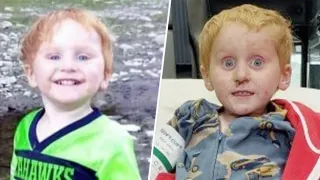
Ryker Webb now stands as a name that continues to echo across online searches, true crime discussions, and survival case studies. When people search “Ryker Webb now,” they are usually looking for one thing: what happened after the terrifying disappearance in Montana and how the young boy’s story unfolded after he was found alive. This article explores the full journey—his origin story, the intense public concern during his disappearance, and the broader impact his case left on search-and-rescue awareness.
In the first hours of his disappearance, fear spread quickly through rural Montana communities. Ryker Webb, a young child, went missing in dense forest terrain—an environment that can turn dangerous within minutes. Yet what followed became one of the most closely followed survival stories in recent memory. And here is the kicker: against all odds, he survived two nights alone in the wilderness.
Now let’s walk through the full narrative of Ryker Webb now—not just what happened, but why his story continues to matter.
Ryker Webb Now: The Beginning of a Disappearance That Shocked Montana
The story of Ryker Webb now begins in a quiet rural setting in Montana, where vast forests and rugged terrain define daily life. On the surface, it was an ordinary day. But in moments, ordinary turned into urgent crisis when Ryker went missing.
Industry veterans in search-and-rescue operations often note that the first few hours of a missing child case are the most critical. In Ryker’s situation, this reality became painfully clear. The terrain was dense, visibility was limited, and temperatures dropped sharply at night. These factors created a high-risk environment that demanded immediate coordination between volunteers, law enforcement, and rescue teams.
Here is the kicker: the geography that made life peaceful also made the search extremely difficult. Thick forest cover reduced visibility from air support, while uneven terrain slowed ground teams. Every passing hour increased concern.
The keyword Ryker Webb now often resurfaces because people want to understand how such a young child managed to survive in those conditions. But at the beginning, nobody knew the outcome—only that a child was missing and time was running out.
The Search Effort and Early Hours of Crisis
When the search began, local responders quickly mobilized. Volunteers joined trained teams, creating a widespread effort that covered miles of rugged land. The urgency was amplified by weather conditions, which can change rapidly in Montana’s wilderness.
The data suggests a shift toward increasingly coordinated rural rescue responses in recent years, especially in child-related cases. Helicopters, drones, and thermal imaging tools are now commonly used, but even with advanced tools, nature remains unpredictable.
As the search intensified, emotional pressure grew. Families, responders, and nearby residents all shared the same fear: that time might not be on their side.
It gets better—but only after intense struggle. Despite extensive efforts, initial hours passed without confirmed sightings. The situation became a race against cold temperatures, wildlife risks, and terrain exposure.
Still, search teams refused to stop. That persistence would soon matter more than anyone expected.
Ryker Webb Now and the Turning Point in the Wilderness Search
The turning point in the Ryker Webb now story came when searchers discovered that he had not been seen near the original expected areas. This shifted the entire strategy. Instead of focusing narrowly, teams expanded their grid search dramatically.
Experts in wilderness survival often emphasize that children behave unpredictably under stress. Rather than staying in one place, movement can occur instinctively, especially when fear sets in. This understanding helped rescuers rethink their approach.
And here is where the story takes a remarkable turn: Ryker was eventually found alive after spending approximately two nights alone in the wilderness.
The discovery stunned both search teams and the public. Survivors in similar conditions are rare, especially young children exposed to cold nights and difficult terrain. His survival became a case study in both resilience and rapid response coordination.
Industry veterans often note that survival outcomes like this depend on a combination of luck, environmental factors, and early mobilization. In Ryker’s case, all three intersected in a way that defied expectations.
Key Takeaways from the Ryker Webb Now Case
Before moving into what happened after the rescue, it’s important to summarize the key lessons that experts and communities took from this event:
- Rapid response in the first hours is critical in missing child cases
- Terrain awareness dramatically impacts search strategy effectiveness
- Rural environments require specialized coordination and tools
- Children can survive longer than expected under certain conditions
- Community involvement often plays a major role in expanding search coverage
This moment in the Ryker Webb now timeline became more than a rescue—it became a reference point for future operations.
Ryker Webb Now: The Conflict and Challenges of Survival
The middle of the Ryker Webb now story is defined by what happened during those two nights in the wilderness. While exact personal details of his experience are kept private out of respect, what is known highlights the extreme conditions he faced.
Temperatures in the region can drop significantly after sunset, especially in forested areas where wind chill intensifies. Without shelter, exposure becomes a serious threat. Wildlife presence adds another layer of unpredictability, and terrain can make even simple movement exhausting.
Here is the kicker: survival in such conditions is rarely about strength—it is about endurance, luck, and environment alignment.
Experts in pediatric survival psychology suggest that children in isolation often rely on instinct rather than strategy. This can sometimes lead to movement toward water sources or shelter-like spaces, though outcomes vary widely.
During this period, search teams expanded their radius even further, using predictive modeling based on terrain behavior patterns. The data suggests a growing reliance on such models in modern search operations, improving efficiency in large-scale wilderness searches.
Despite uncertainty, hope remained alive among rescuers. Every additional hour widened the emotional stakes but also sharpened focus.
The Emotional Toll on Family and Community
While search teams worked in the field, the emotional toll on family and community members was intense. In small communities, such events resonate deeply, often mobilizing entire populations into action or support roles.
Family members of missing children often describe this period as the most difficult phase—uncertainty without resolution. In Ryker’s case, that uncertainty lasted long enough to heighten concern but ultimately ended in relief.
It gets better—but only after the most difficult waiting period imaginable. The moment of confirmation that Ryker had been found alive transformed fear into overwhelming relief across the community.
Experts often point out that these emotional arcs—fear, uncertainty, relief—are common in missing child cases, but the intensity varies depending on duration and conditions.
Ryker Webb Now: The Transformation and Aftermath
When people search Ryker Webb now, they are often looking for what his life looks like after survival. Publicly available information remains limited, and out of respect for privacy—especially involving a child—details are not broadly disclosed.
What is known is that he survived a highly dangerous situation and was safely reunited with his family. The aftermath of such an experience typically involves recovery time, both physically and emotionally, supported by family and professionals.
Here is the kicker: survival is not the end of the story—it is the beginning of recovery.
Psychological experts emphasize that children who experience wilderness survival situations may require long-term emotional support, even if physical recovery is quick. Feelings of confusion, fear recall, or heightened awareness are common after traumatic events.
At a broader level, the Ryker Webb now case influenced public awareness about rural child safety, especially in areas near forests or undeveloped land. Communities revisited safety guidelines, supervision practices, and emergency response readiness.
The Broader Impact on Search-and-Rescue Awareness
The Ryker Webb now case has been referenced in discussions about improving rural emergency response systems. Search-and-rescue professionals often use such cases to refine training and coordination strategies.
The data suggests a shift toward integrating technology more heavily—drones, thermal imaging, GPS tracking systems, and predictive modeling are increasingly standard in wilderness searches.
But professionals also emphasize something more fundamental: human coordination remains irreplaceable. Volunteers, first responders, and local knowledge often provide critical advantages that technology alone cannot replicate.
It gets better—because cases like Ryker’s also strengthen community preparedness. Awareness campaigns following such incidents often encourage families to establish check-in routines, boundary awareness for children, and rapid reporting protocols.
Ryker Webb Now and the Legacy of Survival Awareness
The lasting significance of Ryker Webb now is not just about one child’s survival—it is about how quickly communities respond when a crisis occurs. His story continues to be referenced in safety discussions, not because of tragedy, but because of survival against difficult odds.
Experts in emergency response often say that every case contributes to a larger knowledge base. Ryker’s case reinforced the importance of immediate action, coordinated search grids, and persistence even when initial efforts yield no results.
Here is the kicker: sometimes, survival stories change systems quietly but permanently.
Final Reflection: Why “Ryker Webb Now” Still Matters
The phrase Ryker Webb now continues to trend because it represents more than curiosity—it represents hope, relief, and the human instinct to understand survival against odds.
From the beginning of his disappearance to the moment he was found alive, his story moved through fear, uncertainty, and ultimately resolution. While many details remain private to protect his well-being, the public takeaway is clear: rapid response and community coordination can save lives.
In the end, Ryker Webb’s story remains a powerful reminder that even in the most unforgiving environments, survival is sometimes possible when time, effort, and determination align.
And that is why people still search his name today—not just to ask what happened, but to understand what it teaches.
You May Also Read: Indykaila