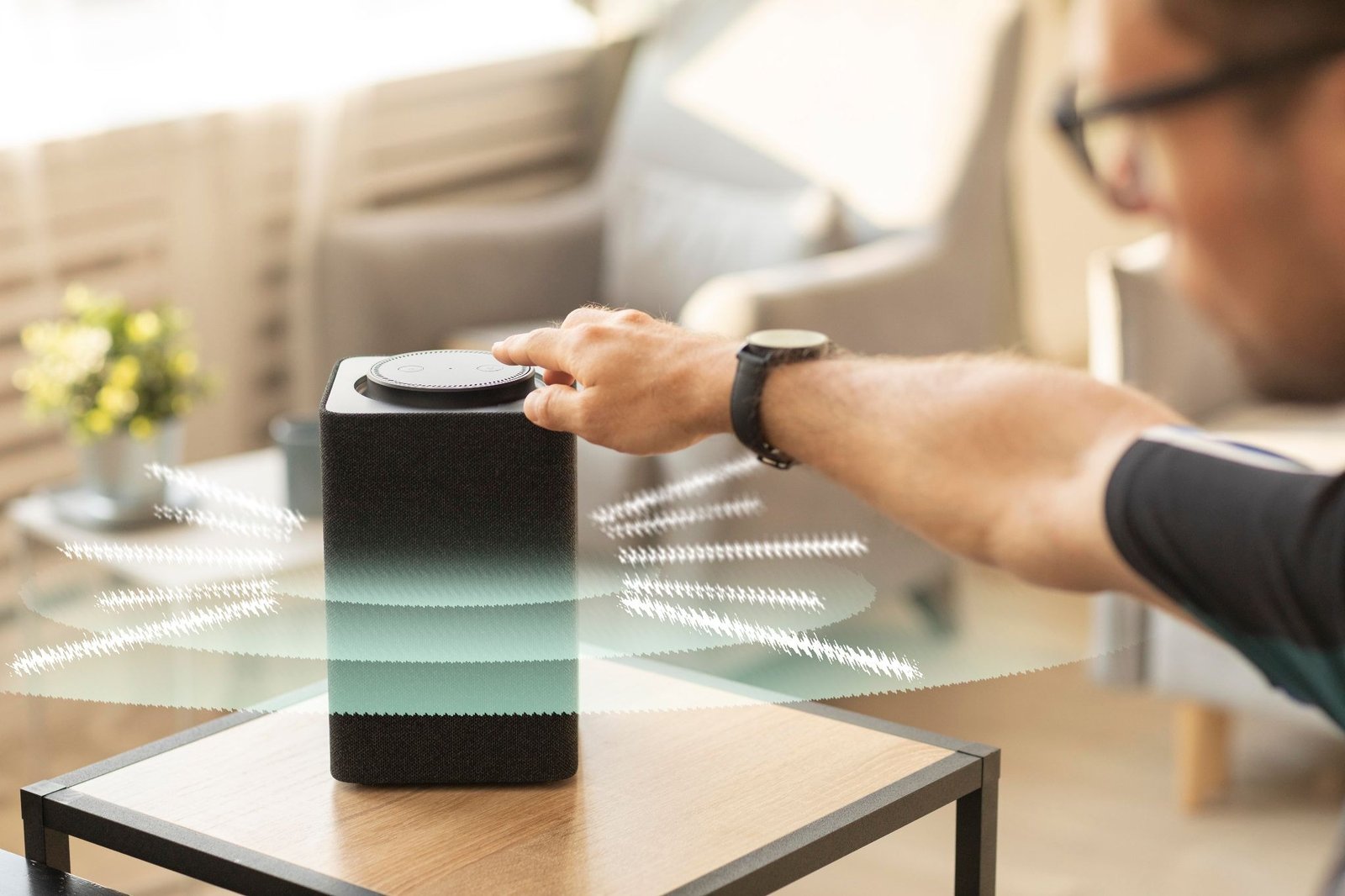
You mention a pair of hiking boots out loud at dinner, and an ad for hiking boots shows up on your phone the next morning. For millions of people, that one coincidence is enough to convince them their smart speaker is recording every word they say and selling it to advertisers. The suspicion isn’t irrational — these devices sit in kitchens and bedrooms, microphones perpetually open, waiting. But the leap from “it’s listening” to “it’s spying” skips over a lot of engineering, and a separate, less-discussed technology that actually does most of the data collection people are worried about.
That technology is called automatic content recognition, and it’s distinct from — though often confused with — the voice assistants people associate with “always listening” fears. Automatic content recognition (ACR) identifies what’s playing on a screen or coming through a speaker by matching it against a reference database, and it has quietly become standard equipment in smart TVs, streaming sticks, and audience-measurement systems worldwide. Untangling what ACR actually does, what voice assistants actually do, and where the real privacy risks sit requires separating three different conversations that have gotten tangled into one big myth.
What “ACR” Actually Means
The definition matters here because the term gets used loosely. Automatic Content Recognition (ACR) technology relies on methods such as audio fingerprinting, video fingerprinting, watermarking, and metadata analysis to identify content in real time. In practice, that means a smart TV or app captures a tiny sample of what’s on screen or playing through speakers, converts it into a kind of digital signature, and checks that signature against a massive database to figure out exactly what show, ad, or song is running — and often, at what timestamp.
This is fundamentally different from a voice assistant listening for a wake word. ACR is built to recognize media content; a voice assistant is built to recognize commands directed at it. They can run on the same device, sometimes even share components, but they serve different purposes and raise different concerns — which is exactly why the two get mixed up in public conversation.
Smart Speakers: What’s Actually Happening When You Say “Hey”
A smart speaker stays in standby mode, continuously processing incoming audio through a machine learning model whose only job is to detect the wake word. That detection happens entirely on the device itself — no audio is sent anywhere until the trigger phrase is recognized. Even when the indicator light is off, the microphone is technically active, but it’s running a local check for one specific sound pattern, not transmitting anything. Once that pattern matches, the device begins recording the actual request and sends it to the provider’s cloud servers, where speech recognition converts it to text and a language model figures out what you want.
The system isn’t perfect. A Northeastern University study identified more than a thousand word combinations capable of falsely triggering Alexa, including ordinary words like “unacceptable” and “election”. That’s the real mechanism behind those eerie “it was definitely listening” stories — not secret continuous recording, but imperfect pattern-matching occasionally firing on the wrong sound. Companies have also faced criticism over what happens after a legitimate activation: human contractors have historically reviewed anonymized voice clips to improve recognition accuracy, a practice users can now opt out of, though many remain unaware it exists by default. None of that amounts to a household microphone broadcasting dinner conversations to an ad server — but it’s also not nothing, and it explains why the myth persists even though the architecture genuinely doesn’t support nonstop eavesdropping.
Smart TVs: The Other Listener in the Room
If voice assistants are the visible suspect, smart TVs are the quieter one — and arguably the more consequential. A 2024 UCL study examining how smart TVs collect viewing data through ACR found the technology shares snapshots of what’s being watched, including content viewed through an external device like a laptop connected to the TV. The same researchers noted that ACR is typically switched on by default during setup, and that most users have no idea the feature exists or that they can turn it off.
Manufacturers describe the practice differently. Samsung states its ACR feature only runs if a customer actively consented to its Viewing Information Services notice during setup, and can be disabled at any time through the settings menu. LG bundles its version under a feature called Live Plus, which identifies what’s being watched across both apps and external devices, requiring a separate toggle in the General settings menu to switch off.
The gap between “opt-in by design” and “opt-out in practice” became a regulatory matter in 2017, when Vizio became the cautionary tale the entire industry still references. The FTC’s complaint described ACR software capturing up to 100 billion data points daily from more than 10 million Vizio televisions, with viewing histories stored indefinitely and shared with outside analytics firms and advertisers. Investigators found the software continuously collected pixel samples from the screen and matched them against a reference database to identify exactly what was being watched, second by second. Vizio settled for $2.2 million and agreed to seek explicit, separate consent going forward — and regulators explicitly classified granular television viewing activity as sensitive personal information, a label that previously hadn’t been applied so directly to this kind of data.
The Companies Turning Your Eyeballs Into Data
ACR isn’t a single product; it’s an entire layer of specialist firms most viewers will never see named on a box. Behind the scenes, vendors build the recognition engines that TV manufacturers license, then resell the resulting analytics to advertisers hungry for proof that a specific ad actually reached a specific household. This quiet industry has scaled fast: the global automatic content recognition market is estimated at roughly $5.45 billion in 2026, projected to climb to about $15.31 billion by 2031 at nearly a 23% annual growth rate, with North America holding around 40% of global revenue thanks to deep smart-TV penetration. Asia-Pacific is growing fastest, driven by rising smartphone use and an expanding base of regional ACR companies operating alongside global players.
What makes this market lucrative isn’t recognition itself — it’s everything built on top of it. The same fingerprint that identifies a sitcom episode also generates a timestamped record that gets fed into audience-measurement dashboards, attribution models, and household-level advertising profiles. ACR technology now underpins audience measurement and analytics across the industry, giving broadcasters and advertisers granular insight into viewer behavior and engagement that older panel-based ratings systems never could. The recognition step is cheap and largely invisible; the analytics built from it are the actual product being sold.
Busting the Big Myths
It’s worth listing the specific claims that circulate online and checking each against how these systems actually function.
Myth: Your TV or speaker streams audio to a server nonstop. Reality: both categories of device process audio locally first. Only the audio captured after a wake word — or, for ACR, a brief fingerprint sample rather than a continuous feed — is sent anywhere, and only while the device is online and functioning normally.
Myth: Companies sell raw recordings of your voice to advertisers. Reality: major voice-assistant providers state outright that they don’t sell personal data, and ad targeting is generally built from search history and stated preferences rather than transcribed voice snippets. ACR is a different story — viewing-pattern data genuinely does get packaged and sold to third parties, which is precisely what triggered the Vizio settlement.
Myth: Disabling the microphone or opting out fully stops all data collection. Reality: muting a mic stops audio capture, but smart TVs typically bundle several separate tracking permissions under different menu names, so a single toggle rarely covers all of them, and some diagnostic or usage data can persist even after the obvious settings are switched off.
Myth: ACR and voice assistants are the same technology, so distrust of one applies equally to the other. Reality: one identifies media content from a screen or speaker; the other identifies spoken commands directed at the device. Conflating them is exactly how legitimate privacy questions about viewing-data collection get diluted into less credible claims about constant audio surveillance — and how genuinely careless practices, like Vizio’s, get lost in noise about myths that aren’t true.
The Question Worth Actually Asking
The honest version of this story isn’t that your living room is bugged. It’s that two distinct, lawful, commercially valuable technologies have been deployed into millions of homes with consent mechanisms that range from genuinely transparent to deliberately easy to miss. Voice assistants are engineered, by necessity, to avoid constant transmission — the false-trigger problem is a flaw, not a conspiracy. ACR, meanwhile, was built specifically to harvest viewing data at scale, and regulators have already shown that when companies cut corners on disclosure, real money changes hands as a consequence.
The useful habit isn’t paranoia about a red light on a speaker. It’s checking the settings menu on every connected screen in the house — the toggle is almost always there, usually unchecked the moment you find it, and usually labeled something forgettable like “viewing information services” rather than anything that sounds like surveillance at al