Picture a harbor master standing at the edge of a busy port. Dozens of ships wait offshore, each carrying valuable cargo, each burning fuel by the hour, each captain insisting their vessel deserves the next open berth. The harbor master can’t dock them all at once. Some ships carry gold; others carry crates that might spoil or explode if mishandled. The master’s job isn’t to love every ship equally — it’s to decide, with a clear head, which vessels come in first, which wait, and which turn back. That’s the real work behind managing a company’s project portfolio: not paperwork, but triage under pressure. Professionals sharpening this exact judgment often turn to a business analyst training in Bangalore, where scenario-based exercises mimic the chaos of competing corporate priorities long before they hit a real boardroom.
The Harbor Master’s Dilemma: Why Every Project Isn’t Equal
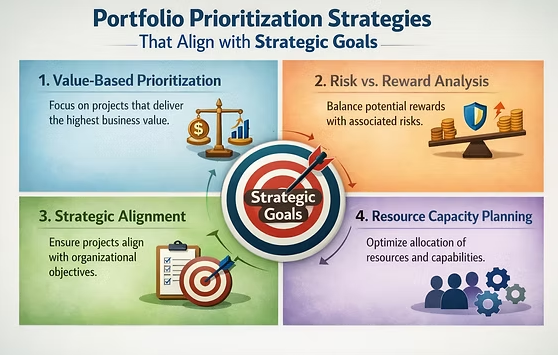
No two ships arrive with identical cargo, and no two projects arrive with identical promise. A flashy new mobile app might dazzle in a pitch meeting, yet quietly drain resources for eighteen months before showing a rupee of return. Meanwhile, a dull-sounding backend migration might unlock efficiency gains within weeks. The harbor master doesn’t rank ships by how shiny their hulls are; she ranks them by what they’ll deliver and what could go wrong along the way. Corporate leaders must adopt the same unsentimental lens, weighing projected returns against the turbulence each initiative might stir up internally.
Reading the Tides: How ROI Becomes the Compass
Every captain claims their ship is priceless, just as every department head insists their project is mission-critical. ROI acts as the compass that cuts through that noise. It’s not merely a spreadsheet formula — it’s a story about time, money, and opportunity cost. A project promising steady, near-term returns might outweigh one promising a distant, uncertain windfall, especially when capital is finite. Portfolio managers translate these competing narratives into comparable numbers, then let the compass, not the loudest voice in the room, decide which ships dock first.
Storms on the Horizon: Treating Risk as Weather, Not an Afterthought
Cargo alone doesn’t decide docking order — weather does too. A ship laden with treasure but sailing into a hurricane may need to wait it out, while a modest vessel under clear skies proceeds without delay. Risk in project portfolios behaves the same way: regulatory shifts, vendor dependencies, talent shortages, or shaky technology foundations are the storm clouds gathering over otherwise promising initiatives. Smart portfolio leaders don’t ignore the clouds because the cargo looks appealing; they factor turbulence into the sequencing itself, sometimes holding a high-value project offshore until the skies clear.
The Berth Allocation Meeting: Where Numbers Meet Negotiation
Eventually, the harbor master must sit down with all the captains and allocate berths — and this is rarely a purely mathematical exercise. Politics, department loyalties, and sunk-cost emotions creep into the room just as they do in corporate steering committees. The discipline of portfolio management insists on a structured scoring model — weighing ROI against risk on a shared scale — so that decisions don’t collapse into whoever argues loudest. This is precisely the muscle that a well-designed business analyst training in Bangalore builds early: the ability to defend a prioritization matrix with data, not decibels, when everyone in the room believes their ship deserves first berth.
Letting Ships Wait: The Underrated Discipline of Saying “Not Yet”
Perhaps the hardest skill any harbor master learns is patience — the willingness to let a perfectly good ship idle offshore because the timing, capacity, or risk profile isn’t right yet. Corporate leaders often struggle with this same restraint, fearing that shelving a project signals failure. In truth, deferring a project intelligently is often the mark of a mature portfolio strategy. It preserves capital, protects teams from burnout, and keeps the harbor from becoming a chaotic pileup of half-finished initiatives competing for the same limited dock space.
Conclusion: The Harbor Never Sleeps
The ships keep coming. New projects, new pitches, new promises of transformation arrive at the harbor every quarter, and the tide never quite settles. What separates a thriving corporate portfolio from a congested one isn’t the absence of ambition — it’s the presence of a steady hand at the helm, someone willing to weigh cargo against weather, urgency against patience, and confidence against evidence. Prioritization, done well, isn’t a bottleneck. It’s the quiet discipline that keeps the entire harbor moving forward, one well-timed berth at a time.