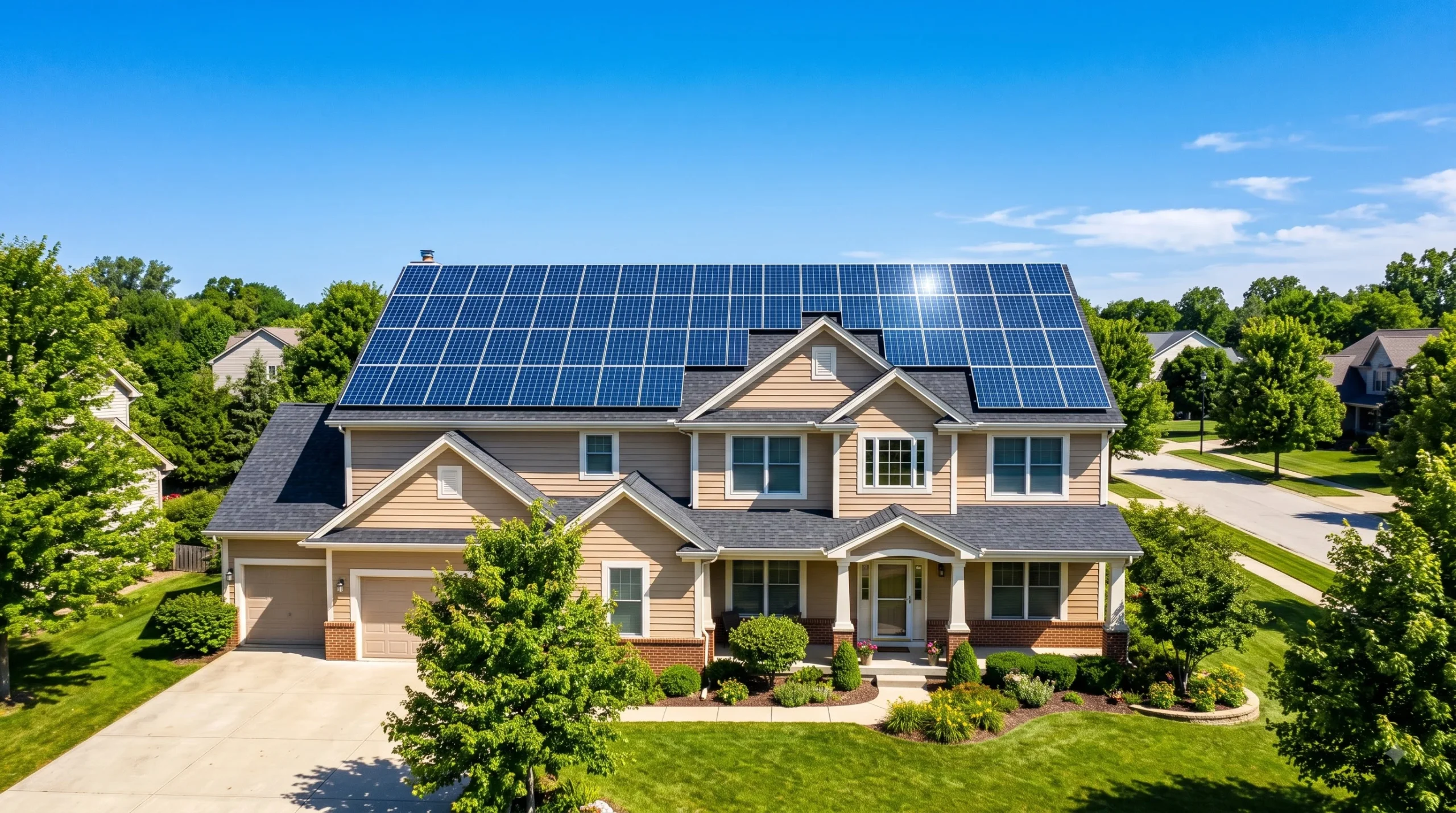
The array was fine. The array was undamaged, bolted straight through the deck the way the roofers bolivar peninsula tx households already trust with their shingles tend to do it, and it was making no usable power whatsoever. Then came seventy-two hours of nothing: a raised house on the Bolivar Peninsula, a 200 amp service with no service behind it, and a chest freezer holding a season of Gulf shrimp and redfish going soft. The lesson underneath that spoiled freezer is the one worth carrying into any solar conversation. A grid tied solar roof switches itself off the moment the grid drops, and only battery storage and an interconnection designed in at install time will keep a single outlet alive in your kitchen.
Panels alone are not a backup plan. They turn into one only when somebody plans for that on day one.
Grid Tied Panels Shut Down With The Grid
The shutdown is deliberate, and it protects people. If an inverter kept pushing current onto lines a utility crew believes are dead, the crew working that pole would be the ones who found out otherwise. So every standard grid tied inverter senses the outage and stops within a couple of seconds. Sunshine has nothing to do with it. A cloudless August afternoon over a spotless array still ends with a dark refrigerator, because the equipment has no legal way to feed a house it cannot safely isolate from the wires at the road. That isolation is the whole job of a transfer switch or a hybrid inverter, and neither one appears on a roof by accident.
Three Dark Days Cost More Than Fuel
Outages on this stretch of coast are ordinary, not exotic. KFDM News in Beaumont reported that thunderstorms crossing Southeast Texas in July 2026 knocked out power to more than 4,000 Entergy customers, including more than 1,300 in Jefferson County, mostly around Port Neches and Port Arthur. That was a summer storm, not a named hurricane, and it still put thousands of households in the dark. Anyone who has ridden out an evacuation season here knows the difference between an inconvenient afternoon and a genuine multi-day event, and the freezer is where the second kind gets expensive.
Run the arithmetic on one illustrative peninsula household and the number stops being abstract. Say the chest freezer holds 180 pounds of shrimp valued at $9 a pound, which is $1,620, plus 90 pounds of redfish and drum at $7 a pound for another $630. Add $140 of ordinary groceries in the kitchen refrigerator, then three days of a portable generator burning roughly 12 gallons daily at $3.10 a gallon, which is about $112 in fuel to keep a few lights and a fan going. That comes to $2,502 in one 72 hour stretch, and none of it bought a single hour of air conditioning. Substitute your own catch, your own prices, and your own outage length; the shape of the answer does not change much.
Which is why the storage question belongs in the first conversation with the roofers bolivar peninsula tx owners are already interviewing, not the last one. What usually turns up, job after job, is a homeowner who assumed the panels were the backup and never asked what the inverter does at 2 a.m. on a Tuesday with the grid down. Deciding it later is not impossible, but it is a second permit, a second interconnection application with the utility, and a second crew day on a roof that was closed up months ago. Sizing it up front is cheaper and it is also more honest, because the honest version starts with a list of what actually has to stay powered. A freezer, a well pump, a CPAP machine, one window unit in a bedroom. Not the whole house. Before anyone quotes you a battery, PVWatts, the free production calculator NREL publishes online, will give you a rough annual output estimate for your roof, your tilt, and your postcode, which is a useful sanity check against a proposal that promises the moon. Then the battery gets sized against your list rather than against the panels, and the two numbers finally have something to do with each other.
Questions To Settle Before The Next Outage
Will my solar panels work if the power goes out?
Not on their own, and not in any standard grid tied setup. The inverter disconnects the moment the utility supply fails, and it stays disconnected until the grid is restored. You need battery storage plus a critical loads panel, wired at install time, for anything in the house to run off that array during an outage.
Does a battery have to power the whole house?
No, and asking it to is how quotes get enormous. Most owners on the peninsula are protecting a freezer, a refrigerator, a couple of circuits and maybe one bedroom air conditioner. That short list is what a critical loads subpanel exists to serve, and it usually turns a conversation about three batteries into a conversation about one.
Until the storage is in place, the generator in the shed is doing that work, and it is the piece of this that can actually kill someone. Run a portable generator outdoors only. Never in a garage, never in a crawlspace, never in a breezeway, and never with the door propped open, because carbon monoxide is invisible and gives no warning before it puts a person on the floor. Ready.gov advises keeping a generator outside and at least 20 feet from windows, doors, and vents (Ready.gov, FEMA). Put a battery powered CO alarm inside the house. If an alarm sounds or anyone feels dizzy, headachy or sick, get everyone outside into fresh air first and call 911, then worry about the generator afterward.
The takeaway from that dark, ruined freezer is small and specific. Solar on the roof is a monthly bill decision; power during an outage is a separate design decision, and it has to be made while the roof is still open. Ask any contractor quoting you a solar roof what happens to your kitchen at hour ten of an outage, and listen for whether the answer names a transfer switch, a critical loads panel, and a battery capacity in kilowatt hours. A vague answer there tells you what you need to know. The next storm is not a hypothetical on this coast, and the freezer is the part that keeps score.